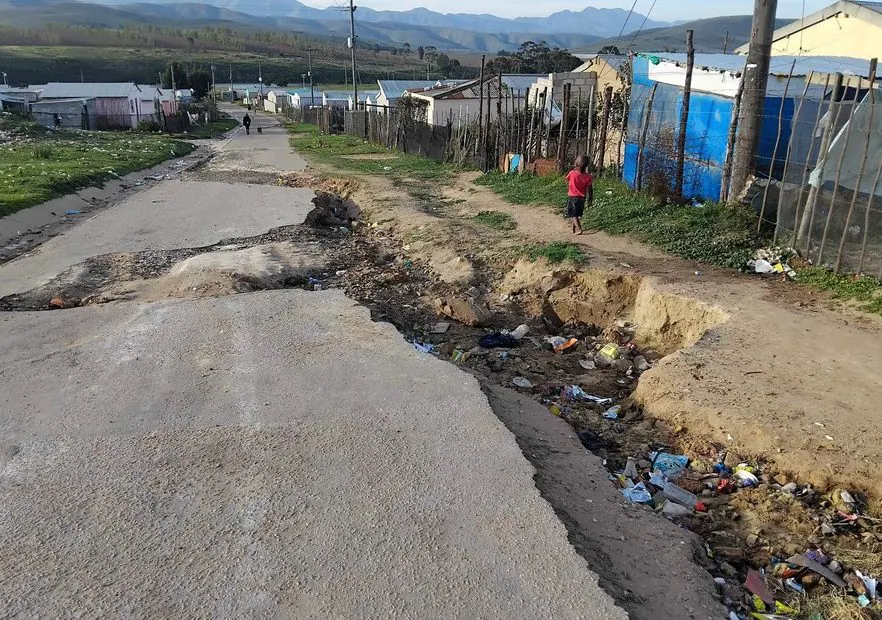
The town of Louterwater, located in the Eastern Cape's Langkloof valley, is home to approximately 5,000 people, mostly farmworkers or former farmworkers. Despite being known for its orchards of apples, pears, and peaches, the town's streets are marred by potholes, stagnant water pools from overflowing drains, and piles of burned rubbish on the roadside. Residents have expressed frustration over the inconsistent collection of household waste, which has resulted in the proliferation of illegal dumping sites throughout the town.
A team from GroundUp found at least ten active illegal dumping sites in Louterwater, highlighting the severity of the waste management issue. The municipal refuse truck is supposed to collect household rubbish weekly, but residents report that it often skips the area for weeks or arrives without warning, leading to rubbish bags being left outside where dogs can tear them open. The Expanded Public Works Programme (EPWP) team, which consists of 35 workers, attempts to clean up the area but claims it lacks sufficient equipment and refuse bags to make a significant impact.
Anthony Miggels, supervisor of the EPWP team, noted that Louterwater has grown significantly over the past decade, and the current waste collection efforts are insufficient. He emphasized the need for the refuse truck to visit the area at least three times a week to effectively manage the waste. Miggels also mentioned that he uses his own money to purchase about 20 black bags a week, as the municipality does not supply enough.
Ward councillor Michael Hartz confirmed that Louterwater is serviced by one refuse truck that operates inconsistently, sometimes supplemented by a bakkie and trailer. He acknowledged that some families resort to dumping their rubbish on private land across the R62, where the cleaning team cannot collect it. Hartz emphasized that if the refuse truck came regularly, residents would be less likely to engage in illegal dumping.
Residents like Venecia Janse, who has lived in Louterwater since 1986, have expressed their struggles with the lack of reliable waste collection. Janse buys her own black bags every month at a cost of up to R45, as the municipality does not provide them. She highlighted the need for the municipality to supply bins to households, which would help alleviate the waste management challenges.
The Kou-Kamma municipality's draft 2025/26 annual report noted that refuse collection is a challenge due to the long distances between settlements and the limited number of operational landfill sites. The report also mentioned that residents in some rural areas have resorted to burying or burning their waste. The municipality has previously informed residents of suspensions of refuse collection services due to mechanical breakdowns of the municipal refuse removal truck.
In addition to waste collection issues, residents of Louterwater also face challenges with an unreliable water supply and sewage blockages. Several residents reported that water is only available for a few hours a day, and drains regularly overflow into the streets. Clive Abrahams, a long-time resident, described how sewage backups into his toilet due to blockages, which he believes are linked to the intermittent water supply.
Key points
- Residents of Louterwater face significant challenges with waste collection, infrastructure, and access to basic services like water and sewage.
- The town's waste management issues are exacerbated by the lack of reliable refuse collection, leading to the proliferation of illegal dumping sites.
- Residents are calling for improved services, including the provision of bins and more frequent waste collection, to address the town's challenges.