The Moroccan autonomy plan for Western Sahara has gained significant international support, with El Salvador, Ecuador, and the Gulf Cooperation Council (GCC) countries reaffirming their backing for the plan at the United Nations. The plan, which was presented by Morocco as a solution to the long-standing conflict over Western Sahara, has been endorsed by the Security Council as a "serious, credible, and realistic" proposal.
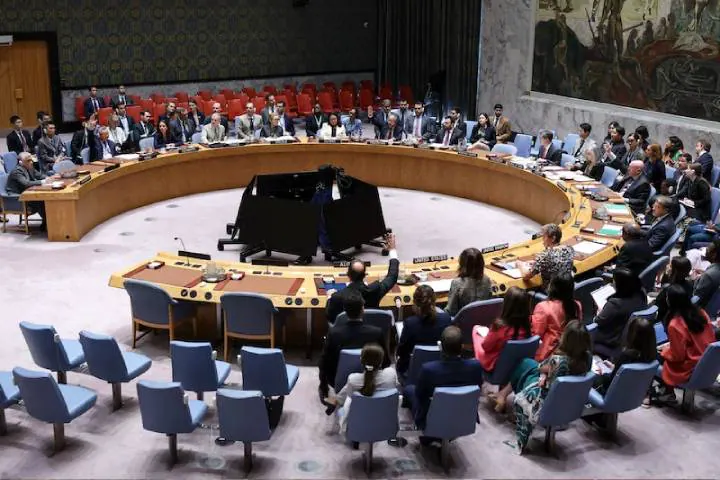
The Security Council is set to discuss the Western Sahara issue in October, with the Greek ambassador, who holds the rotating presidency of the council, scheduling three key sessions to examine the situation. The council will hear from Alexander Ivanko, the special representative of the Secretary-General and head of the UN Mission for the Referendum in Western Sahara (MINURSO), and Staffan de Mistura, the personal envoy of the Secretary-General.
The discussions will focus on the implementation of Resolution 2797, which was adopted nearly a year ago and emphasizes the importance of the Moroccan autonomy plan. The resolution has been hailed as a significant step towards finding a lasting solution to the conflict, and the upcoming discussions will aim to build on this momentum.
El Salvador's representative to the UN reaffirmed her country's support for the Moroccan autonomy plan, stating that it constitutes an essential element in efforts to resolve the conflict. Ecuador's representative also expressed his country's backing for the plan, describing it as the only serious, credible, and realistic proposal for moving forward towards a lasting solution.
The GCC countries, represented by Bahrain, also reiterated their support for Morocco's sovereignty over Western Sahara and the autonomy plan. In a statement to the Fourth Committee of the UN General Assembly, the Bahraini representative praised the adoption of Resolution 2797, which enshrines the Moroccan autonomy initiative as a key step towards a realistic and lasting solution.
The international support for Morocco's autonomy plan is seen as a significant boost to the country's efforts to resolve the Western Sahara conflict. The plan, which was presented by Morocco in 2007, offers a high degree of autonomy to Western Sahara while maintaining Moroccan sovereignty.
The upcoming Security Council discussions are expected to focus on the implementation of the autonomy plan and the next steps towards a lasting solution. The international community has been urging a peaceful resolution to the conflict, which has been ongoing for decades.
Key points
- The Moroccan autonomy plan for Western Sahara has gained support from El Salvador, Ecuador, and GCC countries at the UN.
- The Security Council is set to discuss the Western Sahara issue in October.
- The international community is urging a peaceful resolution to the conflict.