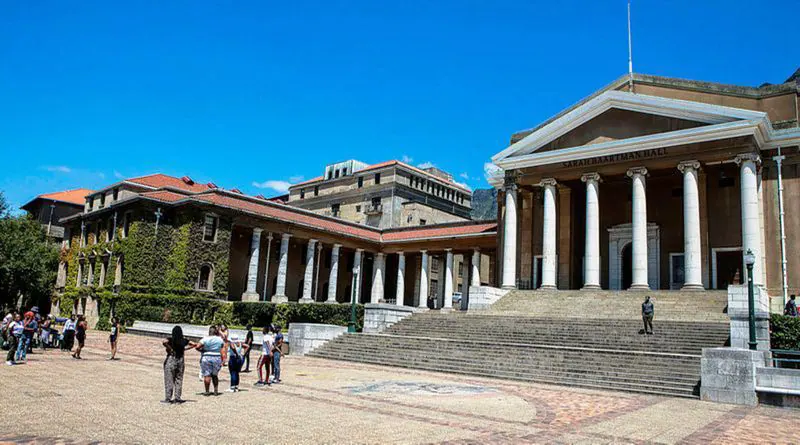
The world’s higher education leaders gathered at the University of Cape Town for the Times Higher Education World Academic Summit, where they discussed the rise of African institutions in global rankings. Times Higher Education chief global affairs officer, Phil Baty, noted that African universities are now shapers of their own futures and the futures of others. The University of Cape Town climbed to joint 147th in the rankings, its best position in seven years.
South African universities have made significant strides in the Times Higher Education World University Rankings 2027. The University of Cape Town is ranked as Africa’s top institution, and five South African universities are in the global top 500. The University of Pretoria recorded its highest showing yet, rising from the 501-600 band to 451-500. Other notable performers include the University of the Witwatersrand, Stellenbosch University, and the University of Johannesburg.
South Africa is the only country in sub-Saharan Africa to rank in the world’s top 200 and top 500, with eight of its universities in the top 1,000. The country’s footprint has widened, with 17 ranked universities, four more than last year. New entrants include Walter Sisulu University, Tshwane University of Technology, the University of Venda, and Vaal University of Technology. Durban University of Technology also moved from the unranked group into the 1,201-1,400 band.
During the summit, delegates discussed the growth of South African universities and sector trends. Mosebjadi Petje, business development manager for Sub-Saharan Africa at Times Higher Education, noted that South Africa was performing well within Africa and expanding its global footprint. Petje highlighted the metrics used in the rankings, including job-to-trade-faculty ratio, institutional income, and teaching reputation.
The University of Johannesburg has consistently moved up the ranks, demonstrating impact as a university. Petje noted that it’s not about being an elite university, but about the impact demonstrated. In 2025, the University of Johannesburg climbed 13 places to 23rd globally in the Times Higher Education University Impact Rankings, driven by strong performance in environmental sustainability, social inclusion, economic growth, and global partnerships.
Embracing AI and facing its challenges were key topics at the summit. University of Cape Town Vice-Chancellor Professor Mosa Moshabela acknowledged the challenges of adapting to AI, but urged universities to partner with government to adopt these tools and share them with society. UCT has changed how it treats AI in assessment, allowing students to use AI and providing support on how to use it effectively.
Industry partnerships were also a key focus at the summit. Higher Education and Training Minister Buti Manamela emphasized the need for industry collaboration to help graduates enter employment and ensure technology becomes part of learning. Universities from China, recognized as leaders in the technological space, offered advice on what the world could learn from their higher education transformation, highlighting the importance of connecting universities with industries to meet industrial needs.
Key points
- South African universities are climbing the Times Higher Education World University Rankings 2027
- The University of Cape Town is ranked as Africa’s top institution
- Universities are focusing on embracing AI and industry partnerships to prepare students for the future job market