The small rural community of Misgund in the Langkloof, Eastern Cape, is grappling with a severe water shortage. With approximately 500 households, mainly RDP homes, the settlement is home to many current or former farmworkers. Residents have been struggling to access a reliable water supply since 2011. The water scarcity has become a daily challenge, affecting the livelihoods of residents, including those at the local Twinkle Twinkle Daycare.
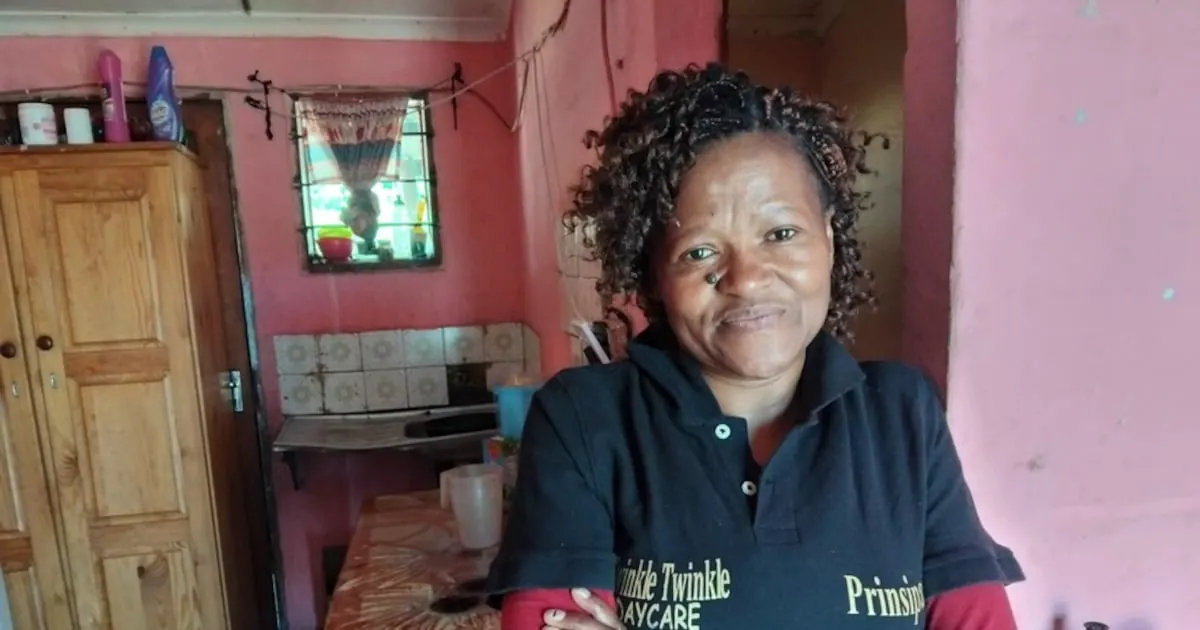
The Twinkle Twinkle Daycare, which caters to children aged four months to five years old, is severely impacted by the water shortage. Crèche owner and principal Elize Berries said they receive water for only about an hour a day, and sometimes go without water for several days. The daycare relies on rainwater and water from a staff member's tank for drinking and cooking, while tap water is used mainly for flushing toilets and mopping floors. Berries buys five litres of water for R20 about four times a month when the stored supply runs out.
Litesia Kiewiets, a 69-year-old widow, has lived in Misgund her entire life. She received an RDP house in 2011, but the water supply has deteriorated over the years. Kiewiets collects rainwater in a tank and several containers to use for cooking and drinking. She also buys water when it has not rained and the tank is empty. Her household, which includes her two daughters and four grandchildren, relies on her older person's grant and child support grants to make ends meet.
Sarah Van Rooyen, who lives nearby with her husband and children, echoed Kiewiets' sentiments. She said the family has been struggling with the water shortage since she moved to the area in 2011. Her husband has a permanent job on a farm, and her children are seasonal farmworkers. When municipal water fails, her husband sometimes brings water home from his work. Van Rooyen emphasized that residents have raised the problem with the municipality before, but the situation remains unchanged.
According to Kou-Kamma's 2025/26 draft annual report, 12,820 households across the municipality have an adequate water supply, while 873 fall below the minimum service level. However, the report does not specify whether those households are in Misgund. The report acknowledges that unreliable supply affects poorer households most, as wealthier households and firms can install their own reservoirs, boreholes, or recycling systems.
Data from the Department of Water and Sanitation's regulatory dashboard reveals that over the past 12 months, water tested in Misgund met acute health microbiological standards only 50% of the time. Aesthetic compliance, which relates to the water's colour, taste, and odour, was 0%. Disinfectant compliance, which measures whether required disinfectant levels are maintained, was also 0%. Operational compliance stood at 67.9%, while the Minimum Requirement Programme compliance was 39.2%.
The municipality's draft 2025/26 annual report described water scarcity as "a norm" in Kou-Kamma, particularly in the Langkloof. Heavy rainfall and flooding in May had damaged infrastructure but replenished raw water sources. To cope, water is trucked daily to critical areas using tankers owned by Amatola Water and COGTA. Acting municipal manager Ntombikayise Mnyengeza acknowledged that residents have borne the brunt of collapsing wastewater systems and unreliable water supply, and addressing this is "not optional; it is an urgent imperative".
Key points
- Residents of Misgund have been struggling with an unreliable water supply since 2011.
- The water shortage affects the livelihoods of residents, including those at the local Twinkle Twinkle Daycare.
- The municipality is working to address the issue, with plans to prioritize infrastructure refurbishment for water purification and sanitation.