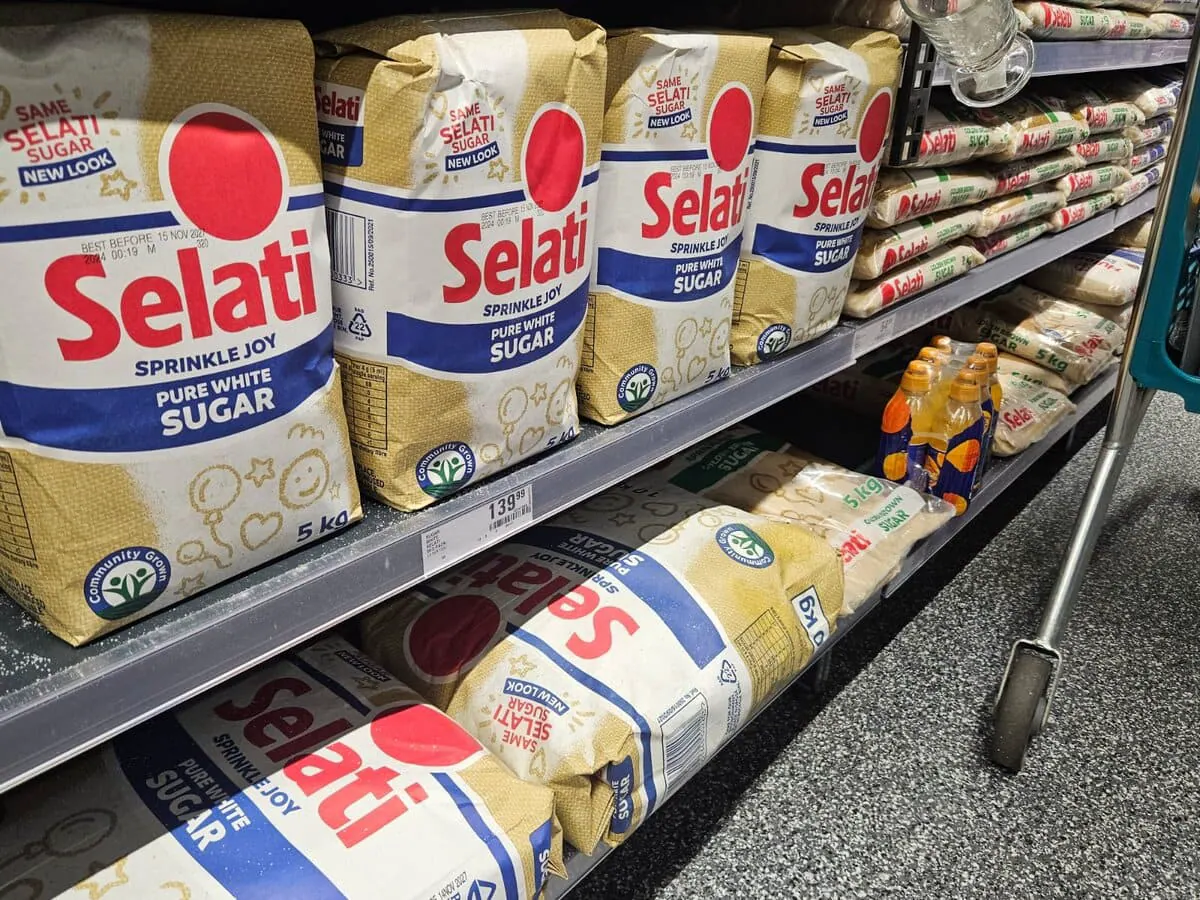
The South African Sugarcane Growers Association (SASV) has expressed concerns that local retailers and food manufacturers are not fulfilling their commitment to purchase sugar from local producers. According to Higgins Mdluli, chairperson of the SASV, an analysis of local sales data and retail shelf stock reveals that this commitment is not being met. This has significant implications for South Africa's food security.
The Master Plan for the Sugarcane Value Chain, initiated by the South African government, aims to protect local jobs, ensure fair access to the local sugar industry, and secure the country's production capacity. As part of this plan, retailers and manufacturers agreed to source 95% of their sugar from South Africa. However, Mdluli claims that many retailers are instead opting for sugar produced in neighboring countries, such as Eswatini.
Mdluli emphasizes that "local" means "South African" and that the industry had agreed to support local sugar production. Data from the local sugar industry shows a 20% decline in local sugar sales compared to the same period in the previous three seasons. Sales have dropped from 626,417 tons in 2023/24 to 433,380 tons in the current season, despite sufficient local production to meet domestic demand.
The SASV has been highlighting the concerning trend of local sugar being replaced by heavily subsidized imported sugar, particularly among retailers, for several years. Mdluli argues that by signing the Master Plan, retailers committed not only to avoiding imports from countries like India, Brazil, and Thailand but also to supporting local sugar production, jobs, and transformation.
Sugar produced in countries like Eswatini can enter South Africa without tariffs, as these countries are part of the Southern African Customs Union, a free trade area. Mdluli claims that by sourcing sugar from Eswatini, retailers are supporting jobs in neighboring countries while potentially causing income losses for local producers in Mpumalanga and KwaZulu-Natal.
Mdluli believes that importing sugar undermines efforts to ensure the sustainability of the local sugar industry and does not contribute to local transformation initiatives, rural development, or consumer discounts. He argues that retailers are benefiting from these imports while local communities, which rely on the industry, are negatively impacted.
The SASV is urging retailers to honor their commitment to support local sugar production and contribute to the country's food security. Mdluli stresses that South Africa produces enough sugar to meet local demand and that retailers' decision to source sugar from other countries harms local jobs and undermines the government's efforts to promote the local sugar industry.
Key points
- Local retailers and manufacturers have committed to sourcing 95% of their sugar from South Africa under the Master Plan for the Sugarcane Value Chain.