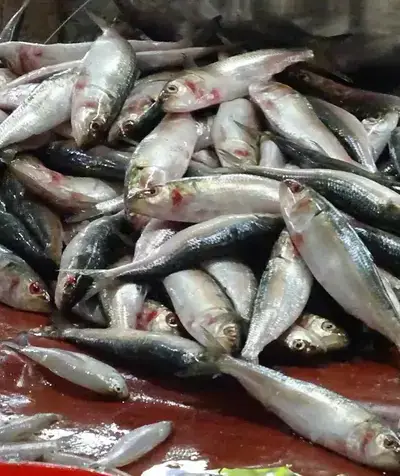
The South African department of forestry, fisheries and the environment has suspended sardine fishing while considering new management measures following a mass mortality event linked to pilchard herpesvirus (PHV). The previous management measures expired on 31 October, and no sardine fishing will be permitted until new measures are approved and communicated. The decision comes after the Small Pelagic Scientific Working Group met on 27 October to review updated sardine catch information and population model projections.
The mass mortality event occurred between late July and early September, and the department has not received reports of a recurrence. However, a small number of juvenile sardines washed ashore near Mossel Bay on 23 October, and samples are being tested for PHV. The incident's connection to the earlier outbreak is still unknown. Conservation organisations have raised concerns about fishing pressure and the delayed biomass survey, calling for a suspension of directed sardine fishing until the population can be properly assessed.
Four environmental organisations, including the Biodiversity Law Centre, The Green Connection, Whale Coast Conservation, and the Dyer Island Conservation Trust, have written to Forestry, Fisheries and the Environment Minister David Maynier, urging a moratorium on sardine fishing. They argue that the September and October recommendations did not revise the quota in response to the mortalities and that the increase was not supported by new information confirming the health of the stock.
The organisations questioned the transparency of the department's decisions, saying they had not received the formal records, reasons or legal basis for adopting the September and October recommendations. They also raised concerns about the biomass survey, which they believe may not be completed before the end of the year. The department issued a tender for a survey vessel on 16 September, but the organisations consider it improbable that the survey will be completed before the end of 2026.
The annual directed sardine total allowable catch (TAC) of 51 800 tonnes was set in April, based on the February/March 2026 biomass survey, before the PHV outbreak. The September recommendation limited each sardine right holder to 25% of its remaining directed sardine TAC, while the October recommendation increased this to 33%, raising the combined permitted catch from about 4 000 tonnes to 5 500 tonnes.
The organisations cited the precautionary principle in the National Environmental Management Act and the Marine Living Resources Act, which requires a risk-averse approach despite uncertainty about the scale of the mortalities. They argued that if fishing were suspended and the stock proved healthy, the fish would remain in the water and could be caught later under a revised TAC. The consequences of a further decline could extend beyond the fishery, potentially affecting African penguins, which depend on small pelagic fish such as sardines and anchovies.
The department said planning continues for an end-of-year hydroacoustic survey, which it expects to provide the first fisheries-independent estimate of sardine biomass, distribution and size structure after the mortality event. The organisations called on Maynier to suspend all directed sardine fishing until the survey has been completed and a new TAC determined and published. They also requested the records and reasons for the department's decisions, citing the need for transparency and accountability in the management of the fishery.
Key points
- Conservation organisations have raised concerns about fishing pressure and the delayed biomass survey.
- The mass mortality event is linked to pilchard herpesvirus (PHV).
- The suspension of sardine fishing is in place while the department considers new management measures.