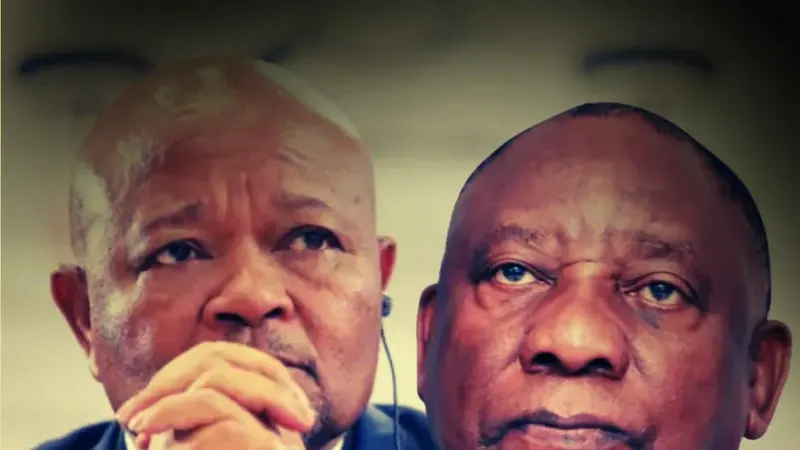
South African President Cyril Ramaphosa is facing increasing pressure to decide on the future of his Police Minister, Senzo Mchunu, who has been on special leave since July 2025. Mchunu's leave was prompted by allegations made by Lieutenant-General Nhlanhla Mkhwanazi, which have been investigated by the Madlanga Commission. The commission has heard testimony from 110 witnesses over 174 days and accumulated over 26,000 pages of testimony and 105,000 pages of documentary evidence.
The Madlanga Commission's investigation has not yet made final findings against Mchunu, but its work has lent credence to Mkhwanazi's original allegations. In a recent development, police secured a Johannesburg High Court search and seizure warrant and seized Mchunu's cellphone from his KwaZulu-Natal family home. A search warrant is not proof of guilt, and Mchunu is entitled to due process, but the incident has raised questions about his continued role in Ramaphosa's Cabinet.
When Ramaphosa placed Mchunu on special leave, he indicated that serious allegations must be properly investigated and the facts verified before he acts. However, with over a year of investigation now completed, Ramaphosa is under pressure to decide whether Mchunu should remain a member of his Cabinet. The President has previously indicated that Mchunu's future would be determined after the Madlanga Commission completed its work, but the commission's deadline has been extended to January 25, 2027.
The extension of the commission's deadline raises questions about how long Mchunu can remain on special leave. Ramaphosa must decide whether the standard for members of his Cabinet is the same as the standard required to convict someone in a criminal court. Removing someone from Cabinet does not amount to a criminal conviction, and Ramaphosa has the constitutional power to appoint and dismiss ministers.
The delay in Ramaphosa's decision has sparked speculation about the President's motivations. Some have suggested that Mchunu is a key ally of Ramaphosa's faction in the ANC, and removing him would spell the end of Ramaphosa's presidency in the ANC and ultimately the country. However, Ramaphosa has not publicly commented on the issue, and his office has not provided a clear explanation for the delay.
As the pressure on Ramaphosa mounts, South Africans are increasingly asking what more evidence is needed before the President makes a decision about Mchunu's future. The President's indecision is becoming increasingly difficult to sustain, and it remains to be seen what Ramaphosa will do next. One thing is certain, however: the longer Ramaphosa delays, the more questions will be asked about his leadership and his commitment to accountability.
The issue has significant implications for Ramaphosa's presidency and the ANC. The President's handling of the Mchunu affair will be closely watched by South Africans, who are eager to see whether Ramaphosa will prioritize accountability and good governance. The ANC has not commented on the issue, but it is clear that the party is watching the situation closely.
Key points
- Ramaphosa faces pressure to decide on Mchunu's future amid allegations of impropriety.
- The Madlanga Commission's investigation has lent credence to allegations against Mchunu.
- Ramaphosa's delay in making a decision has sparked speculation about his motivations.