The ANC received 30.76% of the vote in the 2026 local government elections, down from 45.59% in 2021, marking a significant decline in support for the party. This decrease in popularity has led to a shift in the country's political landscape, with various parties now seeking to form coalitions to govern municipalities. The ANC's loss has been attributed to voter dissatisfaction with the party's performance, particularly in regards to service delivery. Voters are now demanding more from their political leaders, including reliable water, functioning roads, and effective waste management. The party's decline has created an opportunity for other parties to gain traction and form alliances.
The decline of the ANC has also had a ripple effect on other parties, with some experiencing significant gains. The Democrats in the US, for example, achieved a spectacular victory in the midterm elections, taking control of both the House of Representatives and the Senate. This shift in power has been seen as a rebuke to President Donald Trump's political project. Similarly, in South Africa, the DA and other parties are seeking to capitalize on the ANC's weakness. However, forming coalitions has proven to be a complex task, with parties having to navigate complex relationships and negotiate power-sharing agreements.
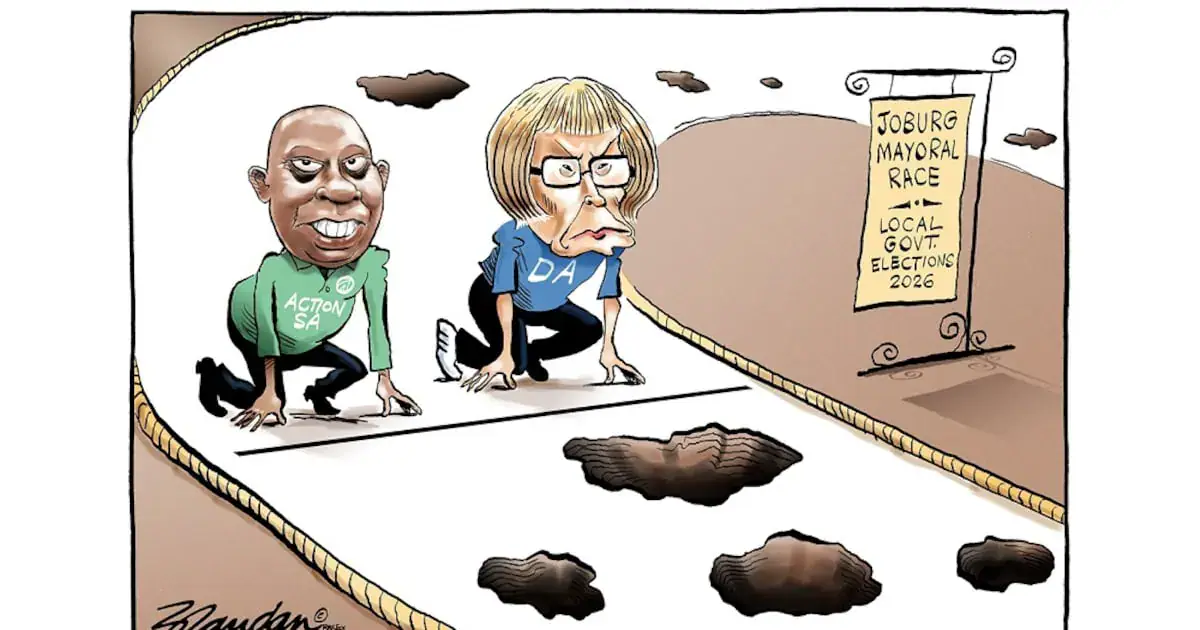
One of the most significant challenges facing South Africa's politicians is the need to form coalitions in municipalities where no single party has a majority. In Johannesburg, for example, Helen Zille's DA and Herman Mashaba's ActionSA are seeking to form an alliance, but their complicated history is making negotiations difficult. Mashaba has offered to step aside from the mayoral race if Zille does the same and the DA nominates another candidate. This has created tension within the DA, with some members opposing the move. The party's leadership will have to navigate these complex relationships to form a viable coalition.
The ANC is also facing significant challenges in forming coalitions, particularly in provinces where it has historically enjoyed strong support. In KwaZulu-Natal, for example, the party is seeking to form an alliance with the EFF's Julius Malema, who has his own demands and ambitions. The ANC will have to navigate these complex relationships to form a viable coalition. The party's leadership, including President Cyril Ramaphosa and Fikile Mbalula, will have to play a key role in negotiations. The outcome of these negotiations will have a significant impact on the country's governance and service delivery.
The formation of coalitions has significant implications for service delivery in municipalities. Residents are demanding more from their politicians, including reliable water, functioning roads, and effective waste management. The success of these coalitions will depend on their ability to work together and deliver on these demands. If they fail, it could lead to further instability and dissatisfaction among voters. The country's politicians will have to prioritize the needs of their constituents and work towards finding solutions to the country's governance challenges.
The role of other parties, such as Jacob Zuma's MK Party, will also be crucial in determining the outcome of coalition negotiations. The party has significant influence in KwaZulu-Natal and could play a key role in forming a coalition. However, its relationship with the ANC and other parties will have to be carefully managed to avoid further conflict. The party's leadership will have to navigate these complex relationships to achieve its goals.
Ultimately, the success of these coalitions will depend on their ability to work together and deliver on the needs of their constituents. If they fail, it could lead to further instability and dissatisfaction among voters. The country's politicians will have to prioritize the needs of their constituents and work towards finding solutions to the country's governance challenges. The formation of coalitions is a necessary step towards achieving this goal, but it will require careful management and a commitment to service delivery.
Key points
- The ANC's decline has created an opportunity for other parties to gain traction and form alliances.
- The formation of coalitions has significant implications for service delivery in municipalities.
- The success of these coalitions will depend on their ability to work together and deliver on the needs of their constituents.
Reporting sources
- LAST WORD | What kind of post-election wedding are we in for? · The Sunday Times