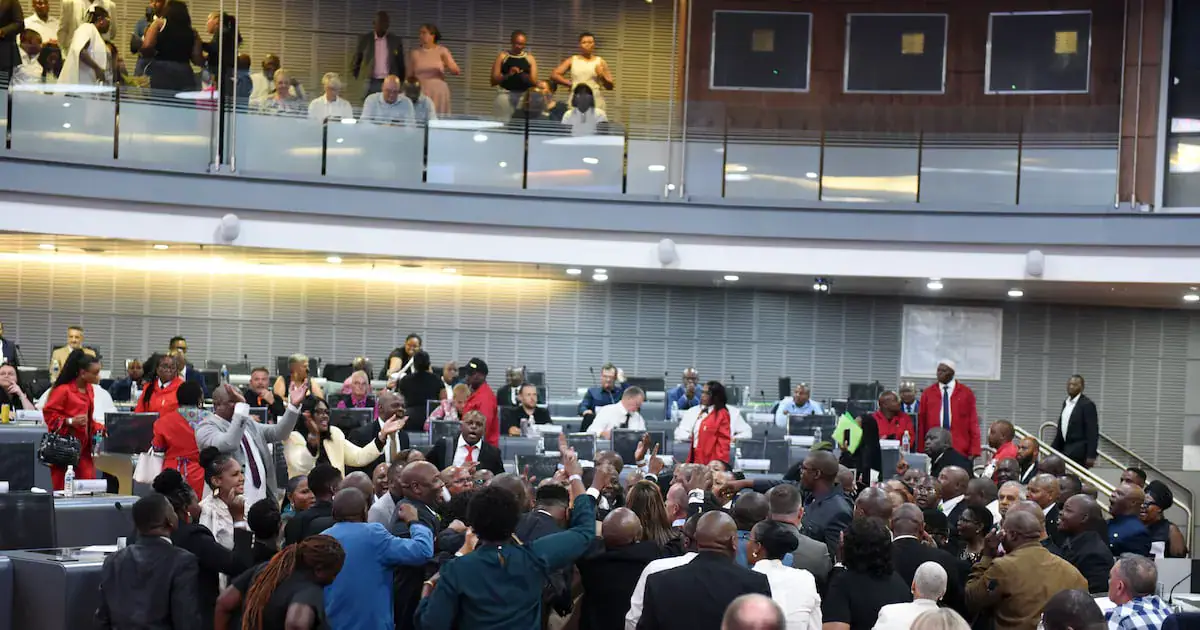
Coalition negotiations are at a critical juncture in South Africa, with political parties having little time to decide on governance in municipalities where no party achieved an outright win. The Democratic Alliance (DA) has re-elected Geordin Hill-Lewis as mayor of Cape Town, while the African National Congress (ANC) secured the mayoral office in Buffalo City with support from the Economic Freedom Fighters (EFF). However, major metros like Johannesburg, Tshwane, Ekurhuleni, and eThekwini remain in a deadlock.
The relationship between ActionSA and the DA has significantly deteriorated, making an agreement between them increasingly unlikely. This development leaves two possible coalition scenarios. One involves a coalition between the ANC, ActionSA, the MK Party, the EFF, and smaller parties, potentially gaining control of many councils nationwide. The other, less likely option, is a coalition between the ANC and DA, including other government of national unity (GNU) partners.
According to reports, the ANC's national executive committee has decided against a working relationship with the DA at the local government level. However, it remains to be seen if this stance will change. A concerning reality has emerged from the negotiations, with discussions focusing on securing positions rather than improving municipal services for residents. The needs of residents should be prioritized, with a focus on addressing service delivery challenges such as unreliable water and electricity supplies, deteriorating roads, and crumbling infrastructure.
Residents across the country are grappling with these challenges, and their primary concern is not who holds the mayoral office but whether their basic needs are being met. Municipalities face well-known challenges, including under-pressure revenue collection, poor administration, weak financial management, and corruption. These issues should dominate coalition negotiations, but politicians often prioritize personal ambitions and party rivalries.
The distribution of offices frequently takes precedence over residents' needs, with some politicians entering coalition talks primarily to secure positions of influence and maintain access to public resources. Voters have made it clear that performance matters, and what councils need now are leaders committed to serving residents rather than advancing narrow party interests.
The GNU has demonstrated that parties with competing agendas can find common ground when necessary. This spirit must be replicated in hung municipalities, with parties setting aside their differences to prioritize community needs. By doing so, they can address the challenges confronting municipalities and improve service delivery for residents.
Ultimately, the coalition negotiations will determine the governance structure of many municipalities in South Africa. The outcome will have a significant impact on the lives of residents, who expect their basic needs to be met. It remains to be seen whether political parties will prioritize their interests or work together to address the challenges facing municipalities and improve service delivery.
Key points
- Coalition negotiations in South Africa have reached a critical point, with political parties needing to prioritize community needs over party interests.
- The relationship between ActionSA and the DA has deteriorated, making a coalition agreement between them unlikely.
- Residents are more concerned about service delivery challenges than who holds the mayoral office, and parties should focus on addressing these issues in coalition negotiations.
Reporting sources
- SOWETAN | Political parties must find common ground · The Sowetan