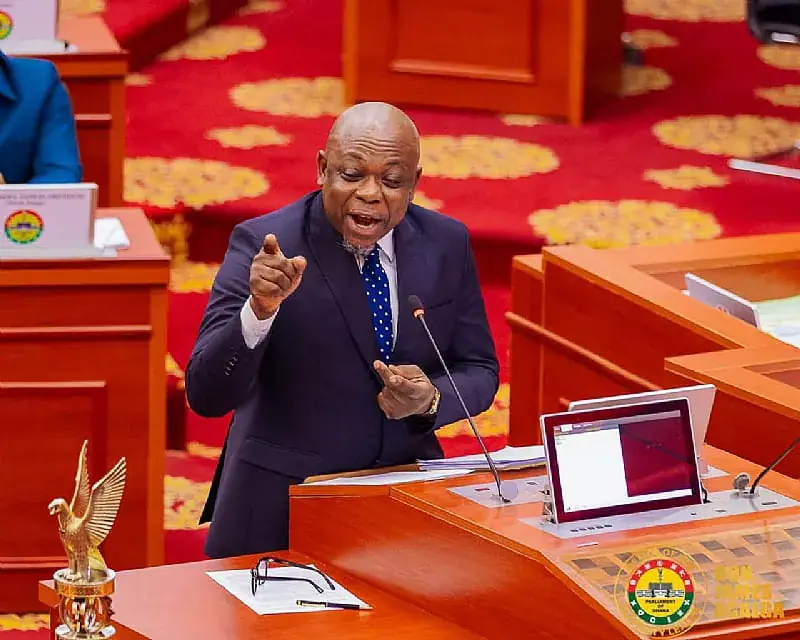
Ghana's Majority Leader James Agalga has strongly criticized the New Patriotic Party (NPP) over its handling of the narcotics trade, accusing the previous administration of creating conditions that facilitated cocaine smuggling into Ghana. On Thursday, November 26, 2026, during parliamentary proceedings, Agalga alleged that the NPP government deliberately removed the Narcotics Control Commission from the country's ports of entry, weakening efforts to monitor narcotic substances.
Agalga's comments were in response to accusations by the Minority that the current government was responsible for cocaine consignments brought into Ghana and alleged attempts to export the drugs from the country. He dismissed these claims, warning the NPP against challenging the government on the narcotics issue, given its questionable record on the matter. Agalga stated that the NPP's record on the issue was questionable and that it was in no position to accuse the current government of mishandling the fight against drug trafficking.
The exchanges in Parliament come at a time when Ghana is dealing with investigations and court cases involving major cocaine consignments linked to the country. In September 2026, French customs officials intercepted nearly 3.9 tonnes of cocaine concealed in a container carrying plastic waste that had arrived from Ghana at the port of Dunkirk. The shipment, estimated to have a street value of approximately €225 million, was reportedly partly destined for Antwerp in Belgium.
The seizure triggered investigations and prosecutions in Ghana, with 4 Ghanaians remanded by an Accra High Court over their alleged involvement in exporting the consignment. Another 6 people were also arraigned before the Kwabenya Circuit Court in connection with the shipment. The accused persons face charges including conspiracy to export narcotic drugs, unlawful exportation and abetment of crime.
In a separate incident, authorities in Lebanon seized 46.7 kilogrammes of cocaine at the Rafic Hariri International Airport in Beirut on October 31, 2026. The drugs were reportedly found in the possession of a Syrian national who had travelled from Accra. Following the seizure, the Narcotics Control Commission arrested 3 foreign nationals — a Syrian, a Tunisian and a Lebanese — in Ghana on November 3 as part of investigations into the suspected international drug trafficking operation.
Agalga's comments reflect a deeper debate about the handling of the narcotics trade in Ghana. The Majority Leader's allegations against the NPP highlight the complexities of addressing the issue, which involves not only law enforcement but also international cooperation and effective governance. The current government's efforts to tackle the problem are being closely watched, both domestically and internationally.
The NPP's response to Agalga's comments remains unclear, but the debate is likely to continue in the coming days. As Ghana grapples with the challenges of the narcotics trade, the effectiveness of its strategies and the accountability of its leaders will be under scrutiny. The country's experience in addressing this issue may offer insights for other nations facing similar challenges.
Key points
- The NPP removed the Narcotics Control Commission from Ghana's ports of entry, creating opportunities for traffickers to operate.
- The current government is dealing with investigations and court cases involving major cocaine consignments linked to Ghana.
- Agalga warned the NPP against challenging the government on the narcotics issue, citing its questionable record on the matter.