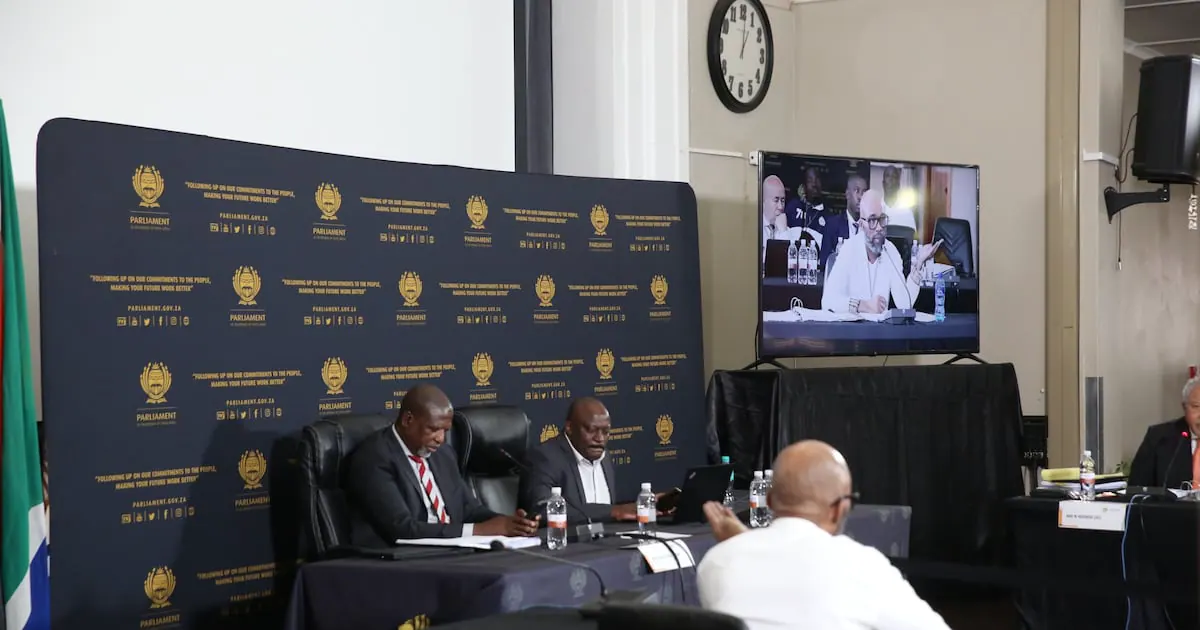
A year after commencing public hearings, the ad hoc committee investigating allegations of corruption and political interference in the criminal justice system has concluded its detailed draft report. The committee met virtually to finalise key findings and recommendations gathered from witness testimony. This inquiry was established following an explosive media briefing by KwaZulu-Natal police commissioner Lt-Gen Nhlanhla Mkhwanazi, who made serious allegations against high-ranking law enforcement officials.
Public hearings for the inquiry began on October 7 last year, with Mkhwanazi appearing as the first witness to testify. The committee highlighted that navigating the nearly 800-page report was not easy. The process involved multiple timeline extensions, intense inter-party clashes, and heated debates over contentious issues. These challenges did not deter the committee from working towards finalising the draft report.
The draft report will be sent to implicated individuals for their right to reply next week. They will have three weeks to respond before the final version is formally submitted to the National Assembly. Committee chairperson Soviet Lekganyane clarified that while the committee has made findings and recommended further investigations into some individuals, it exercised restraint where evidence was lacking.
Lekganyane emphasised the committee's cautious approach in making recommendations. “Where we don’t have reasonable findings, we cannot recommend that a person be investigated or go so far as to question their suitability to occupy a particular office,” Lekganyane said. He thanked members for their dedication in guiding the proceedings to completion and acknowledged the challenges faced during the process.
Committee members expressed their gratitude to the chairperson and the South African public for following the proceedings throughout the journey. DA MP Damien Klopper hoped that the report would make a difference in the lives of South Africans. He urged the seventh administration to take its work seriously and address the concerns of South Africans.
The committee is working towards meeting its deadline of October 30 to submit the final report to the National Assembly. Lekganyane reflected on the committee's journey, stating, “This has been a marathon. Where we have stumbled, let’s dust ourselves off and move forward. We keep learning, there are things we will get right and things we will get wrong.”
The final report's submission to the National Assembly marks a crucial step in addressing allegations of corruption and political interference in the criminal justice system. The committee's efforts aim to promote accountability and transparency within law enforcement. Key stakeholders will review the report's findings and recommendations, which may lead to further investigations and actions.
Key points
- The ad hoc committee's draft report is based on nearly 800 pages of findings and recommendations gathered from witness testimony.
- Implicated individuals will have three weeks to respond to the draft report before its final submission to the National Assembly.
- The committee aims to submit the final report by October 30, marking a crucial step in addressing allegations of corruption and political interference.