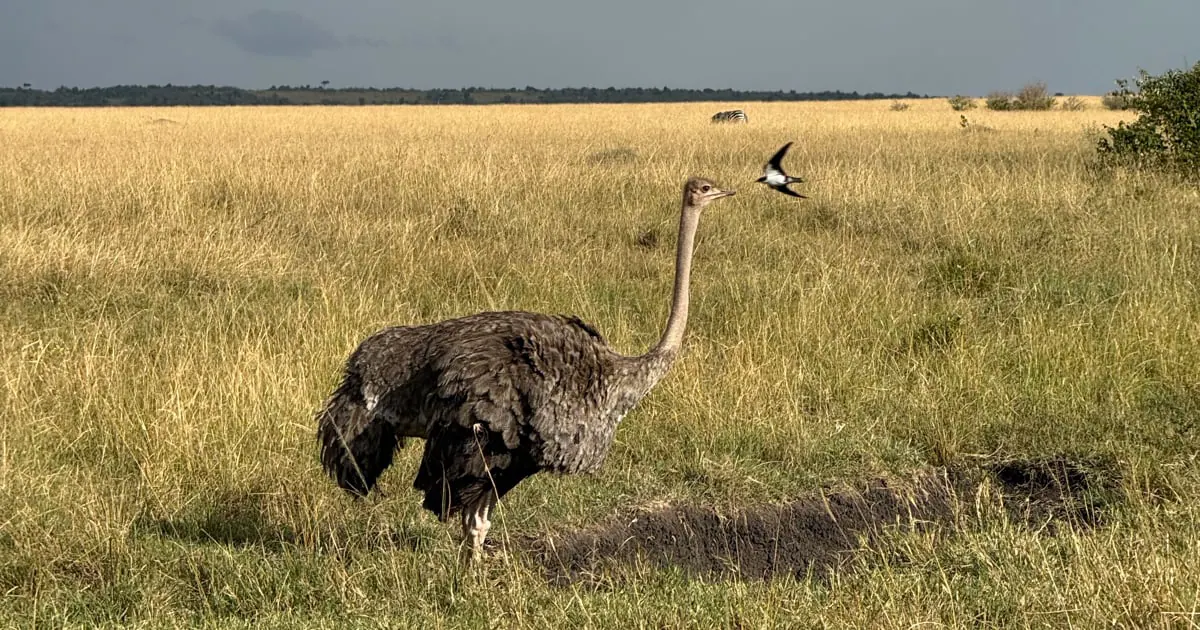
An investigation by World Animal Protection and Collective Fashion Justice has found that ostrich farms in South Africa use mechanical pluckers to remove feathers from living birds, which are then supplied to major luxury fashion brands. The investigation, documented in a report entitled "Blood Feathers", examined conditions on commercial ostrich farms and at feather-processing facilities in South Africa.
The report claims that some farms cut feathers above the bloodline, which means they are still growing and supplied with blood, before pulling them from the animals' skin with pliers. This process is repeated on some birds every six months. The charity says that blood is often found in the shaft of these feathers, leading to the term "blood feathers".
According to World Animal Protection, South Africa accounts for about 75 percent of the global ostrich market, producing meat, leather, and feathers. The investigation reported seeing injured birds, including ostriches that appeared unable to stand and others with wounds from pecking at each other's eyes and feathers.
The charity says that the findings challenge claims that ostrich feathers used in fashion are simply collected during the birds' natural moult. More than 150 tonnes of ostrich feathers were exported from South Africa during the 2024-25 season, while about 150,000 ostriches were slaughtered for the feather, meat, and skin trades.
Olivia Charlton, campaign manager at World Animal Protection, said that pulling out a bird's feathers with pliers is not natural and that fashion brands need to take responsibility for their actions. She compared the treatment of ostriches to the fur trade, saying that it's the same cruelty, just with a different animal.
Emma Hakansson, founding director of Collective Fashion Justice, said that it's inconsistent for fashion brands to reject fur while embracing ostrich feathers, which also come from a slaughtering industry full of suffering. She argued that there are innovative fabric manipulation techniques and bio-materials available to create the same lightness, volume, and movement consumers admire in feathers.
The report's findings have significant implications for the fashion industry, with World Animal Protection calling for an end to the cruel and painful methods used to obtain ostrich feathers. The charity's investigation has highlighted the need for greater transparency and accountability in the ostrich feather trade, and for fashion brands to consider the welfare of the animals that supply their products.
Key points
- Ostrich farms in South Africa supply luxury brands with feathers obtained through cruel and painful methods.
- The investigation challenges claims that ostrich feathers used in fashion are simply collected during the birds' natural moult.
- Fashion brands are urged to take responsibility for their actions and consider the welfare of the animals that supply their products.