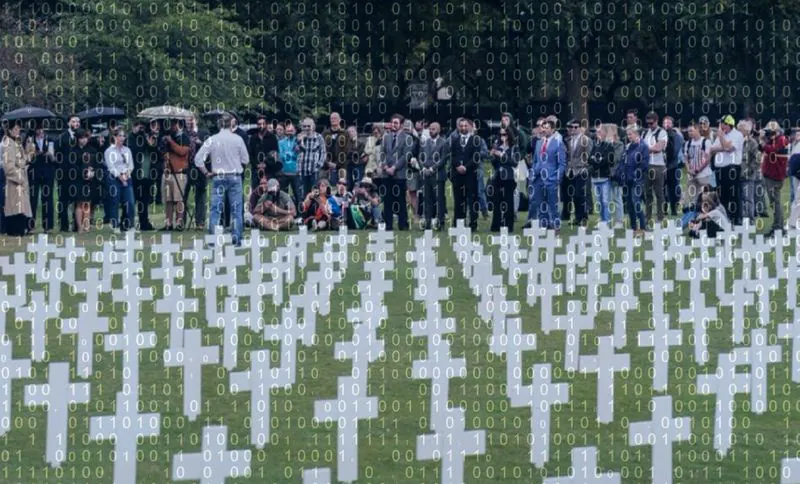
In the five weeks leading up to the 4 November local elections, online discussions in South Africa have been marked by a surge in Afrikaner rural safety activism. A gathering at the White Cross Project in Washington, DC, during the weekend of 25-26 September, briefly pushed anti-immigrant campaigners off the top of the country's political conversations. This activism, led by figures such as Ernst Roets, has seen significant engagement on social media platforms, with Roets's Lex Libertas organisation and AfriForum generating almost a quarter of all posts on X.
The Afrikaner rights and rural security activists, which include AfriForum and its leader Kallie Kriel, made up 13% of accounts on X but generated 24% of all posts. However, this surge appears to be event-driven, and it remains to be seen whether conversations can be sustained at these levels going into the elections. The community's mean "buzzer score", a measure of repeated, coordinated boosting, was among the lowest in the network, suggesting passionate activism rather than manufactured reach.
In contrast, the anti-immigrant community, centred on Jacinta Ngobese of March and March, presented a different profile. It produced 15% of posts from 8% of accounts, and its average buzzer score was three times that of the Afrikaner activist community. This community has been known to use sustained artificial amplification, with a cohort of about 1,460 accounts repeatedly amplifying the same posts throughout the week.
The EFF supporters' community came third on X, with 14% of posts from 7% of accounts. This is in line with the party's share in earlier snapshots, but now behind both the Afrikaner activist and anti-immigrant communities. A cohort of about 1,330 accounts drove #VoteEFF2026 and #VictoryOrDeath ahead of the party's Eastern Cape manifesto rallies.
Inside the Government of National Unity, partners spent the week campaigning against one another. The ANC and GNU community was less a forum for the government and more a criticism of it, with more than half its posts directed at GNU members rather than amplifying content from such members. The ANC's #VoteANC2026 campaign trail ran alongside appeals to reinstate police commissioner Fannie Masemola and renewed PPE-corruption anger.
The DA and other GNU partners also engaged in campaigning, with DA leader Geordin Hill-Lewis casting his party as the only one able to stop an EFF "takeover" of the metros. Helen Zille's Johannesburg mayoral campaign contrasted "billions spent" by the DA with "billions looted" by the ANC. The Patriotic Alliance's Bloemfontein manifesto launch saw its leader, Gayton McKenzie, promise that the DA would hold no power in Mangaung or Cape Town.
The use of paid influencers to promote public entities and parties has also raised concerns. A pool of about 30 suspected paid influencers promoted five public entities, including Gauteng's housing department and Prasa, with over 700 posts in tight bursts of near-identical copy. However, none of these posts disclosed the promotion as advertising, unlike posts made for Samsung and FNB.
Key points
- Afrikaner rural safety activism has surged in online discussions, led by figures such as Ernst Roets.
- Infighting within the Government of National Unity has dominated online political conversations.
- The use of paid influencers to promote public entities and parties has raised concerns about transparency.