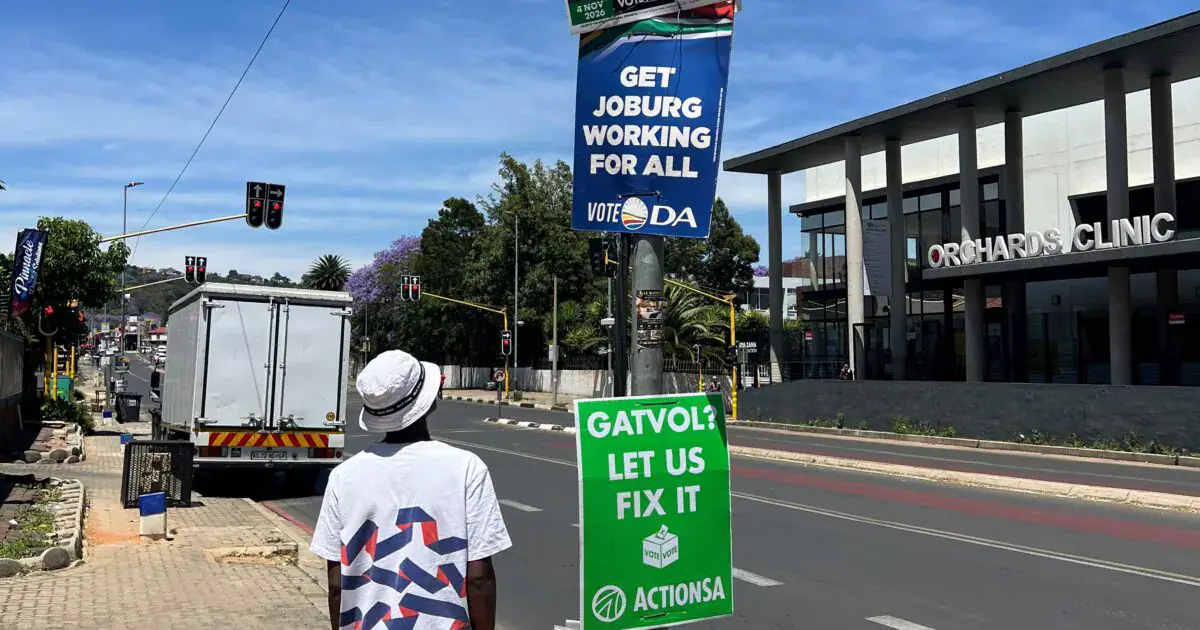
As South Africa prepares for its municipal elections, the debate over Israel and Palestine has taken center stage. Candidates from various parties have made their stances on the issue clear, sparking controversy and discussion among voters. Ashley Mama, the Johannesburg mayoral candidate for Al Jama-ah, a small Muslim party, has ruled out working with the Democratic Alliance (DA) due to its position on Israel and Palestine.
The issue has also been raised in Cape Town, where Fadiel Adams, leader of the National Coloured Congress (NCC), challenged the DA over its support for Israel during a mayoral debate. The debate highlights the complexities of the issue, with some voters prioritizing service delivery and others seeing the stance on Israel as a key factor in their voting decision. Jewish voters, in particular, are grappling with the issue, with some expressing anger over the positions taken by South African parties on Israel since October 7.
Elections analyst Wayne Sussman believes that positions on Israel and Palestine may not significantly influence voting patterns. He cites the 2024 national elections, where the ANC's support for Palestine did not seem to have a significant impact on its vote share. Sussman notes that the ANC lost its parliamentary majority despite making its support for Palestine a prominent part of its campaign.
However, some voters say their opinions on Israel have hardened their existing political allegiances. Errol Hurwitz, a Johannesburg businessman, says his criticism of the ANC's record in government has been reinforced by its position on Israel and what he sees as antisemitism. Despite this, his voting intentions have not changed. In contrast, Leanne Shulman says her voting intentions have changed since the 2021 municipal elections, as she wants a party that supports Israel and delivers on service delivery.
The debate over Israel has also raised questions about potential coalition partners after the elections. Parties contesting Johannesburg have ruled out working with certain parties over their stances on Israel and antisemitism. However, Sussman doubts that these declarations will survive coalition negotiations, citing the complexities of coalition arithmetic and the need for parties to work together.
Sussman's analysis of voting patterns in areas with substantial Jewish populations suggests continued strong support for the DA. He cites neighborhoods such as Sea Point, Glenhazel, and Linksfield, where the DA has historically performed well. However, the issue of Israel may influence some voters differently, with some prioritizing their existing party loyalty over their stance on Israel.
Ultimately, the municipal elections will depend on various factors, including service delivery, governance, and voter priorities. While the debate over Israel has added a new layer of complexity to the elections, it remains to be seen how voters will weigh this issue against other concerns. As Sussman notes, foreign policy may play a small role in coalition negotiations after the elections, and parties may need to work together despite their differences.
Key points
- The debate over Israel and Palestine has sparked controversy and discussion among voters and parties in South Africa's municipal elections.
- Some voters prioritize service delivery, while others see the stance on Israel as a key factor in their voting decision.
- The issue may reinforce existing political loyalties, but its impact on voting patterns remains uncertain.