Egypt is considering entering the floating nuclear power sector as discussions with Russia's state nuclear corporation, Rosatom, advance. The talks focus on deploying and localizing floating and small modular nuclear reactors. Rosatom's CEO, Alexey Likhachev, confirmed that Moscow and Cairo are actively discussing collaboration opportunities on floating nuclear power plants and compact land-based reactors. This potential expansion of Egypt's nuclear strategy goes beyond the land-based El-Dabaa project.
Floating nuclear power plants are compact reactor units on specially constructed vessels or offshore barges. They operate along coastlines and in remote regions, generating electricity and supplying thermal energy and large-scale seawater desalination. This technology has gained interest worldwide due to increasing global baseload power demand driven by industrial electrification, desalination projects, and artificial intelligence data centers. Floating reactors provide weather-independent, zero-carbon energy, complementing renewable power grids.
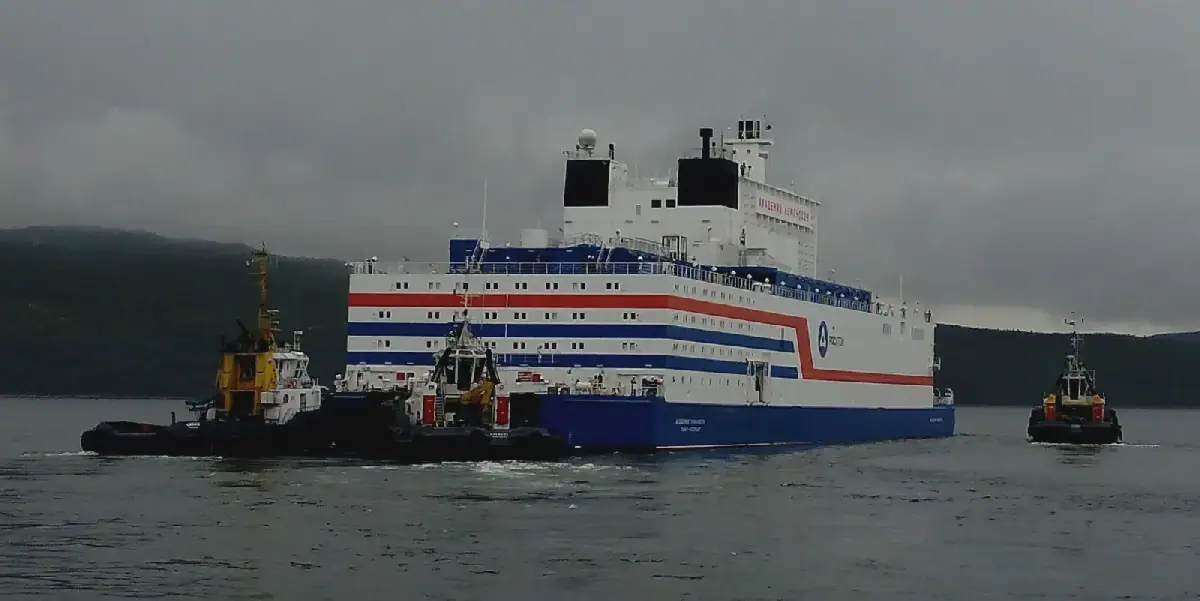
Russia currently leads the commercial deployment of floating nuclear technology with Rosatom's Akademik Lomonosov, the world's first operational floating nuclear power plant. The vessel generates up to 70 megawatts of electricity, powering remote communities in Russia's Arctic region. Rosatom is developing next-generation floating units with the advanced RITM-200 reactor series, each outputting roughly 55 megawatts with higher thermodynamic efficiency and extended operational lifespans.
The potential deployment of RITM-200-based floating units in Egypt would supply reliable power and desalinated water to coastal municipalities, industrial corridors, and major infrastructure projects. This would reinforce national energy security and support carbon reduction goals. Egypt's coastline along the Mediterranean and Red Sea offers strategic locations for such deployments.
Egypt's flagship $30 billion El-Dabaa plant remains the central nuclear undertaking, but discussions with Rosatom are increasingly focusing on floating units. The El-Dabaa project is a significant step in Egypt's nuclear energy program, but floating reactors could provide additional benefits in terms of flexibility and reliability.
The collaboration with Rosatom could mark a significant expansion of Egypt's nuclear strategy. With the global demand for baseload power increasing, Egypt's exploration of floating nuclear power plants could provide a reliable source of energy. The technology also offers opportunities for desalination and industrial applications.
Egypt's potential entry into the floating nuclear power sector is part of a larger trend towards exploring alternative energy sources. As the country seeks to enhance its energy security and reduce carbon emissions, floating nuclear power plants could play a role in its energy mix. The discussions with Rosatom are ongoing, with further developments expected in the coming years.
Key points
- Egypt is in talks with Rosatom to deploy floating nuclear reactors.
- Floating nuclear power plants offer a reliable source of energy and can provide desalination and industrial applications.
- The collaboration with Rosatom could mark a significant expansion of Egypt's nuclear strategy.