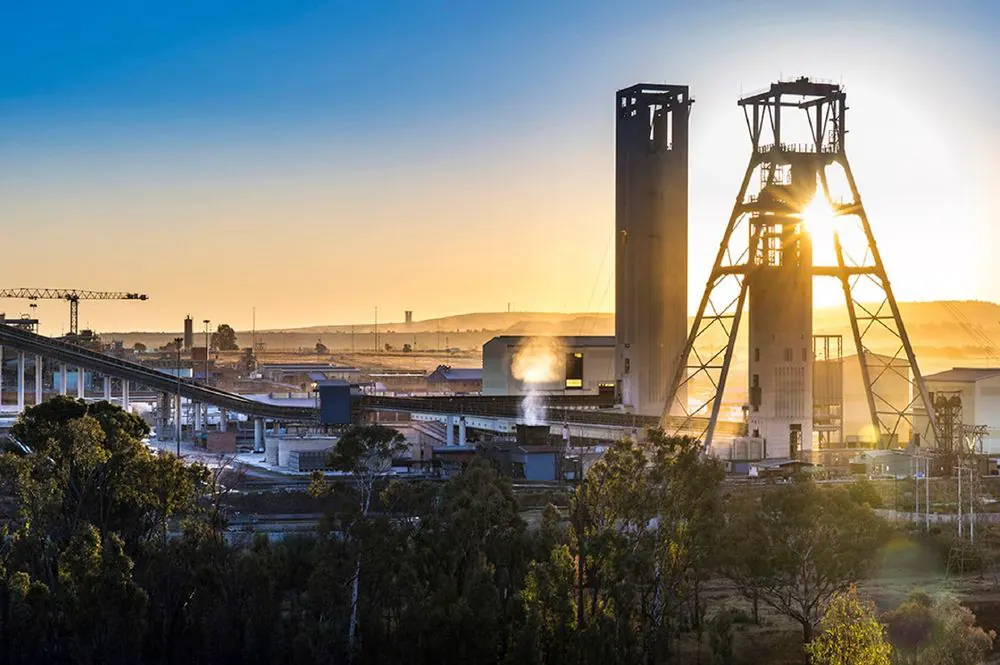
The South African mining industry experienced a significant increase in fatalities in 2026, despite making long-term progress in reducing mine deaths and injuries. According to data, 44 mineworkers died between January 1 and August 31, 2026, compared to 32 during the same period in 2025, representing a 37.5% increase. This regression is concerning, especially given the industry's commitment to a target of zero fatalities.
The mining industry had previously recorded its safest year in 2025, with 41 fatalities, but the 2026 results have already exceeded that number. The increase in fatalities is concentrated in certain sectors, with platinum recording 17 fatalities by August 2026, up from 11 in all of 2025. Gold recorded 15 fatalities, compared to 21 for the full year 2025, while coal's two fatalities equaled its 2025 total.
Despite the increase in fatalities, reportable injuries declined from 1,370 in January-August 2025 to 1,180 in the corresponding 2026 period, a reduction of 13.9%. However, this falls short of the annual 20% milestone. The simultaneous rise in fatalities and fall in injuries suggests that the industry is reducing the frequency of accidents more successfully than it is controlling their potential severity.
The industry's performance differs considerably by accident classification. Machinery injuries declined by 21.1% and conveyance injuries by 35.3%, exceeding the 20% reduction target. Falls of ground improved by 15.2%, transportation and mining by 14.0%, and general accidents by 13.8%. Notably, falls-of-ground fatalities decreased from 12 to five, indicating that focused interventions can reduce historically persistent catastrophic risks.
However, the principal weakness lies in general accidents, which accounted for 61% of reportable injuries, while associated fatalities rose from seven to 21. This concentration implies that established controls may be working more effectively for technically defined hazards, such as machinery and conveyance, than for the diverse behavioural, organisational and situational conditions aggregated under "general" accidents.
The broader occupational health evidence also varies by commodity. In dust exposure monitoring, platinum achieved the 2034 milestone, with 95.1% of results below the prescribed threshold in 2026. Coal improved sharply from 89.2% in 2025 to 93.7% in 2026, approaching the 95% commitment, whereas crystalline silica deteriorated slightly from 91.6 to 91.0%.
The industry's long-term trajectory shows that fatalities declined from 615 in 1993 to 41 in 2025, approximately 93%, making 2025 the lowest annual total on record. Reportable injuries fell from 9,251 to 1,877, almost 80%. The industry's commitment to Zero Harm requires integrated prevention encompassing traumatic injury, chronic exposure, communicable disease and worker wellbeing.
Key points
- The South African mining industry experienced a 37.5% increase in fatalities in 2026, despite making long-term progress in reducing mine deaths and injuries.
- Reportable injuries declined by 13.9% in 2026, but the industry is not meeting its 20% injury-reduction target.
- The industry's performance varies considerably by accident classification and commodity, highlighting the need for targeted interventions.