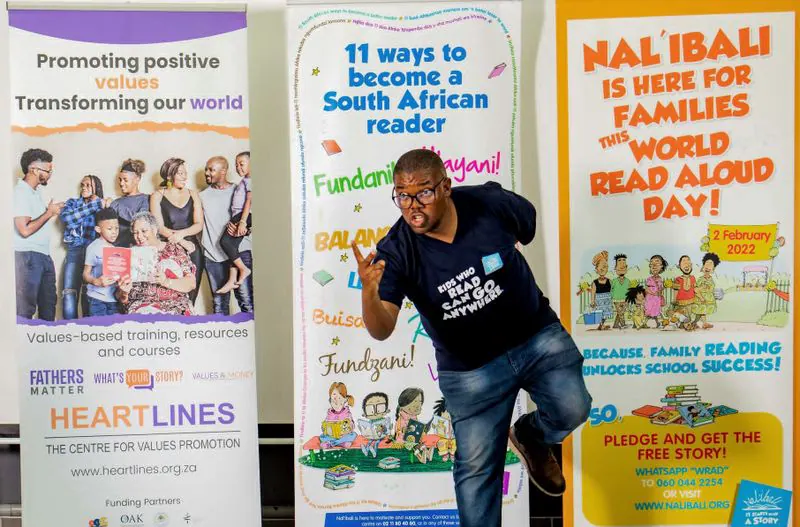
The Nal'ibali Men's Literacy Imbizo is a program aimed at encouraging men to take an active role in their children's education by teaching them how to foster a love for reading and storytelling. The initiative, which was established in 2022, has been running workshops across South Africa, including in the Eastern Cape and Western Cape. Through these workshops, men are taught how to read aloud and tell stories to children, and are encouraged to reflect on their own early childhood memories of reading.
Madoda Ndlakuse, an author and community development coordinator for Nal'ibali in the Eastern Cape, was a driving force behind the establishment of the Men's Literacy Imbizo in Kariega, Eastern Cape. He notes that men are often not playing a significant role in their children's education, and that this program aims to change that. Ndlakuse believes that children's education should not only be seen as the responsibility of mothers, teachers, and the Department of Basic Education, but also part of the duty of fathers.
The program has been well-received by attendees, including Ntsika Scott, a librarian with Nelson Mandela Bay Libraries in the Eastern Cape. Scott notes that the workshop was better than he expected, and that it focused on the core function of literacy - getting children to read and making sure they have access to books and stories. He also emphasizes the importance of giving children male role models who demonstrate a love of reading and storytelling.
Another workshop attendee, Thando Mkoyi, got involved in the imbizo because of his work as a board member of Dlala Tata, a fatherhood and early childhood development organization in Khayelitsha, Western Cape. Mkoyi notes that there is a disparity between children from lower-income and more financially stable families when it comes to exposure to words and language development, and that the program provides useful resources for organizations working in this area.
The Men's Literacy Imbizo is one of the strategies being employed to tackle South Africa's literacy crisis. According to the Progress in International Reading Literacy Study, 81% of South Africa's Grade 4 pupils struggled to read for meaning in 2023. Ndlakuse believes that the program has the potential to make a significant impact, and that men taking leadership and ownership of their children's literacy is a key part of this.
Ndlakuse's own experience with his eldest daughter, who wrote a book at the age of six and was shortlisted in the children's category of the South African Literary Awards, demonstrates the power of storytelling and parental involvement in education. He notes that education can take place in families, and that the program aims to empower families to use storytelling and reading as a way to educate their children.
The Nal'ibali Men's Literacy Imbizo has been successful in encouraging men to take an active role in their children's education, and has provided them with the skills and tools to build a culture of reading for enjoyment in their communities. The program aims to continue running workshops across South Africa, and to make a lasting impact on the country's literacy crisis.
Key points
- The Nal'ibali Men's Literacy Imbizo is a program aimed at encouraging men to take an active role in their children's education by teaching them how to foster a love for reading and storytelling.
- The program has been well-received by attendees, including men from the Eastern Cape and Western Cape.
- The Men's Literacy Imbizo is one of the strategies being employed to tackle South Africa's literacy crisis, which affects 81% of Grade 4 pupils.