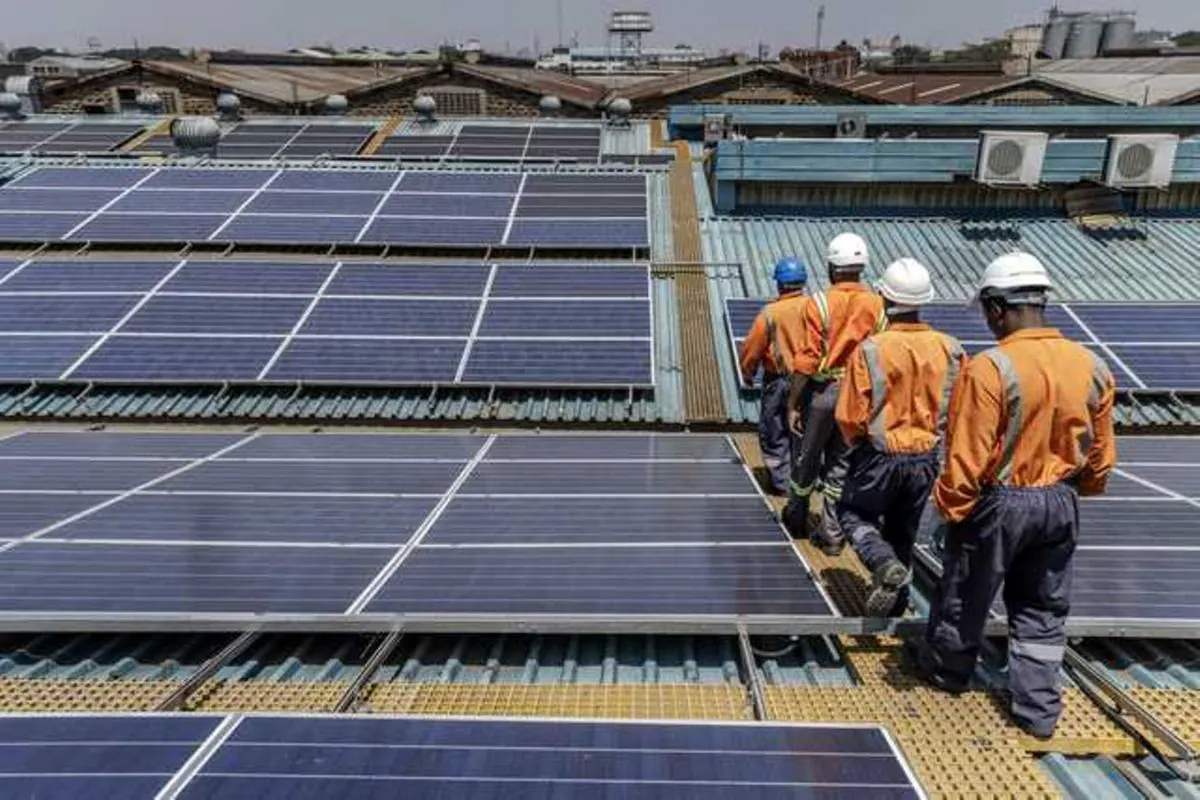
The Kenyan government has introduced fines for homes and businesses found to be illegally dumping excess electricity from their solar plants into the national grid. This move aims to deter prosumers, or Kenya Power customers with back-up power plants, from infiltrating Kenya's electricity distribution network, which is constrained and highly vulnerable to shocks. The changes to the law were gazetted on September 18, 2026.
The Net-Metering Regulations of 2024 allow prosumers with power plants whose capacity does not exceed one Megawatt (MW) to sign agreements with Kenya Power. These agreements enable consumers to supply electricity to the grid during times of overproduction and use the credited energy during other times. The agreements are valid for a renewable term of five years. The regulations also specify the maximum demand and installed capacity for commercial, industrial, and domestic consumers.
To enter into a net-metering agreement with Kenya Power, consumers must provide several details, including their Kenya Revenue Authority Personal Identification Number (PIN), Kenya Power account number, peak demand, generation capacity, and technology used. They must also submit a feasibility study report with demand forecasts and historical load profiles, as well as a title deed for the land where the installation is located.
The billing process under net-metering involves a tariff charged to determine the amount of power due to the consumer, based on the approved tariff and consumption class. Consumers receive a credit for every unit of electrical energy exported to Kenya Power in a billing period, which is 50 percent of the exported unit. Any surplus credit is carried forward to the next billing period, and unused credits are forfeited at the end of the licensee's financial year.
Consumers who breach the net-metering provisions are liable to a fine of not less than Sh100,000. Offences include connecting a net metering system to Kenya Power's network without an agreement, and alterations to net metering systems without prior approval. The dumping surcharge was introduced to ward off consumers keen to illegally feed excess power from solar to the national grid.
The Energy and Petroleum Regulatory Authority introduced the dumping surcharge in response to the growing number of customers who illegally connect their back-up power plants to Kenya Power, risking the stability of the national grid. Kenya Power has cited this as a major challenge, as it can trigger sudden supply and demand imbalances that can collapse the grid and lead to countrywide blackouts.
The introduction of the fines and dumping surcharge aims to protect Kenya Power from spending billions of shillings to pay for renewable energy, notably solar, being fed into the grid amid a mass shift of many companies and the rich to own power generation. This move is expected to ensure the stability of the grid and prevent risks to the lives of Kenya Power technicians and engineers during routine network maintenance works.
Key points
- The Kenyan government has introduced fines for homes and businesses illegally dumping excess electricity from solar plants into the national grid.
- The Net-Metering Regulations of 2024 allow prosumers to sign agreements with Kenya Power to supply electricity to the grid during times of overproduction.
- Consumers who breach the net-metering provisions are liable to a fine of not less than Sh100,000.