The Jewish community in South Africa is reflecting on the unity that emerged in the aftermath of the 7 October attacks in Israel. Three years ago, the news of the invasion of southern Israel, families murdered, children killed, and women assaulted sent shockwaves around the world. The attacks resulted in 251 people being taken hostage into Gaza, including South African-born Aviva Siegel and Channah Peri.
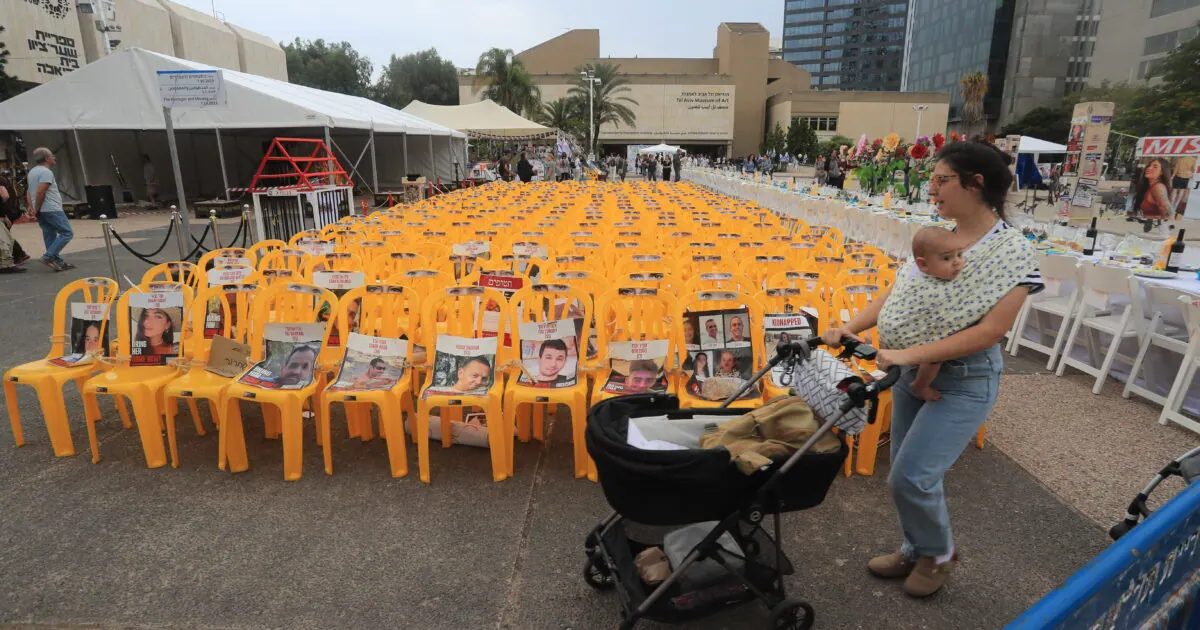
In response to the crisis, a campaign for the hostages was launched, becoming one of the most extraordinary expressions of Jewish solidarity in generations. The campaign, "Bring Them Home Now," was supported by people across Israel and the Jewish world, who put aside their differences to demand the safe return of the hostages. In Johannesburg, yellow ribbons were distributed to be tied on trees, street poles, and outside Jewish institutions, while empty places were laid at Shabbat tables and yellow Shabbas candles were packed with tehilim cards.
The Jewish National Fund (JNF) of South Africa and The Base formed an unlikely partnership to support the hostages and their families. The partnership led to a programme that brought released hostages, survivors, and their families to South Africa, providing them with a safe space to heal and recover. Or Levy, who was freed after 491 days, and Eliya Cohen, who was held for 505 days, were among those who visited South Africa, where they were welcomed by the community.
The visits had a profound impact on both the hostages and the community. Sapir Cohen, who was held hostage for 55 days, spoke about the impact of seeing television footage of thousands of Israelis gathered at Hostage Square while in captivity. Her captor had noted that when Jews stand together, they are strong. The community's support was a powerful reminder of this message, and Sapir experienced it firsthand when she visited South Africa and saw hundreds of yellow ribbons tied around trees.
The yellow ribbons, which had become a symbol of unity and solidarity, were eventually taken down on 26 January this year, when the last hostage, Ran Gvili, was returned to Israel after 843 days. While the return of the hostages is a source of relief, it also raises questions about what happens to the unity that emerged during the crisis. The authors of an opinion piece, Michael Kransdorff, Rabbi Aaron Zulberg, and Saul Jassinowsky, argue that unity does not require uniformity, but rather the recognition that despite differences, the Jewish community remains "as one people, with one heart".
The authors reflect on the lessons learned from the past three years, including the importance of vigorous disagreement and the need to recognise that disagreement cannot become contempt. They note that the Jewish community can contain different traditions and opinions, yet still work together towards a common goal. The partnership between JNF South Africa and The Base is cited as an example of this, as well as the way that religious and secular Jews came together to support one another.
As the Jewish community in South Africa looks to the future, the authors emphasise the importance of holding onto the unity that emerged during the hostage crisis. They argue that when Jews stand together, they are strong, and that this message should not be forgotten. The community's response to the crisis has shown that even in the face of trauma and adversity, unity and solidarity can emerge, and that this unity can be a powerful force for good.
Key points
- The Jewish community in South Africa is reflecting on the unity that emerged in the aftermath of the 7 October attacks in Israel.
- The campaign for the hostages, "Bring Them Home Now," was supported by people across Israel and the Jewish world.
- The unity that emerged during the crisis can be a powerful force for good, and should not be forgotten.