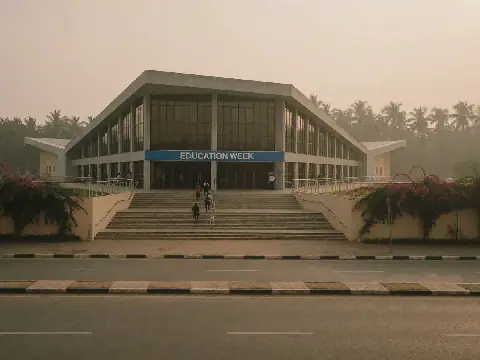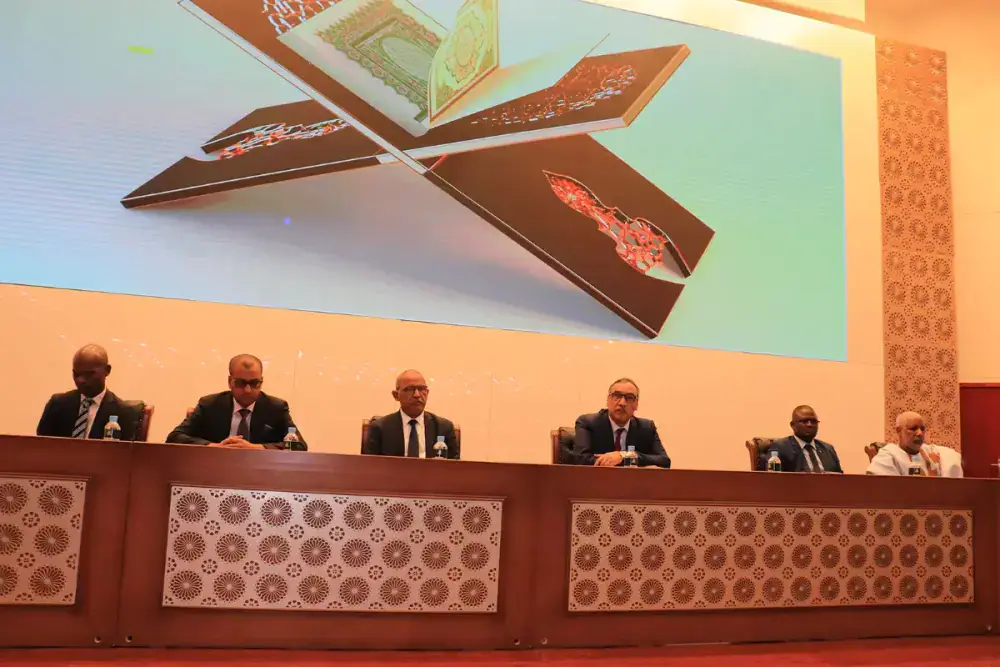
The second international colloquium on the Almoravids commenced on November 23, 2026, at the Palais des congrès Mokhtar Ould Daddah in Nouakchott, Mauritania. The event is being overseen by Minister of Higher Education and Scientific Research, Yacoub Ould Moine. This gathering of scholars is organized by the Department of History and Civilization at the Faculty of Letters and Human Sciences. It has brought together 36 researchers and academics from Mauritania and other Maghreb countries.
The colloquium aims to deepen research into the historical, intellectual, civilizational, and religious dimensions of the Almoravid movement. It also seeks to foster exchanges of academic expertise. This event takes place nearly three decades after the first edition was held in 1996. The current meeting is expected to provide a platform for scholars to share knowledge and enhance partnerships between scientific institutions with similar interests.
In his opening address, Minister Yacoub Ould Moine emphasized the significance of this colloquium for the dynamism of scientific research dedicated to the history of the Almoravids. He highlighted the role of this forum in sharing knowledge and strengthening partnerships among institutions with common research interests. The minister's remarks underscored the importance of such gatherings for advancing scholarly understanding.
Mohamed Salem Ould Boukhari, President of the University of Nouakchott, reaffirmed his institution's commitment to innovation and research. He mentioned efforts to modernize academic programs, establish scientific units and laboratories, and integrate into international research networks. Ould Boukhari stressed the need for methodological rigor, critical analysis of sources, and verification of historical accounts to open new perspectives on studies of the Almoravid state.
Mohamed Khaled Ould Bebana, Dean of the Faculty of Letters and Human Sciences, recalled the historical impact of the Almoravid state in Mauritania, the Maghreb, and Africa. He noted its role in unifying the Saharan and Sahelian regions and spreading the Maliki rite. This edition of the colloquium aims to renew Almoravid studies by adopting modern scientific approaches.
Ousmane Cherif Touré, Head of the Department of History, indicated that the colloquium offers a unique opportunity for young researchers to contribute to the study of this pivotal period. It also enables them to participate in the preservation and valorization of national and regional heritage. The event is seen as a chance for scholars to engage with the historical significance of the Almoravid era.
The opening ceremony was attended by the Governor of the Central Bank of Mauritania, high-ranking officials from the Higher Education sector, and a gathering of national and foreign academics and researchers. The presence of these dignitaries highlights the importance of the colloquium and its relevance to both national and international scholarly communities.
Key points
- The colloquium features 36 researchers from Mauritania and the Maghreb region.
- The event aims to deepen research into the Almoravid movement's historical, intellectual, and cultural impacts.
- The colloquium is a platform for scholars to share knowledge and strengthen partnerships in the field of Almoravid studies.
Reporting sources
- Ouverture du deuxième colloque international sur les Almoravides avec la participation de 36 chercheurs du Maghreb · Le Quotidien de Nouakchott