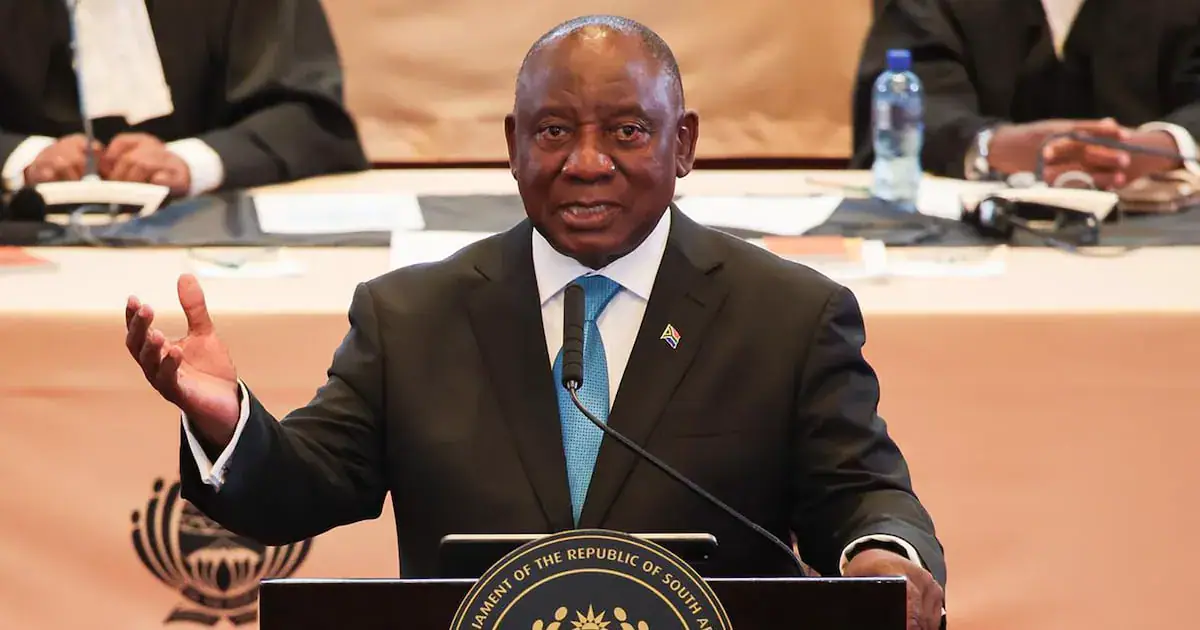
In a significant ruling, the Western Cape high court has set aside an independent panel report that found President Cyril Ramaphosa may have committed a serious violation of law in his handling of the theft of foreign currency at his Phala Phala farm. The report, chaired by former chief justice Sandile Ngcobo, was declared unlawful in its entirety due to material errors of law. This ruling marks a major blow to parliament's impeachment process, which would have resulted in consideration of Ramaphosa's removal from office being decided by politicians.
The independent panel, which included senior advocate Mahlape Sello and retired judge Thokozile Masipa, found that Ramaphosa may have breached the Prevention and Combating of Corrupt Activities Act by not reporting the theft of foreign currency to the police. The panel's report was based on the 2020 theft of about $580,000 in cash that had been concealed in a couch at Ramaphosa's game farm in Limpopo. However, the high court found that the panel applied an incorrect legal test or mechanism in considering the allegations, leading to several material errors of law.
The court's judgment, delivered by a full bench consisting of judge-president Nolwazi Mabindla-Boqwana and judges Mark Sher and Ncumisa Mayosi, stated that the panel fundamentally misconstrued its functions, the nature of the inquiry it was to conduct, and the recommendation it was required to make to the speaker. The court also found that the panel's process and conclusions were not rationally related to the object of parliament's rules or the power and duty that it was required to exercise.
As a result of the court's ruling, the parliamentary impeachment process, which was reliant on the report, has fallen away, and Ramaphosa will no longer have to appear before the much-anticipated inquiry. The opposition party African Transformation Movement (ATM), which has been seeking Ramaphosa's impeachment for the past four years, has indicated that it will urgently consult its legal team with the intention of appealing the judgment and exhausting all available constitutional and legal avenues.
The judgment also sets aside the establishment of the committee that would have probed the veracity of the charges against Ramaphosa and whether their seriousness amounted to serious misconduct. The committee, chaired by Makashule Gana, was seeking legal advice from parliament's legal service, as the judgment also set aside steps taken by the National Assembly pursuant to the report.
Legal analyst and lecturer in the law faculty at the University of the Free State, Advocate Inez Bezuidenhout, said that the Phala Phala matter judgment mainly concerned constitutional process rather than a determination of the truth or falsity of the allegations against Ramaphosa. Bezuidenhout noted that the court's reasoning provides an accessible illustration of an often-overlooked principle of law: different institutions apply different evidential thresholds because they perform different functions.
The court's ruling has significant implications for Ramaphosa's career, as it removes a major threat to his presidency. However, the opposition party's intention to appeal the judgment means that the matter may not be fully resolved yet. The judgment highlights the complexities of the impeachment process and the importance of following due process in such cases.
Key points
- The Western Cape high court has set aside an independent panel report that found President Cyril Ramaphosa may have committed a serious violation of law.
- The report was declared unlawful in its entirety due to material errors of law.
- The opposition party African Transformation Movement has indicated that it will appeal the judgment and exhaust all available constitutional and legal avenues.
Reporting sources
- # 5 Impeachment win — Ramaphosa survives biggest threat to career · The Rand Daily Mail