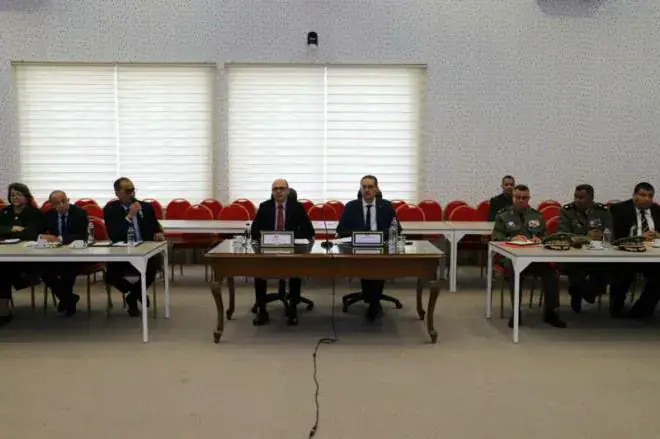
Tunisian Agriculture Minister Azzedine Ben Cheikh has urged for the swift implementation of a project aimed at developing the national feed system and boosting local production. The project, part of the 2026-2030 development plan, seeks to establish a comprehensive and sustainable feed system to support the livestock sector and enhance national food security. The minister made the call during a meeting to discuss the project's development.
The meeting, organized by the National Office for Feeds, brought together representatives from various concerned structures and administrations, including the ministries of agriculture, defense, and trade, as well as research institutions and private sector stakeholders. The focus was on presenting project components, proposed directions for feed system development, and identifying key challenges facing the sector, such as limited local production and reliance on imported raw materials.
The project's development plan includes three main axes: enhancing local production and expanding areas dedicated to feed crops, establishing an agricultural-industrial hub based on renewable energy to convert feeds and agricultural by-products into high-value products, and creating a comprehensive network for storage, distribution, and digital management of stocks. The project aims to achieve an annual production capacity of approximately 100,000 tons of feed products and establish a strategic storage capacity of around 60,000 tons.
Minister Ben Cheikh emphasized the importance of adopting a practical and integrated approach that leverages local resources and develops national production, while expanding areas dedicated to feed crops and efficiently utilizing conventional and non-conventional water resources, particularly treated wastewater. He also stressed the need for coordination and integration among various stakeholders and for providing necessary technical support to farmers.
The project's objectives include enhancing the national offer, improving supply regularity, and contributing to market regulation and price fluctuation control. To achieve these goals, the minister called for the mobilization of available resources, unified efforts from all stakeholders, and strengthened cooperation and coordination among them. This would enable the transition from the study phase to the actual implementation of the project.
Key challenges facing the sector, as discussed during the meeting, include limited and fluctuating local production due to climate change, degradation of pastures, high feed costs, and increased reliance on imported raw materials. The meeting also explored possibilities for intensifying feed crops using non-conventional water resources and highlighted the need to overcome technical, logistical, and administrative difficulties while ensuring safety and monitoring conditions.
The National Office for Feeds presented its development project, which aims to establish an integrated feed system based on three main axes. The minister concluded the meeting by emphasizing the need to launch the project's implementation as soon as possible and at maximum speed, by mobilizing available resources and uniting the efforts of all stakeholders.
Key points
- The project aims to achieve an annual production capacity of approximately 100,000 tons of feed products and establish a strategic storage capacity of around 60,000 tons.
Reporting sources
- Radio Gafsa · Radio Gafsa