The South African government has acknowledged that implementing a Constitutional Court ruling on asylum applications has placed significant pressure on its refugee-processing system. The Inter-Ministerial Committee on Migration held an urgent media briefing to address the operational fallout from the July 7, 2026, judgment in the Scalabrini Centre of Cape Town matter. The committee recognized that measures introduced to give effect to the judgment have produced unintended consequences, with increased demand at refugee reception centers exposing capacity constraints.
Justice Minister Mmamoloko Kubayi, who chairs the Inter-Ministerial Committee, stated that the government is working across departments to address the operational fallout from the judgment. The government is seeking legal advice on its options, while indicating that legislative or policy amendments could be considered if necessary. Kubayi emphasized that the judgment does not automatically confer refugee status on people entering South Africa or legalize unlawful migration. Instead, it requires that individuals claiming asylum be allowed access to the asylum determination process.
The directive introduced to comply with the ruling has contributed to an influx that the Department of Home Affairs is not equipped to handle. Kubayi said the government recognized that this development has placed significant pressure on refugee-processing facilities and administrative systems at Home Affairs. As a result, the government is now seeking to strengthen refugee-processing capacity, identity verification, and biometric screening, while accelerating asylum determinations and intensifying action against fraud and abuse.
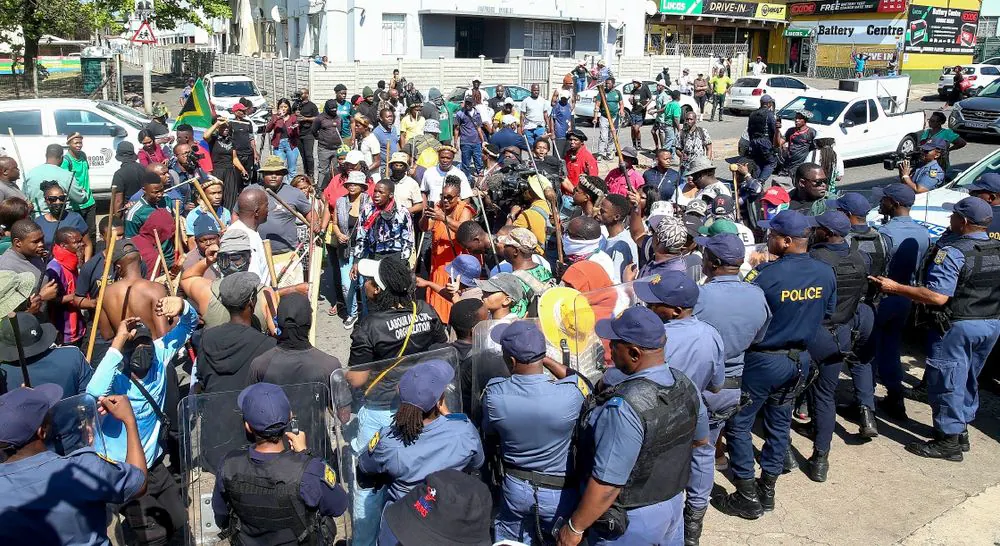
Operations at the Home Affairs Refugee Reception Centre in Durban have been severely disrupted due to a protest by the anti-illegal immigration group March and March. The group has blocked access to the facility and confronted foreign nationals. The protest has highlighted the tensions surrounding the asylum system, with the government facing criticism for its handling of the situation. Minister in the Presidency Khumbudzo Ntshavheni stated that the government is seeking legal advice on how to deal with the consequences of the judgment.
Ntshavheni emphasized that the increased demand at refugee centers allows Home Affairs to establish who is applying for asylum and who is legally entitled to remain in South Africa. She warned that if individuals do not qualify to be in the country, they will be deported. The government has opposed the case but is constitutionally obliged to implement the binding judgment. An operational directive was subsequently issued solely to give effect to the judgment.
The government’s response has been met with concerns from various stakeholders. ActionSA parliamentary chief whip Lerato Ngobeni questioned the government's ability to manage the consequences of the judgment, citing concerns about its systems, resources, and controls. African Transformation Movement leader Vuyo Zungula also raised concerns about the effect of the ruling on an already strained labor market, questioning the length of asylum determinations and the potential for rejected applicants to remain in the country for years.
The government has clarified that asylum-seeker status does not confer voting rights, with only South African citizens aged 18 and older who are registered on the voters’ roll eligible to vote. Additionally, the Employment Services Amendment Bill, now before Parliament, aims to regulate the employment of foreign nationals according to skills availability, skills transfer, quotas, exemptions, and enforcement. The bill seeks to protect South Africans by prioritizing their employment and ensuring that no one is employed with a skill that is already available.
Key points
- The South African government is seeking legal advice on its options following the unintended consequences of a Constitutional Court ruling on asylum applications.
- The ruling has placed significant pressure on the refugee-processing system, with increased demand at refugee reception centers exposing capacity constraints.
- The government is strengthening refugee-processing capacity, identity verification, and biometric screening, while accelerating asylum determinations and intensifying action against fraud and abuse.