A family of four from South Africa, who had been living in the US as refugees, were recently denied re-entry into the country after they traveled back to South Africa to seek medical care. The news sparked widespread astonishment, anger, and debate about the US refugee policy. The family had apparently decided to return to South Africa to take advantage of its excellent and affordable medical system.
The issue took a turn when International Relations and Cooperation Minister Ronald Lamola spoke out against the US refugee policy, describing it as "Apartheid 2.0". Lamola argued that only white Afrikaners were being allowed into the US as refugees, which he claimed was a form of legislated racism. However, his comments were met with criticism from former AfriForum deputy Ernst Roets, who responded by stating that South Africa was currently an apartheid state.
Both Lamola and Roets have been accused of misusing the term "apartheid" to describe the US refugee policy and the current state of South Africa. Critics argue that the US policy, while potentially racist, is not comparable to the apartheid regime that existed in South Africa. Similarly, Roets' claims that South Africa is an apartheid state have been disputed, given that he enjoys freedoms and rights that were denied to non-whites during the apartheid era.
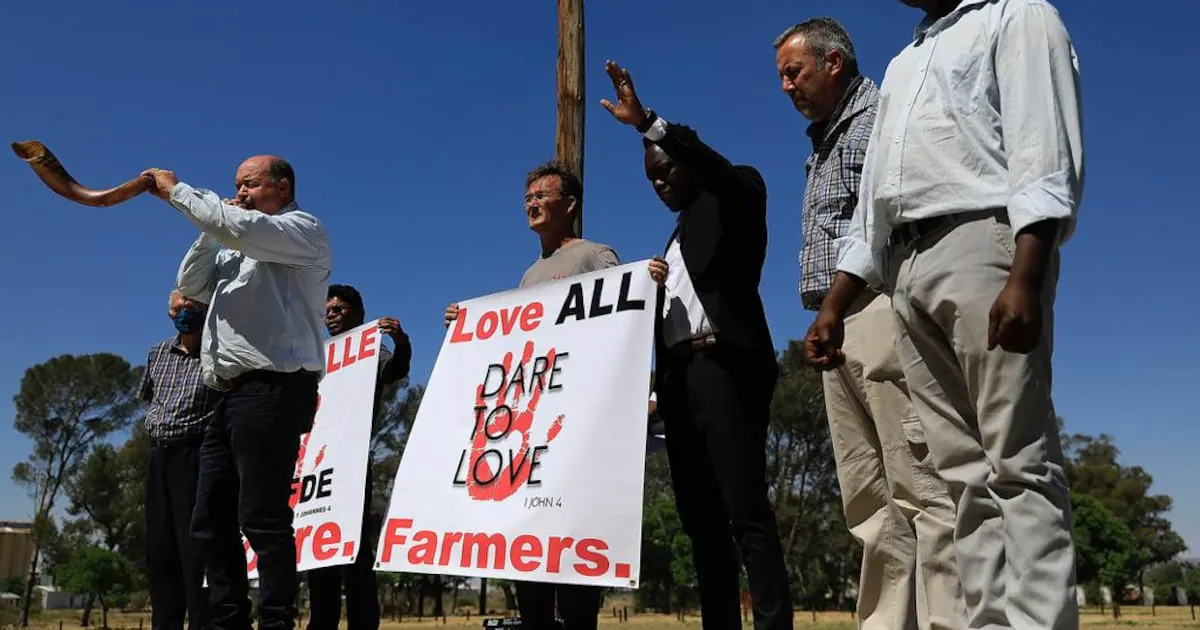
Roets has been involved in a campaign to raise awareness about farm attacks and murders in South Africa, which he claims are perpetrated by the government. He has been criticized for selective activism, as the majority of violent crime in South Africa affects black urban residents. Despite this, Roets plans to erect 3,000 white crosses on the National Mall in Washington, DC, to represent farm murder victims since 1990.
The installation of crosses is part of a larger effort to sway public opinion and influence US policy on South Africa. The event is being staged in collaboration with the New York Young Republicans Club, and is seen as an attempt to appeal to white nationalist Republicans who are concerned about the midterms. The issue has become highly politicized, with some US politicians using it to further their own agendas.
The debate surrounding the US refugee policy and South Africa's human rights record is expected to continue. While some have accused the US of racism and xenophobia, others argue that the policy is necessary to protect American interests. Meanwhile, South Africa's own human rights record remains a contentious issue, with many criticizing the government's handling of farm attacks and violent crime.
The controversy highlights the complexities of international relations and the challenges of addressing human rights issues in a polarized global environment. As the debate continues, it remains to be seen how the US and South Africa will navigate their relationship and address the concerns of all parties involved. The issue is likely to remain a contentious topic in the lead-up to the US midterms.
Key points
- The US refugee policy has been criticized for its perceived racism and selectivity.
- South Africa's human rights record, particularly with regards to farm attacks and violent crime, remains a contentious issue.
- The debate surrounding the US refugee policy and South Africa's human rights record is highly politicized and complex.