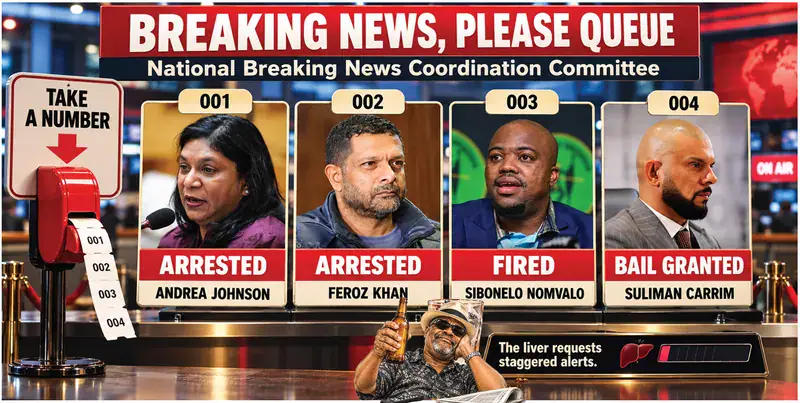
Bhekisisa Mncube, a columnist for the Daily Maverick, has expressed his frustration with the constant stream of breaking news in South Africa. He jokingly attributes his liver problems to the numerous arrests and breaking news alerts that have been flooding the media. Mncube's article, titled "Can we please now have a break from all this breaking news?", has sparked a conversation about the way news is reported and consumed in the country.
Mncube argues that the term "breaking news" has become an integral part of the accountability soundtrack in South Africa. He notes that the phrase was first recorded in an American newspaper in 1877 and has since become a staple in modern journalism. However, Mncube believes that the overuse of breaking news alerts has desensitized the public and made it difficult to distinguish between truly significant events and minor updates.
The columnist cites several recent examples of breaking news that, in his opinion, did not warrant the label. For instance, on October 28, former ANC regional treasurer Suliman Carrim was granted R100,000 bail but remained behind bars. Mncube questions whether this story truly qualified as breaking news, especially when compared to more significant events like the arrest of Miss Gorgeous, advocate Andrea Johnson, and former Crime Intelligence deputy head Feroz Khan on charges of defeating the ends of justice.
Mncube proposes the establishment of a National Breaking News Coordination Committee to regulate the release of breaking news alerts. He suggests that the committee, chaired by a retired journalist, would be responsible for scheduling breaking news alerts to avoid overwhelming the public and to give them time to process each update. The columnist believes that this approach would help to create a more balanced and sustainable news cycle.
The columnist also criticizes the way some news outlets handle breaking news. He notes that eNCA announced breaking news on its 24-hour news channel, only to reveal that a baby-faced reporter had been promoted to editor of its investigations unit. Mncube argues that this type of news does not warrant the label "breaking" and contributes to the fatigue and desensitization of the public.
Mncube's article has sparked a conversation about the role of breaking news in South African journalism. While some have defended the use of breaking news as a way to keep the public informed, others have acknowledged the potential drawbacks of overusing the label. The columnist's proposal for a National Breaking News Coordination Committee has also generated interest, with some suggesting that it could be a step towards creating a more responsible and sustainable news culture.
Ultimately, Mncube's call for a break from breaking news is a commentary on the state of journalism in South Africa. He argues that the constant stream of breaking news alerts has created a culture of sensationalism and fatigue, rather than encouraging meaningful engagement with the issues that matter. As the media landscape continues to evolve, it remains to be seen whether Mncube's proposal will gain traction or if the public will continue to crave the instant gratification of breaking news.
Key points
- The columnist proposes a National Breaking News Coordination Committee to regulate the release of breaking news alerts.