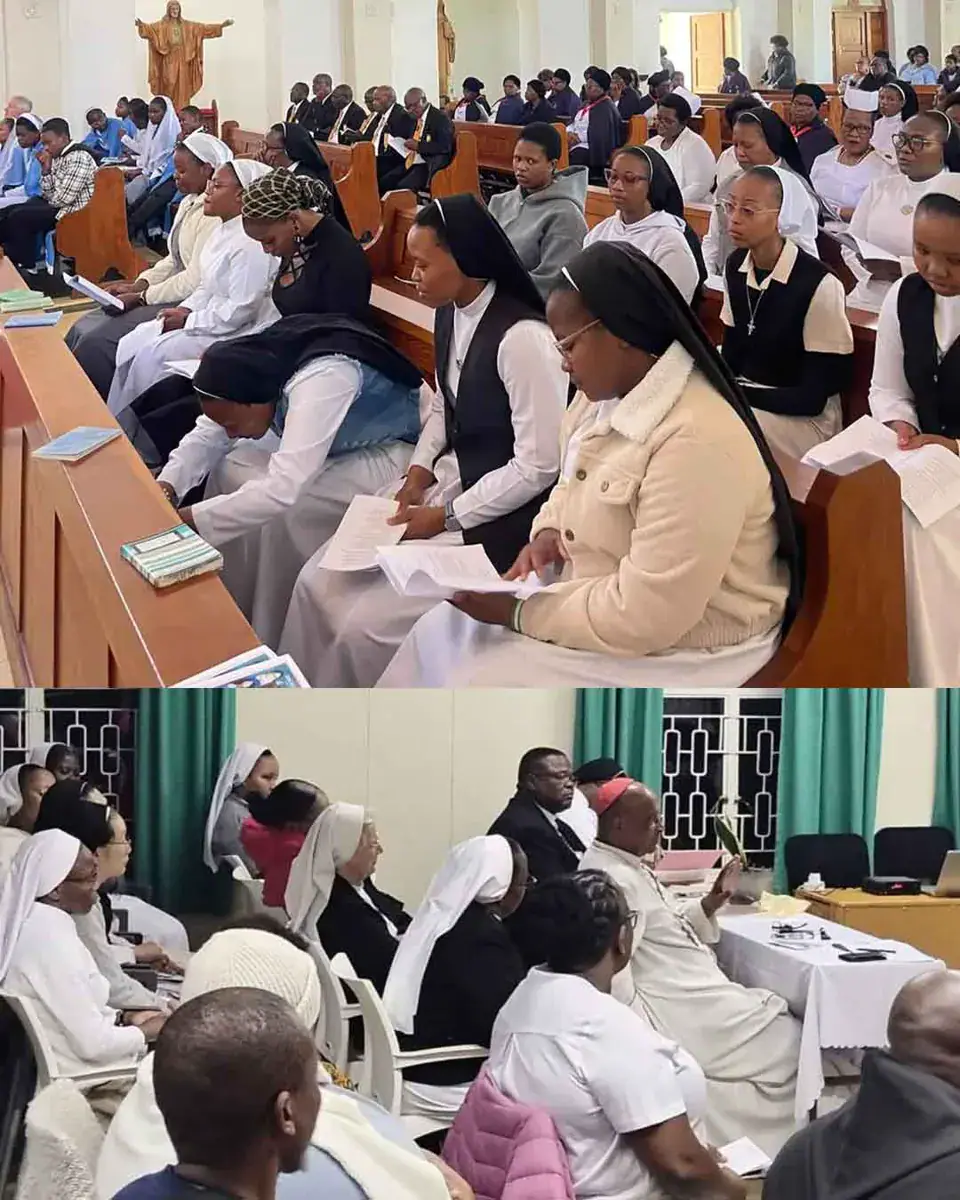
The 125th anniversary of the birth of Sr Reinolda "uMashiyane" May was commemorated at the Benedictine Inkamana Abbey near Vryheid, KwaZulu-Natal, with a gathering of clergy, religious superiors, and members of the Missionary Benedictine Sisters of Tutzing. Fr Sifiso Ntshangase addressed the audience on the theme "We are the Eucharistic Church", emphasizing the significance of the Eucharist in the life of the Church and its connection to Sr Reinolda's reported apparitions of Our Lady at Ngome.
Sr Reinolda, a German-born Benedictine Sister and pioneering midwife, was born on October 21, 1901, and died on April 1, 1981, at Inkamana Abbey. Her visions of Our Lady gave rise to the popular Ngome shrine. Fr Ntshangase explained that it is impossible to remember Sr Reinolda without considering the Eucharist, which was central to the reported apparitions. In these accounts, Mary identifies herself as the Tabernacle of the Most High, appearing as a living monstrance holding the Eucharist.
Fr Ntshangase drew a connection between Mary's role as the first tabernacle and the responsibility of Christians to carry Christ into the world. He referred to Pope Benedict XVI's description of Mary as "the first tabernacle", carrying Jesus within her as she visited her pregnant cousin Elizabeth. This encounter, recounted in Luke's Gospel, culminates when the unborn John the Baptist leaps in Elizabeth's womb at Mary's greeting.
Fr Ntshangase emphasized that being a Eucharistic Church means being aware of the needs of others. He saw this spirit in Sr Reinolda, who walked long distances to assist women in labour who could not reach a health facility. "In this way, she became a true example of what I am talking about," Fr Ntshangase said. "If we are the Eucharistic people, we cannot be indifferent to other people's needs."
The priest stressed that receiving the Eucharist must transform individuals, citing the example of the Samaritan woman in John's Gospel, who encountered Jesus and became a proclaimer of the good news. He questioned how far the Eucharist transforms homes, workplaces, and parish communities. Fr Ntshangase also shared an anecdote about a man who attended Mass with his family but did not enter the church himself, highlighting the contradiction of religious practice without inner change.
Fr Ntshangase called on the Church to recover traditional Catholic Eucharistic devotions, which he believed had been neglected. He recalled practices such as genuflection before the Blessed Sacrament, visiting the Blessed Sacrament after Mass, and weekday Mass attendance. He expressed concern about the decline in these practices and appealed to those gathered to renew their devotion to the Eucharist.
Cardinal Wilfrid Napier, apostolic administrator of the diocese of Eshowe, was among those who attended the gathering at Inkamana Abbey. The commemoration of Sr Reinolda's legacy served as a reminder of the importance of the Eucharist in the life of the Church. Fr Ntshangase concluded with an appeal to restore practices that had once shaped Catholic life, emphasizing that the Church had lost the true sense and devotion to the Eucharist when she neglected traditional devotions.
Key points
- The Eucharist is the heart of the Church, as described by the Second Vatican Council as "the source and summit" of the Church's life.
Reporting sources
- ‘We are the Eucharistic Church’: Remembering Sr Reinolda May · The Southern Cross