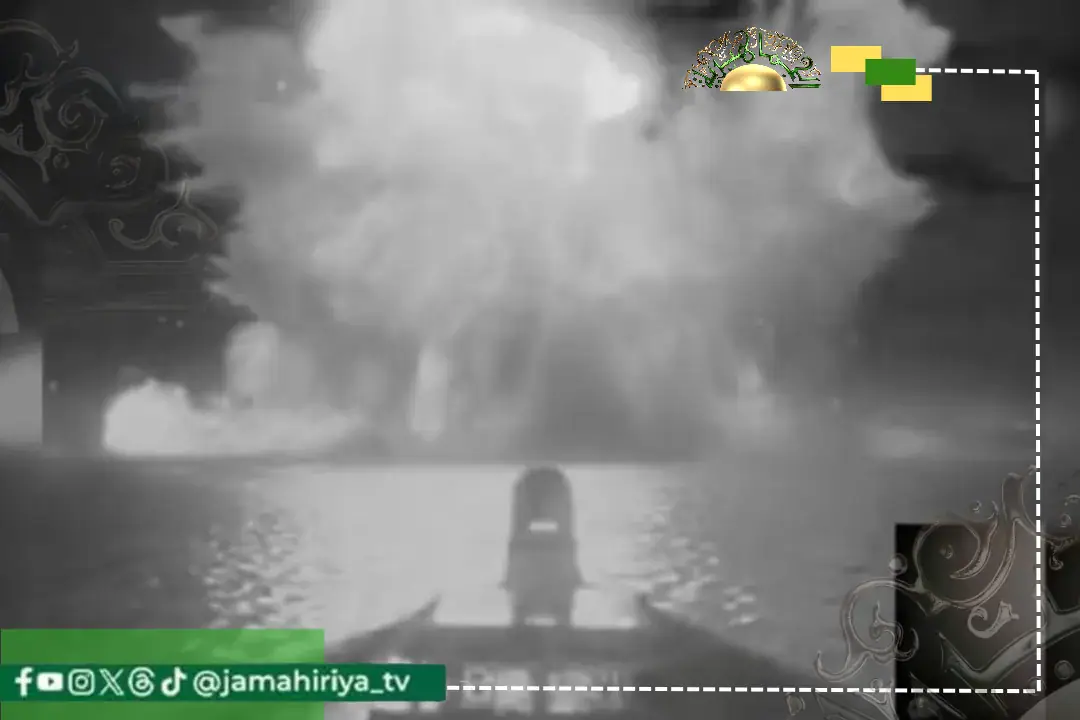
A recent drone attack by Ukraine on a Russian warship in the port city of Benghazi has exposed the deep-seated divisions and lack of trust between eastern and western Libya. According to a report by The National, the attack resulted in the capsizing of the Russian ship "Merkuri" and partial sinking, while another Russian cargo ship, "Angara", was also targeted off the coast. The incident has sparked a significant political response, with authorities in eastern Libya calling for a UN investigation and the UN mission urging an independent probe.
The attack has also prompted a response from the Libyan parliament, which has launched an initiative to unify institutions and prepare for elections in coordination with the High Council of State. However, analysts warn that this initiative may not necessarily represent a significant breakthrough, and that the incident could exacerbate existing mistrust and complicate efforts to unify power and military institutions. The lack of trust between eastern and western Libya extends to the security file, with multiple armed groups operating in western Libya and differing interests at play.
The incident has also raised questions about the security and intelligence gaps that allowed the Russian ship to be targeted in Benghazi. According to The National, the attack has highlighted the reliance of Libyan factions on external powers, with the eastern-based command tied to Russia militarily, while western factions seek to diversify their international relationships. Analysts argue that this reliance on external powers is a major factor in the ongoing crisis.
In response to the attack, there are signs of a shift in alliances, including a rapprochement between the eastern-based command and Turkey. Khalifa Haftar and his sons have visited Ankara, and the Libyan parliament has approved a maritime agreement signed with Turkey in 2019. These developments suggest that the incident may lead to a reconfiguration of alliances and interests in Libya.
The attack has also resulted in human losses, with two Libyan navy personnel dying from their injuries. The incident has sparked concerns about the potential for further instability and violence in the region. According to The National, the attack is unlikely to alter the balance of power or the nature of external alliances, but it highlights the fragility of the Libyan situation.
The situation in Libya remains complex, with multiple factions and external powers vying for influence. The attack on the Russian warship has exposed the deep-seated divisions and reliance on external forces that characterize the Libyan crisis. Efforts to unify institutions and prepare for elections face significant challenges, including the lack of trust between eastern and western Libya.
The international community has been urged to take a closer look at the situation in Libya, with analysts warning that the country's instability has significant implications for regional and global security. The UN mission has called for an independent investigation into the attack, and there are hopes that this will help to shed light on the circumstances surrounding the incident and potentially pave the way for greater stability in the region.
Key points
- The attack highlights Libya's deep-seated divisions and reliance on external forces.
- The incident has sparked a significant political response, including a UN investigation and a Libyan parliamentary initiative to unify institutions.
- The situation in Libya remains complex, with multiple factions and external powers vying for influence.
Reporting sources
- تقرير| هجوم بنغازي كشف عمق الانقسام الليبي وارتهان المعسكرين لقوى خارجية · Aljamahiriya TV