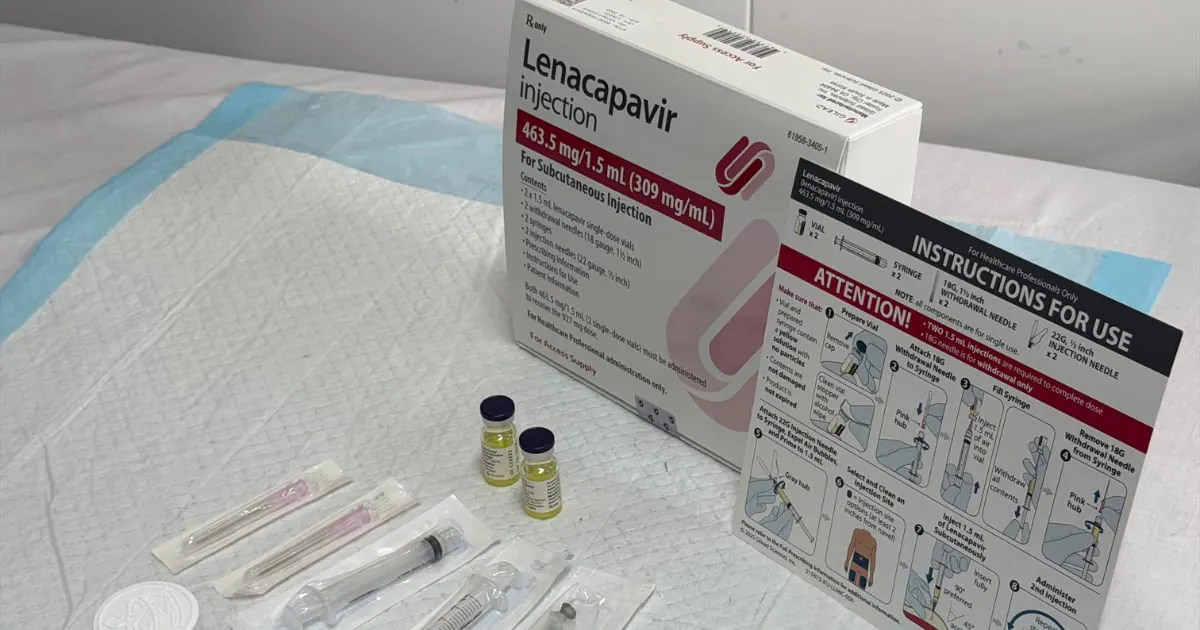
South Africa is exploring the possibility of locally producing lenacapavir, a highly effective HIV prevention injection administered every six months. The country's health department began rolling out the injection in June, and potential local manufacturers are being assessed for a voluntary license to produce generic versions. However, the process of local production is complex and raises questions about cost, quality, and demand. The South African National Aids Council and health department have selected three local manufacturers for assessment and possible voluntary licensing by Gilead Sciences, the injection's developer.
The local manufacturing process requires technology transfer, investment by the manufacturer, and regulatory approval before locally made lenacapavir can be produced. A South African license would likely differ from the six generic licenses Gilead has already granted to manufacturers in Egypt, India, and Pakistan, as it would be more developmental and allow companies to import the active pharmaceutical ingredient. Local production would likely start with parts of the process that can be established fastest, such as making the finished product, producing the sterile injectable, packaging, or quality control.
To make lenacapavir locally, a manufacturer needs a license with clear terms, access to technical knowledge, reliable supplies of ingredients and materials, and strict quality systems. They must also meet production and registration requirements of the South African Health Products Regulatory Authority. The practical steps involved in local production include adapting a production line, testing and validating the manufacturing process, proving product safety and stability, training staff, passing inspections, registering the product, and monitoring its safety.
One of the biggest risks associated with local production is that a manufacturer invests in capacity, but the market is too small or uncertain to produce the product affordably. If locally made lenacapavir is produced in small volumes only for South Africa, it may struggle to compete on price with large generic manufacturers supplying many countries. However, if South African manufacturers can supply a regional market, particularly if countries combine their orders and buy together, the economics look more favorable.
Demand is a crucial factor in determining the viability of local production. South Africa has a significant HIV prevention need, with around 134,000 new infections per year. However, government budgets are under pressure, and prevention programs have to allocate resources to various initiatives. Guaranteed demand is essential, and Unitaid has indicated it would be prepared to help with this. Governments, donors, and large buyers can provide manufacturers with more certainty about demand through national roll-out plans and commitments to buy the product.
Timing is also a critical consideration, as existing generic license holders are expected to start supplying lower-cost lenacapavir from 2027. If these products arrive quickly and are priced around $40 per person per year, South Africa will need to assess the role of locally made lenacapavir. The fastest route to access may be to import affordable generics while local production is being developed. However, relying solely on imports leaves South Africa and the region vulnerable to supply shocks, pricing disputes, or delays in accessing new medicines.
Ultimately, South Africa should pursue local production of lenacapavir, as it could help the country develop the capacity to manufacture other important medicines locally in the future, including for HIV, TB, STIs, and future pandemics. The goal is to balance access to the injection with the development of local manufacturing capacity, rather than choosing between the two.
Key points
- Local production of lenacapavir in South Africa faces challenges related to cost, quality, and demand.
- The process of local production requires technology transfer, investment, and regulatory approval.
- Guaranteed demand and a regional market are crucial to the viability of local production.