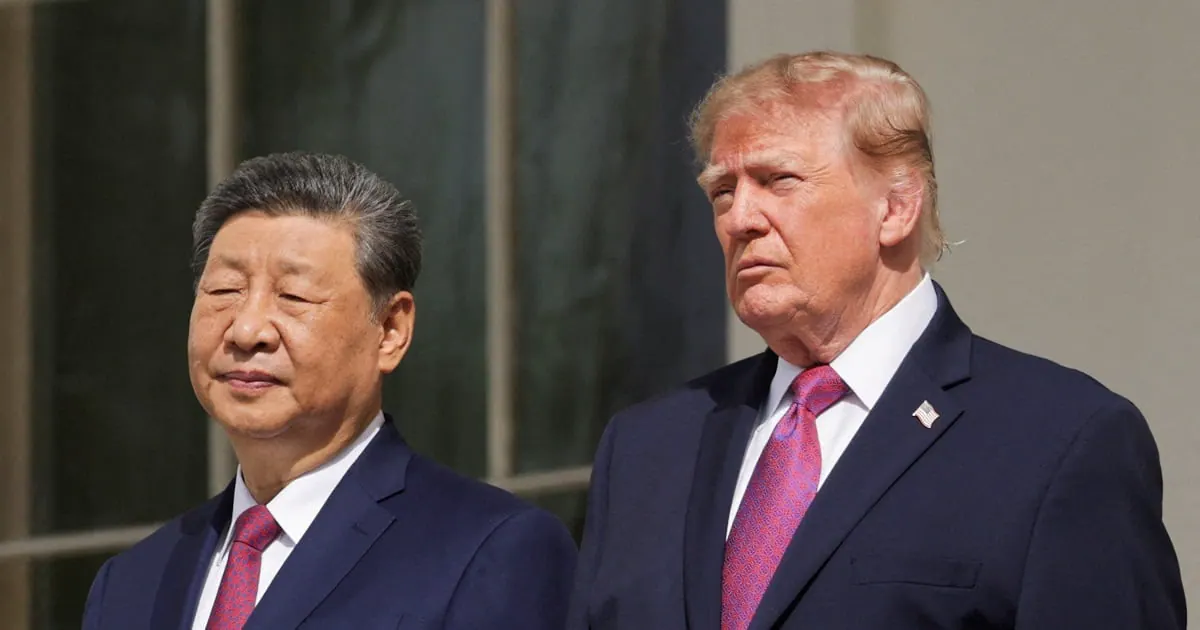
As global competition between the US and China intensifies, South Africa is facing increasing pressure to take sides. However, Pretoria has maintained that it deals with both Washington and Beijing based on its own agenda, adopting a nonalignment or strategic autonomy approach. This approach has been described as hedging, where South Africa maintains relationships with both powers without allowing either to dominate its foreign policy. The strategy has been likened to a line of shrubs that marks a boundary without cutting either side off completely.
The effectiveness of this approach was questioned last year when Pretoria instructed Taiwan to relocate its de facto embassy from the capital. American lawmakers viewed the decision as Pretoria "kowtowing to China", leading to calls for South Africa to lose access to the African Growth & Opportunity Act (Agoa). The episode exposed the risks of dependence on one great power and the potential impact on relationships with the other. This was not an isolated incident, as similar patterns have emerged in the past, highlighting the challenges of navigating complex foreign policy relationships.
Agoa provides valuable access to the American market for South African exporters, but threats to remove South Africa from the act have raised concerns about the dangers of dependence. US lawmakers have floated the idea of pulling South Africa from Agoa due to various reasons, including South Africa's case against Israel at the International Court of Justice, its ties with China and Russia, and a manufactured white genocide narrative. Nearly a fifth of South Africa's exports move duty-free due to Agoa, making it a crucial trade policy.
Meanwhile, Beijing has been generous in its own way, extending a zero-tariff policy to all 53 African states it has relations with, including South Africa. This provides South African exporters with another valuable market, but it also raises concerns about the potential for economic leverage. The experience of South Korea, which has played the hedging game for longer than Pretoria, serves as a cautionary tale. Seoul has benefited from both relationships but has also learned the risks of great-power competition.
South Korea's strategy of hedging has not prevented it from facing punishment from China for pursuing a defensive move. When Seoul agreed to host the US THAAD missile defence system in 2016, Beijing responded with economic pressure, including consumer boycotts, tourism restrictions, and limits on Korean entertainment. The incident cost South Korea millions and highlighted the risks of economic dependence becoming political leverage. This experience serves as a warning for South Africa as it navigates its own foreign policy relationships.
The lesson for South Africa is that economic dependence can become political leverage, and that hedging should provide room to manoeuvre, not turn the country into a hostage of whichever great power is more annoyed. To avoid this, Pretoria needs to make both relationships work harder for the country. This includes looking beyond Agoa towards more stable trade and investment agreements with Washington, and negotiating investment in local processing, technology, and jobs.
Pretoria also needs to develop alternatives to reduce its dependence on one market. Strengthening intra-African trade through the African Continental Free Trade Area (AfCFTA) and deeper relationships with other emerging economies would help mitigate the risks of losing access to one market. By picking up the shears and tending to its foreign policy relationships, South Africa can choose itself, rather than choosing between the eagle and the dragon.
Key points
- South Africa's hedging strategy between US and China may backfire, expert warns
- Economic dependence can become political leverage, and South Africa needs to make both relationships work harder for the country
- Pretoria needs to develop alternatives to reduce its dependence on one market and strengthen intra-African trade