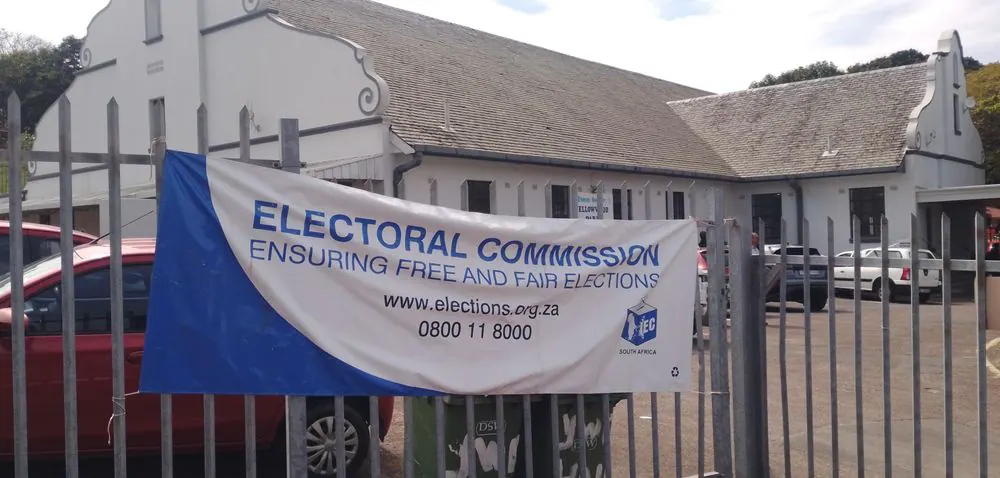
The South African government has developed a National Integrated Security Plan (NISP) for the upcoming 2026 local government elections. The plan, coordinated through the National Joint Operational and Intelligence Structure (Natjoints), aims to ensure the safety and security of voters, candidates, and the Electoral Commission of South Africa's (IEC) infrastructure. The plan will be implemented through a multi-faceted approach, including police visibility, crime-prevention measures, and coordinated incident-response capabilities.
According to Acting National Police Minister Firoz Cachalia, the safety of voters will be a top priority, with police deployment informed by ongoing threat and risk assessments. The plan will also support the statutory authority of presiding officers at voting stations. Cachalia was responding to parliamentary questions from MK MP Kwenzokuhle Madlala, who had asked for details of the NISP. The minister emphasized that the safety of candidates and election-related activities will be addressed through threat monitoring and assessment, policing of public gatherings, and prevention and investigation of intimidation and violence.
The NISP will also focus on safeguarding the IEC's infrastructure, including voting stations, storage facilities, results centres, and election materials. This will be achieved through coordinated security planning, policing support, and incident-response arrangements. Cachalia stressed that the Electoral Commission remains responsible for administering the electoral process, with the South African Police Service and other relevant role players providing security and law-enforcement support.
In response to concerns about political killings ahead of the local government elections, Cachalia said the police have comprehensive operational plans in place to ensure the safety and security of electoral and political processes. These plans are structured around four operational phases, namely voter registration, pre-election activities, election-day operations, and post-election stabilisation after results are announced.
The four-phase security plan is designed to prevent, detect, investigate, and respond to threats and incidents that may undermine political stability, public safety, and the integrity of democratic processes. The plan will be implemented impartially, with any individual protection measures considered in accordance with applicable prescripts and verified threat assessments.
The South African Police Service (SAPS) has committed to implementing the integrated approach to ensure the safety and security of the electoral process. The plan will also involve the monitoring and assessment of threats, the policing of public gatherings, and the prevention and investigation of intimidation, violence, and other election-related offences.
The 2026 local government elections are scheduled to take place in November, and the government has assured voters that it is taking all necessary measures to ensure a safe and secure electoral process. The implementation of the NISP will be crucial in preventing and mitigating potential threats to the integrity of the elections.
Key points
- The South African government has developed a comprehensive four-phase security plan to ensure the safety and security of the 2026 local government elections.
- The plan will be implemented through a multi-faceted approach, including police visibility, crime-prevention measures, and coordinated incident-response capabilities.
- The safety of voters, candidates, and the IEC's infrastructure will be a top priority, with police deployment informed by ongoing threat and risk assessments.