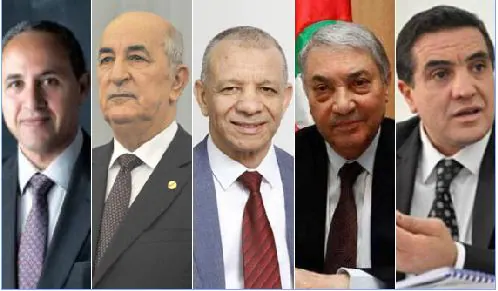
The official campaign for the Algerian presidential election, scheduled for December 12, has begun. Five candidates, including incumbent President Abdelmadjid Tebboune, are vying for the top spot. They will engage in intense campaigning across the country, attempting to convince voters to support their programs. The campaign had been informally underway, with candidates making media appearances and party rallies, but the official start marks a more serious phase.
Two candidates, Abdelmadjid Tebboune and Abdelaziz Belaïd, will kick-start their campaigns in Adrar, a southern region with strong religious influence. They will address local leaders and farmers, promoting their respective programs. The choice of Adrar may be driven by logistical considerations, as some candidates face challenges in the northern regions. Meanwhile, Ali Benflis and Abdelkader Bengrina will launch their campaigns in Tlemcen and Algiers, respectively.
Ali Benflis, a former prime minister under President Bouteflika, has chosen to start his campaign in Tlemcen, a city closely associated with the former president. This strategic move may help Benflis gain traction in the region. In contrast, Abdelkader Bengrina, leader of the El-Bina party, has opted for Algiers, the capital city. Bengrina recently presented his electoral program, which focuses on building a new Algeria based on freedom, dignity, and justice.
Abdelkader Bengrina's program emphasizes the importance of dialogue and partnership in the reform process. He advocates for constitutional amendments, limiting presidential powers, and strengthening individual and collective freedoms. Bengrina also promises to support the opposition and ensure an independent judiciary. His campaign slogan, "Construisons ensemble l'Algérie nouvelle" (Let's build a new Algeria together), reflects his vision for the country's future.
The other candidates have also been preparing for the campaign. Azeddine Mihoubi, however, had not made his campaign schedule public as of the previous day. The five candidates recently learned their allocated airtime on public television and radio, following a random draw supervised by the National Independent Electoral Authority (ANIE). Each candidate will have four 30-minute slots on television and two hours of direct speaking time on radio.
The campaign will be closely monitored, with strict regulations in place to ensure fairness and transparency. The ANIE has been working to ensure that the electoral process is free and fair. Voters will have the opportunity to hear from all candidates and make informed decisions about their preferred candidate.
The presidential election is a critical moment for Algeria, with the country seeking to strengthen its democratic institutions. The candidates' campaigns will focus on issues such as economic development, corruption, and social justice. The outcome of the election will have significant implications for Algeria's future, and the international community is watching closely.
Key points
- The official campaign for the Algerian presidential election has begun, with five candidates vying for the top spot.
- The candidates will engage in intense campaigning across the country, attempting to convince voters to support their programs.
- The election is scheduled for December 12, and the outcome will have significant implications for Algeria's future.