South Africa has maintained its stance on Broad-Based Black Economic Empowerment (B-BBEE) policies, rebuffing external pressure and demands from the United States. The country's Minister in the Presidency, Khumbudzo Ntshavheni, emphasized that South Africa will not compromise on B-BBEE, despite warnings that it may impact the African Growth and Opportunity Act (AGOA) agreement, set for review in November. Ntshavheni stated that the US demand to scrap B-BBEE policies is, in effect, a demand to maintain apartheid's outcomes, which South Africa cannot accept.
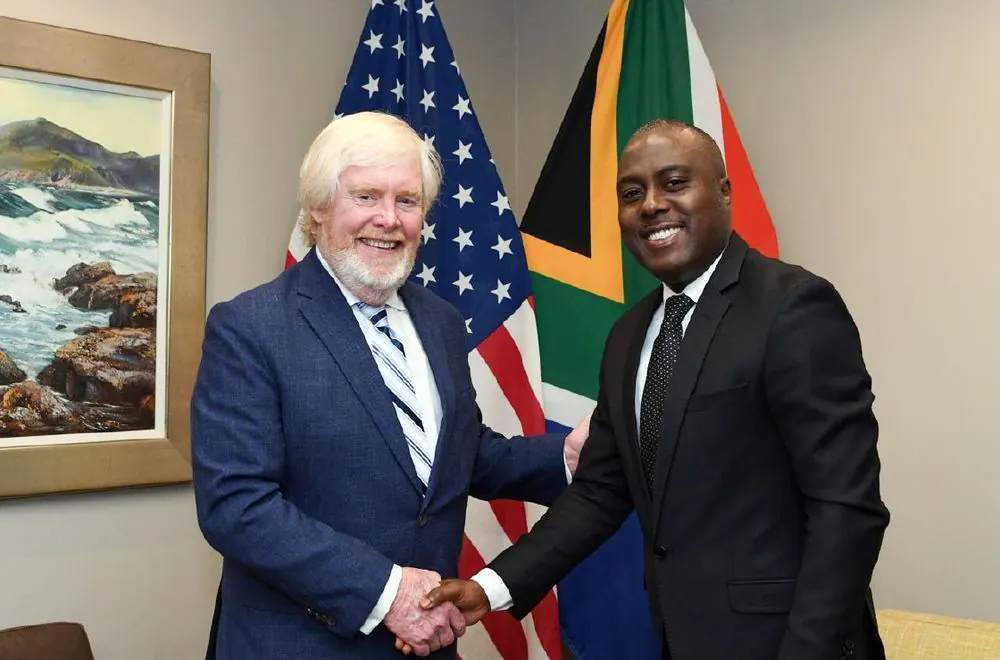
The diplomatic friction between South Africa and the US escalated after US Ambassador to South Africa, Leo Brent Bozell III, publicly criticized President Cyril Ramaphosa for not addressing US concerns. Bozell argued that South Africa's race-based regulatory environment, specifically its B-BBEE policies, is a bottleneck blocking billions of dollars in new American investments. In response, the Department of International Relations and Cooperation (Dirco) strongly rejected the accusations and summoned Bozell for a formal reprimand over his public statements.
The US State Department has stated that it is not interested in dialogue for its own sake and expects South Africa to address US concerns. However, Ntshavheni emphasized that South Africa will engage with the US and other partners as an equal, based on mutual respect and sovereign equality, without apologizing for the transformation mandated by the Constitution. She stressed that B-BBEE is an instrument of redress, as required by the Constitution, and not a bargaining chip.
The B-BBEE policies have been a point of contention between South Africa and the US, with the latter viewing them as a barrier to investment. However, Ntshavheni argued that the policies are necessary to rectify the historical legacies of apartheid. She noted that apartheid was declared a crime against humanity, and its economic crimes, including forced removals and restricted job opportunities, must be addressed. The South African government has defended its constitutional programs aimed at correcting apartheid-era racial inequalities, including land reform and B-BBEE.
The potential consequences of the diplomatic fallout between South Africa and the US are significant, with up to 250,000 jobs potentially affected if South Africa is removed from the AGOA agreement. According to Solidarity, an announcement on South Africa's participation in AGOA is expected by November 1, 2026. The union has expressed concerns that the US criticism of South Africa's policies may lead to companies pulling their investments out of the country.
Experts have offered differing views on the situation, with Professor Andre Thomashausen suggesting that the South African government should take the US criticisms seriously and engage in constructive dialogue. He argued that the US is South Africa's oldest ally and second-largest trading partner, and that the government should not overlook the importance of the relationship. On the other hand, Dr. Sean Muller, an economic and public policy expert, believes that the US threat of investment withdrawal is exaggerated and that the controversy surrounding B-BBEE and the Expropriation Act is being manufactured.
The diplomatic spat between South Africa and the US has significant implications for the country's economic and international relationships. As the review of the AGOA agreement approaches, South Africa's stance on B-BBEE policies is likely to remain a point of contention. The country's government has reiterated its commitment to defending its constitutional programs, while the US has maintained its concerns about the policies. The situation remains a delicate balancing act for South Africa, as it navigates its relationships with international partners while defending its sovereignty.
Key points
- South Africa refuses to scrap B-BBEE policies amid US pressure.
- The US has warned that South Africa's continued stance on B-BBEE may jeopardize the AGOA agreement.
- Experts have offered differing views on the situation, with some calling for constructive dialogue and others downplaying the threat of US investment withdrawal.