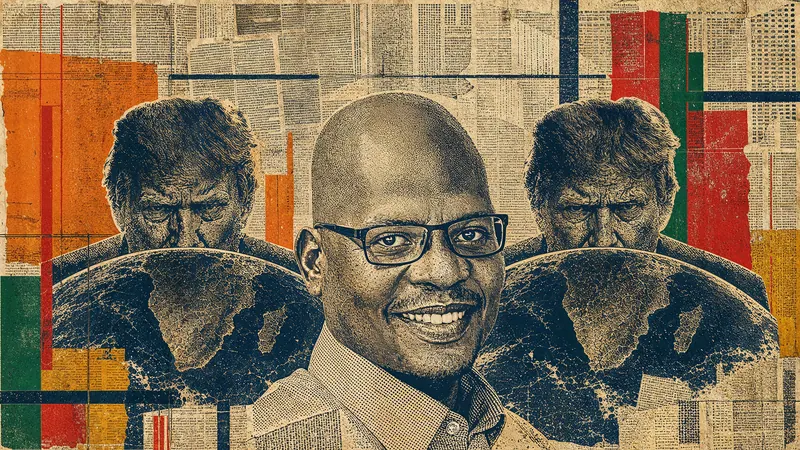
South Africa is experiencing escalating tensions with the US, which has imposed tariffs, diplomatic pressure, and accusations over its domestic policies. The Trump administration has increasingly targeted the country, leading Pretoria to shift from accommodation to a firmer diplomatic stance. Despite its weaker economic and geopolitical position, South Africa is moving towards resistance. This change in approach comes after 20 months of strained relations under US President Donald J. Trump's second term.
During Trump's first term, South Africa was not a priority, with the president largely ignoring the country. It took nearly two years for Trump to nominate an ambassador to South Africa, Lana Marks, a luxury handbag entrepreneur and member of Trump's Mar-a-Lago Club. Her nomination was eventually confirmed by the senate, and she arrived in November 2019. The calibre of the individual was telling, with Marks being born in the Eastern Cape and speaking some isiXhosa.
Under President Joe Biden's administration, there was increased engagement with South Africa, and hopes that Kamala Harris would continue this trend if victorious in the November 2024 election. However, Harris and the Democrats ran a poor campaign, and Trump returned to power in Washington. Upon his return, the Russia-Ukraine war was nearing its third year, Israel was devastating Gaza, and China had become a significant rival to US economic and political power.
South Africa has become one of Trump's great obsessions, alongside other issues. In his second term, Trump has imposed, reversed, and re-imposed tariffs on the world, threatened to invade Greenland, and wrecked relations with Canada. The US has accused South Africa's leaders of inciting violence against minorities, enabling racial discrimination, and effecting land confiscation. US Secretary of State Marco Rubio announced that the US would not allow such behaviour to go unchecked.
The US has taken a paternalistic and undiplomatic tone, with ambassador Leo Bozell chiding President Cyril Ramaphosa for not implementing Trump's requests. This includes overturning laws passed by Parliament, which can only be overturned by the courts. Veteran diplomat Kingsley Makhubela noted that the US expects Ramaphosa to violate his oath of office. Despite South Africa's efforts to be a respectable partner, the relentless onslaught persists.
South Africa is not alone in being a victim of Trump's erratic decision-making. Close allies, such as Canada and European nations, have also been targeted. However, they have more power and leverage than South Africa, which is in a weaker position due to its fragile economy and rickety state. The lack of a united African front also makes it challenging for South Africa to resist US pressure.
The situation has led to a significant shift in South Africa's diplomatic approach. The country is now moving towards a firmer stance, despite the risks. This change is driven by the need to protect its national interests and sovereignty. As the tensions between South Africa and the US continue to escalate, it remains to be seen how the situation will unfold.
Key points
- South Africa faces escalating tensions with the US over accusations of inciting violence and enabling racial discrimination.
- The country is shifting from appeasement to resistance, despite its weaker economic and geopolitical position.
- The situation is driven by Trump's erratic decision-making and the lack of a united African front.