The Department of Forestry, Fisheries and the Environment (DFFE) has approved revised interim sardine catch limits until 30 November. This decision allows commercial sardine fishing to resume after previous restrictions expired on 31 October. The new allocations were recommended by the Small Pelagic Scientific Working Group and approved on 5 November.
Under the interim measures, companies may initially catch about 2 800 tonnes of sardines west of Cape Agulhas and 2 700 tonnes east of the landmark. The department said the limits could increase by 80% in either area if catches exceed half of the initial allocation by 15 November. This means catches would need to exceed 1 400 tonnes west of Cape Agulhas or 1 350 tonnes to the east.
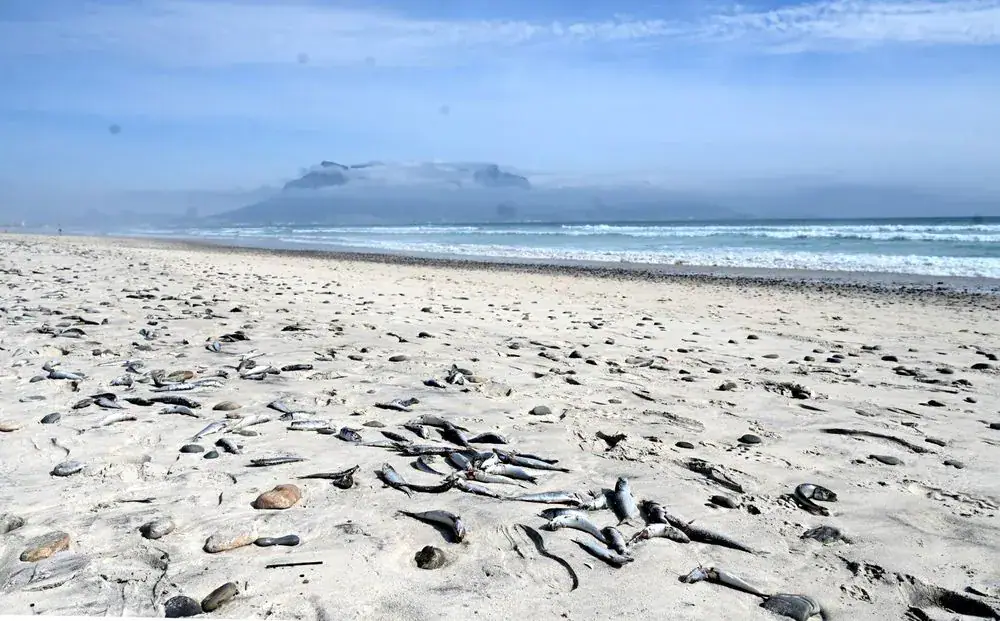
The decision follows continued uncertainty about the scale of the mortality event, first reported off Saldanha Bay on 28 July. Reports alone suggested that detections indicate Pilchard Herpesvirus (PHV) was present around Cape Agulhas before the first reported mortalities farther west. This points to an earlier spread than mortality. Testing is continuing for PHV, which has been detected in sardine samples associated with the mortality event.
PHV genetic material was found in two samples taken from apparently healthy sardines during the department’s recruit survey around Cape Agulhas on 22 and 29 July. This suggested the virus may have been present further east before the first mass mortalities were reported. PHV was also detected in samples collected during a small sardine wash-up at Mossel Bay on 23 October.
No further widespread sardine mortalities have been reported, although monitoring and testing continue. Studies of PHV in Australia found that infected sardines could develop gill lesions before dying, with a modelled incubation period of up to 12 days. The department said the PHV is a fish virus and is not known to infect people.
Commercial sardine products released through regulated channels remain safe for consumption. The department warned that members of the public should not collect or consume dead or dying sardines found on beaches or near the shore, feed them to animals, or use them as bait. Any unusual fish mortality should be reported promptly to the relevant coastal authority or the DFFE.
The stepped catch limits are intended to provide flexibility by allowing allocations to increase in areas where catches improve. The department continues to investigate the cause of the mass sardine deaths and monitor the situation.
Key points
- The DFFE has set revised interim sardine catch limits of 2 800 tonnes west of Cape Agulhas and 2 700 tonnes east.
- Pilchard Herpesvirus was detected in sardine samples associated with the mortality event.
- Commercial sardine products released through regulated channels remain safe for consumption.