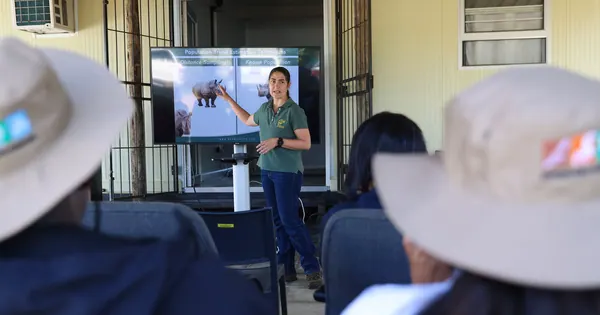
South Africa has made notable strides in reducing rhino poaching, according to a conservation expert. Ahead of World Rhino Day on September 22, the expert highlighted that while progress has been made, shifting criminal networks and mounting environmental pressures continue to threaten the species' long-term survival. The country's conservation efforts have been underway for several years, with a focus on protecting rhino populations in national parks and reserves.
The Hluhluwe-iMfolozi Park in KwaZulu-Natal Province, South Africa, is one of the country's oldest and most historic reserves. Established in 1897, it is home to over 5,000 animals, including both black and white rhinos. Park officers and conservationists have been working tirelessly to protect the rhino population from poaching and habitat loss. Recently, the park has employed innovative technologies, such as drones, to enhance rhino protection and monitor the reserve's vast territory.
World Rhino Day, observed annually on September 22, serves as a reminder of the importance of protecting rhino populations and their habitats. The day also highlights the ongoing challenges faced by conservationists, including poaching, habitat loss, and human-wildlife conflict. In South Africa, conservation efforts have been bolstered by government support and collaboration with international organizations. However, the high cost of conservation remains a significant challenge, with many reserves and parks struggling to fund their protection efforts.
According to the conservation expert, South Africa's progress in reducing rhino poaching is a positive development, but sustained protection efforts are necessary to ensure the long-term survival of the species. The expert emphasized that cooperation and collaboration among governments, conservation organizations, and local communities are crucial in addressing the complex challenges facing rhino conservation. By working together, stakeholders can develop effective strategies to protect rhino populations and their habitats.
The use of technology, such as drones and camera traps, has enhanced conservation efforts in South Africa's national parks and reserves. These tools enable park rangers and conservationists to monitor rhino populations more effectively, detect poaching activity, and respond quickly to threats. Additionally, community-based conservation initiatives have been implemented to engage local communities in rhino conservation and promote coexistence with wildlife.
Despite the progress made in reducing rhino poaching, South Africa's conservation efforts continue to face significant challenges. Shifting criminal networks and organized crime groups have adapted to law enforcement efforts, finding new ways to exploit vulnerabilities in the conservation system. Furthermore, environmental pressures, such as climate change and habitat loss, pose a significant threat to rhino populations and their habitats.
As World Rhino Day is observed, conservationists and stakeholders are emphasizing the need for sustained protection efforts and cooperation to ensure the long-term survival of rhino populations. The use of innovative technologies, community-based conservation initiatives, and collaboration among governments and organizations are critical components of effective rhino conservation. By working together, it is possible to protect these iconic species and preserve the rich biodiversity of Africa's ecosystems.
Key points
- South Africa reports progress in reducing rhino poaching, but conservation challenges persist.
- The country is using innovative technologies, such as drones, to enhance rhino protection.
- Sustained protection efforts and cooperation among stakeholders are necessary to ensure the long-term survival of rhino populations.