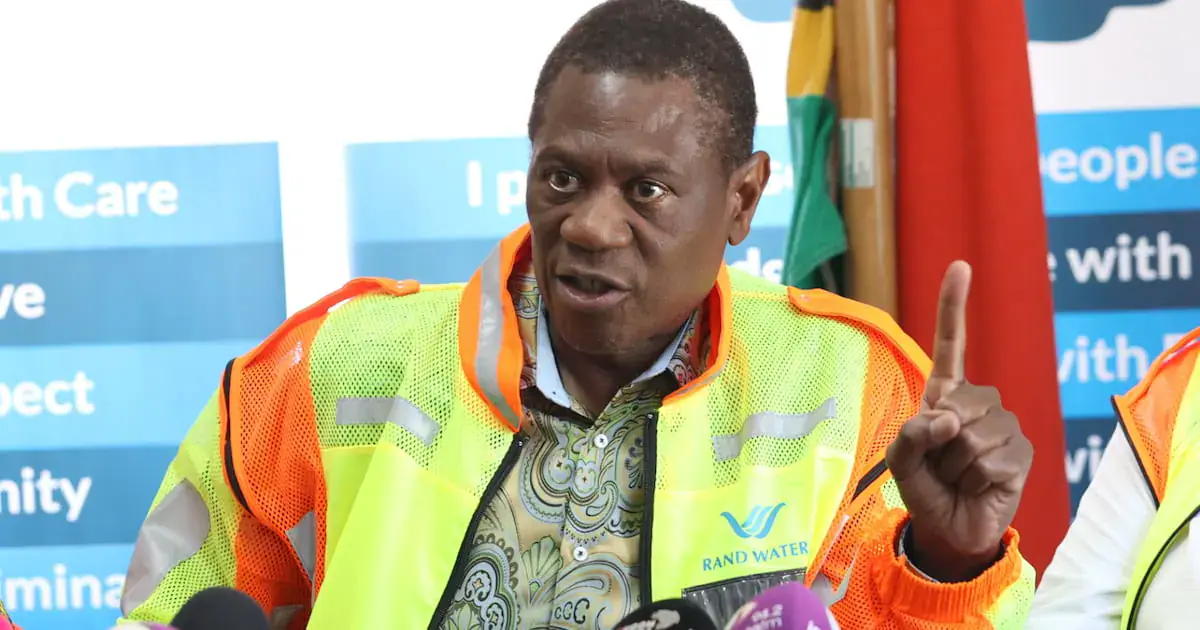
President Cyril Ramaphosa's recent decision to campaign in Mamelodi instead of visiting Bronkhorstspruit, where over 800 people reported illness linked to contaminated municipal water, has raised concerns about his priorities. The president's visit to Mamelodi, where he condemned municipal failures, rang hollow to residents who felt they deserved his attention when their health was compromised. Deputy President Paul Mashatile was subsequently despatched to the area.
The water crisis in South Africa extends beyond Gauteng, with eThekwini announcing restrictions on October 24 to replenish reservoirs supplied from Durban Heights. In Polokwane, persistent shortages in 19 wards and failing sewage treatment works left thousands without water. The crisis has been attributed to a combination of factors, including infrastructure neglect and weak administration. The Department of Water and Sanitation reported that chlorine supply difficulties resulted in unchlorinated water leaving treatment works between September 24 and October 14.
The contamination emergency in Tshwane was exacerbated by the city's failure to warn residents of the potential risks. The affected tap water was unsuitable for bathing or cooking, and residents were urged to take precautions. Tshwane's water shortages compound the contamination emergency, with restrictions affecting the Garsfontein and Klapperkop systems. Residents were urged to avoid garden watering, car washing, and filling pools to help rebuild critically low reservoirs.
The water crisis has also been linked to alleged corruption in some municipalities. In uThukela, the water crisis is said to be precipitated by alleged corruption, with the Hawks arresting the municipal manager and another official on corruption and extortion charges. The pair allegedly demanded payment from a service provider and accepted a bribe, highlighting the issue of the "water mafia" and its impact on service delivery.
The dependence on outsourced suppliers and apparent criminal syndicates has created opportunities for profiteering and corrupt procurement. The Durban high court recently ordered the DA to remove a billboard bearing the words "stop the water tanker mafia", with the faces of eThekwini's top three municipal officials. While the court found it defamatory, it acknowledged that criticism of water management was acceptable given the municipality's failure to maintain infrastructure.
To address the water crisis, solutions require protected maintenance budgets and competent technical appointments. National and provincial intervention must bring technical support and enforceable accountability where municipalities cannot fulfil their duties. Councils should publish monthly leakage and repair performance reports so residents can distinguish genuine improvement from promises recycled whenever an election approaches.
As millions of voters head to the polls, water will be a decisive test of municipal performance. It is imperative to choose candidates who will honour the needs of the people, particularly in local government elections. President Ramaphosa acknowledged that water revenue has been diverted from the infrastructure it should sustain, highlighting the need for a comprehensive solution to the country's water crisis.
Key points
- The water crisis in South Africa has been attributed to a combination of factors, including infrastructure neglect and weak administration.
- The crisis has sparked concerns over government accountability and priorities, particularly in the run-up to elections.
- Solutions require protected maintenance budgets, competent technical appointments, and enforceable accountability to address the country's water crisis.