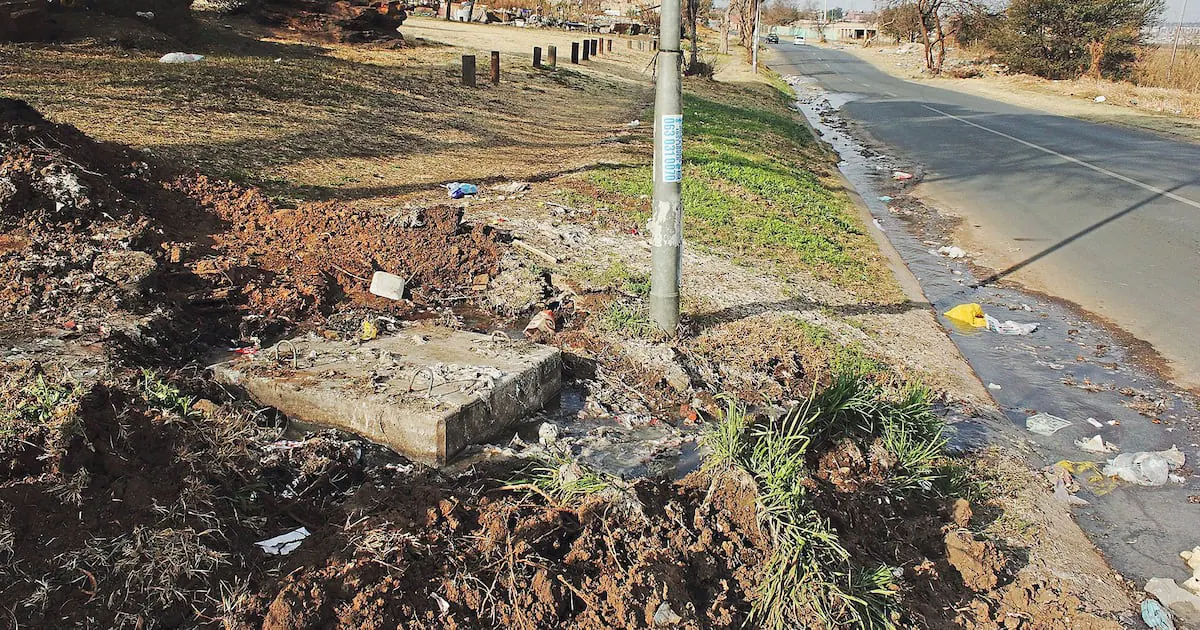
South Africa's municipal wastewater treatment systems are facing a severe crisis, with nearly half of the country's 848 systems classified as critical. According to the Department of Water and Sanitation's latest "Full Green Drop Report," 396 systems, or 47%, are in a critical state of performance. This represents a significant deterioration from the previous Green Drop assessment, which found 334 systems, or 39%, in a critical state.
The Green Drop programme assesses the management of wastewater systems, including infrastructure, operational capacity, maintenance, compliance, monitoring, and management practices. The programme provides the department with a mechanism to identify facilities requiring intervention. The deterioration in wastewater systems has drawn concern from parliament's portfolio committee on water and sanitation, which warned that municipalities' failure to submit and implement corrective action plans was undermining efforts to restore failing wastewater systems.
The shortage of skilled personnel is also a major challenge, with only 1,151 of the 2,431 process controllers required nationally employed at the time of the committee's briefing. The department's response to a parliamentary question shows that the problem is not confined to a small number of municipalities, with critical wastewater facilities listed across all nine provinces. Gauteng, for example, has 10 critical systems under the City of Johannesburg, while KwaZulu-Natal has 19 critical systems listed under eThekwini municipality.
The Department of Water and Sanitation is pursuing 96 criminal cases against 53 water services authorities regarding wastewater management failures. Municipalities whose wastewater systems are classified as critical are required to prepare or update corrective action plans (CAPs). Of the 90 municipalities identified in the 2022 Green Drop report as having critical wastewater systems, 79 submitted CAPs, and all had begun implementation.
However, several municipalities identified in the earlier assessment had not submitted corrective action plans, including Masilonyana and Nketoana in the Free State, uMkhanyakude in KwaZulu-Natal, and several Northern Cape municipalities. There is no single deadline for all the critical systems to be restored, as the timeframe depends on the nature and extent of the work required. Refurbishment involving civil works or pumps could take about a year, while facilities that have completely collapsed and cannot be refurbished could require decommissioning and the construction of new infrastructure.
The Department of Water and Sanitation has allocated R2.923 billion to wastewater infrastructure upgrades in the 2026/27 financial year, covering 87 projects funded through the Regional Bulk Infrastructure Grant and Water Services Infrastructure Grant. The department has also introduced an internal review process for critical wastewater treatment plants and amended its annual performance plan to track the number of critical systems monitored against Green Drop requirements.
The deterioration in municipal wastewater performance has been linked to factors including ageing infrastructure, inadequate maintenance, shortages of technical skills, weak financial management, and governance problems. The government has previously linked the deterioration to these factors, and the department's latest response indicates that enforcement is increasingly forming part of its response. The portfolio committee has also noted that the Water Services Amendment Bill would strengthen the department's ability to act against water services authorities that fail to implement corrective measures.
Key points
- 396 out of 848 municipal wastewater treatment systems in South Africa are classified as critical.
- The Department of Water and Sanitation is pursuing 96 criminal cases against 53 water services authorities regarding wastewater management failures.
- The department has allocated R2.923 billion to wastewater infrastructure upgrades in the 2026/27 financial year.