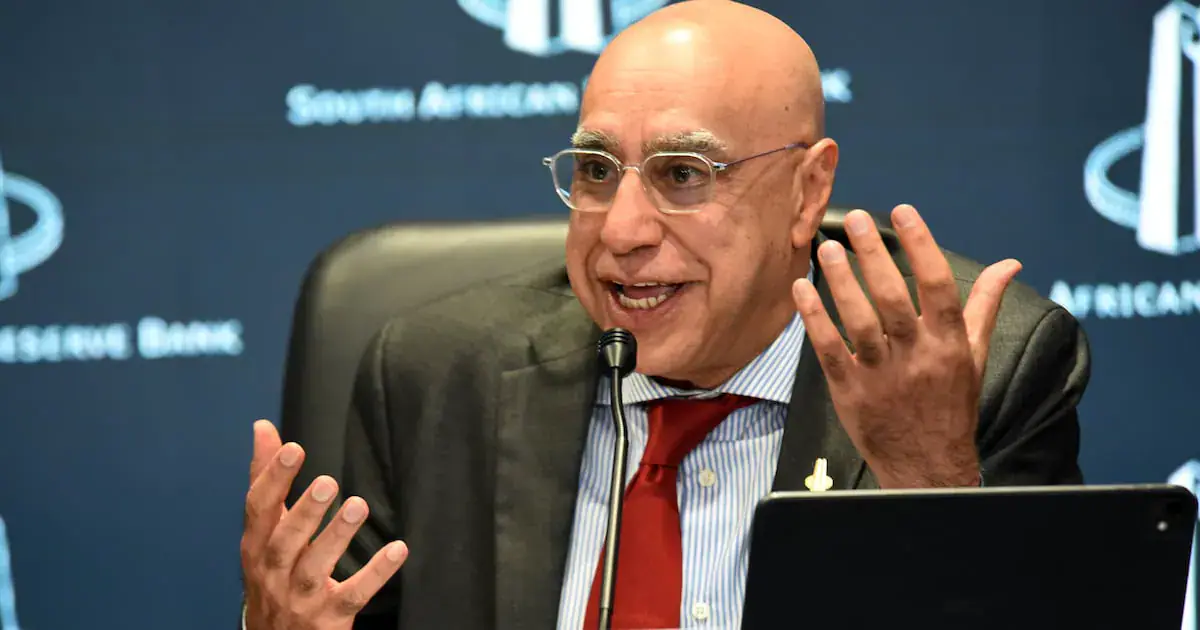
The South African Reserve Bank has revised its plan to discontinue the Johannesburg interbank average rate, or Jibar, pushing back the cessation date from December this year to May 31, 2025. Deputy Governor Rashad Cassim announced the delay, citing the need for more time to complete legislative processes related to the transition to the new South African Rand Overnight Index Average, or Zaronia. This decision aims to ensure a smooth transition and avoid potential disruptions in the financial market.
The Reserve Bank first announced its plan to cease Jibar in December last year, citing the rate's structural weaknesses and vulnerabilities due to the decline in the market underpinning it. Jibar serves as the primary short-term money market benchmark reference rate in South Africa. The bank has been working on a successor rate, Zaronia, which has shown promising progress, with Zaronia-related derivative exposures growing to over R18.5-trillion globally as of September. However, global Jibar derivative exposures still exceed R98-trillion.
A major challenge in transitioning to Zaronia is addressing "tough legacy contracts" that cannot be easily amended or transitioned. These contracts pose a significant risk if not properly addressed, as their amendment or transition is not feasible before the cessation of Jibar. To mitigate this risk, proposed amendments to the Financial Sector Regulation Act are being considered. These amendments would allow for the designation of replacement benchmarks, providing a legislative solution for tough legacy contracts.
The Market Practitioners Group, a joint public and private sector body, has been working on the transition to Zaronia since 2018. The group facilitates decisions on interest rate benchmarks and has made progress in promoting the adoption of Zaronia. However, some market participants are still hesitant, and a passive transition is expected for some contracts. The Reserve Bank's decision to delay the cessation of Jibar aims to ensure that all market participants are adequately prepared for the transition.
The delay in Jibar's cessation is not a reversal of the decision to discontinue the instrument, nor does it reflect any concerns about Zaronia. According to Cassim, Zaronia is working well, with a small and stable spread to the policy rate. The Reserve Bank is encouraged by the progress made so far but acknowledges that there is still significant work ahead. The bank will continue to monitor the transition and make adjustments as necessary.
In addition to the Jibar transition, the Reserve Bank is also planning to scrap the prime lending rate, which commercial banks use as a baseline to charge customers for loans, mortgages, and credit facilities. The bank published a paper earlier this year arguing that the prime rate is a legacy benchmark no longer needed. The prime rate is currently pegged at 350 basis points above the central bank's policy rate, which is at 7.25%. Eliminating the prime rate is expected to make loan pricing simpler and more transparent.
The Reserve Bank's decision to delay the cessation of Jibar and its plans to reform the prime lending rate reflect its efforts to modernize and improve the country's financial benchmarks. The bank aims to ensure that the transition to new benchmarks is smooth and orderly, minimizing disruptions to the financial market. Key stakeholders will continue to work together to address the challenges associated with the transition and ensure a successful implementation of the new benchmarks.
Key points
- The South African Reserve Bank has postponed the cessation of Jibar to May 31, 2025, due to legislative loopholes and the need for a smooth transition to Zaronia.
- The bank aims to address "tough legacy contracts" through proposed amendments to the Financial Sector Regulation Act, allowing for the designation of replacement benchmarks.
- The Reserve Bank also plans to scrap the prime lending rate, which is expected to make loan pricing simpler and more transparent.