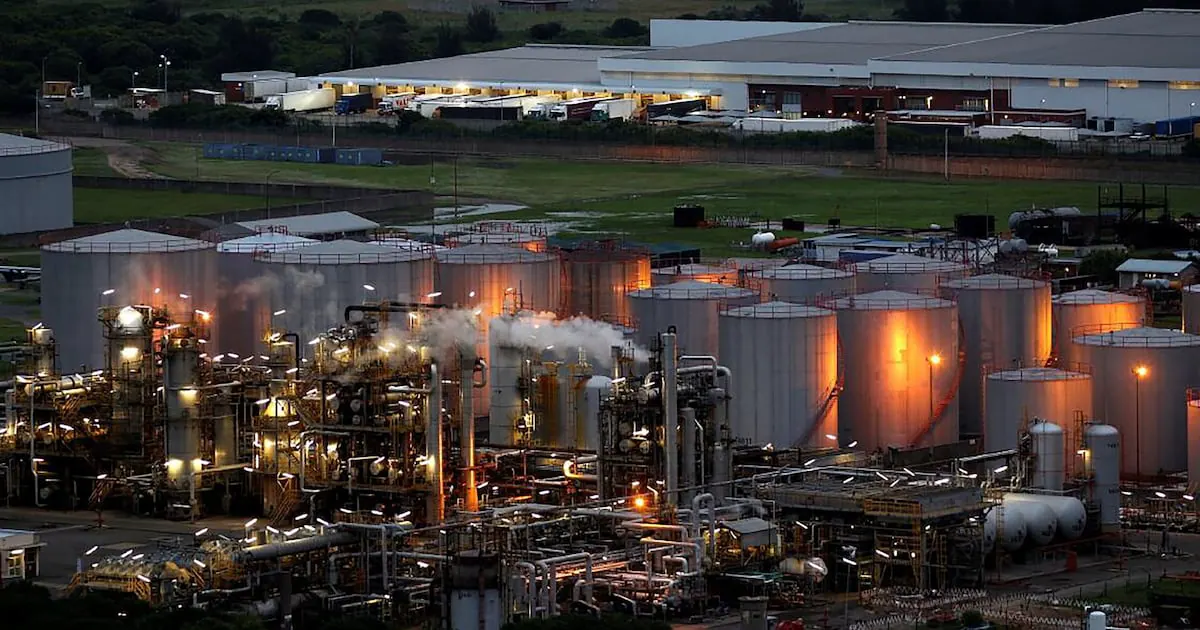
The South African Reserve Bank has noted that the country's loss of over half its refining capacity since 2020 has had a significant economic impact. The bank's economists found that South Africa has spent R76bn more than expected on finished petroleum import bills between 2021 and 2024. This decline in refining capacity has resulted in the country importing 61% of its domestic fuel requirements, up from 19% in 2019.
South Africa's active fuel refining capacity has dropped to approximately 250,000 barrels per day (bpd), down from a peak of over 720,000 bpd. The country's economy consumes 27-billion litres of fuel annually, making the dwindling refining capacity significant for both industry and consumers. This decline has displaced an estimated 5,400 direct and indirect jobs and prompted firms to defer investment.
According to the Reserve Bank, South Africa's decline in refining capacity reflects persistent cost disadvantages and long-running tensions around regulation of cleaner fuels. Domestic refineries are generally old, relatively small, and costly to operate by international standards, leaving them structurally disadvantaged compared to large, integrated facilities that dominate global refining capacity.
The impact of the decline in refining capacity is evident in the country's second-quarter current account deficit of R205bn, the widest gap since the fourth quarter of 2015. This was largely due to a surge in fuel costs of 82% in the quarter. The structural shift in South Africa's refining capacity carries broad macroeconomic and developmental consequences.
The Central Energy Fund (CEF) has signalled plans to revive the Sapref refinery and increase its capacity. The CEF aims to launch a multi-phase programme to scale throughput from Sapref's historical 180,000 bpd to an ultimate capacity of between 400,000 bpd and 650,000 bpd. However, the plan's hefty price tag of over R100bn raises concerns about the CEF's ability to raise the required funds.
Minister of Mineral Resources and Petroleum, Gwede Mantashe, is appealing to the National Treasury for about R117bn to implement the plan. The lack of funding detail and the CEF's track record of scepticism add to concerns about the plan's feasibility. To shore up confidence, the CEF must outline a credible financial plan to fund the project.
The revival of South Africa's refining capacity is crucial, and authorities must move quickly to address the issue. A credible financial plan and concrete financial backing are necessary to turn the plan into a reality and mitigate the economic consequences of the decline in refining capacity.
Key points
- The decline in South Africa's refining capacity has resulted in increased fuel import bills and economic concerns.
- The Central Energy Fund's plan to revive the Sapref refinery and increase its capacity requires a credible financial plan to move forward.
- The revival of South Africa's refining capacity is crucial to mitigate the economic consequences of the decline and support the country's economy.