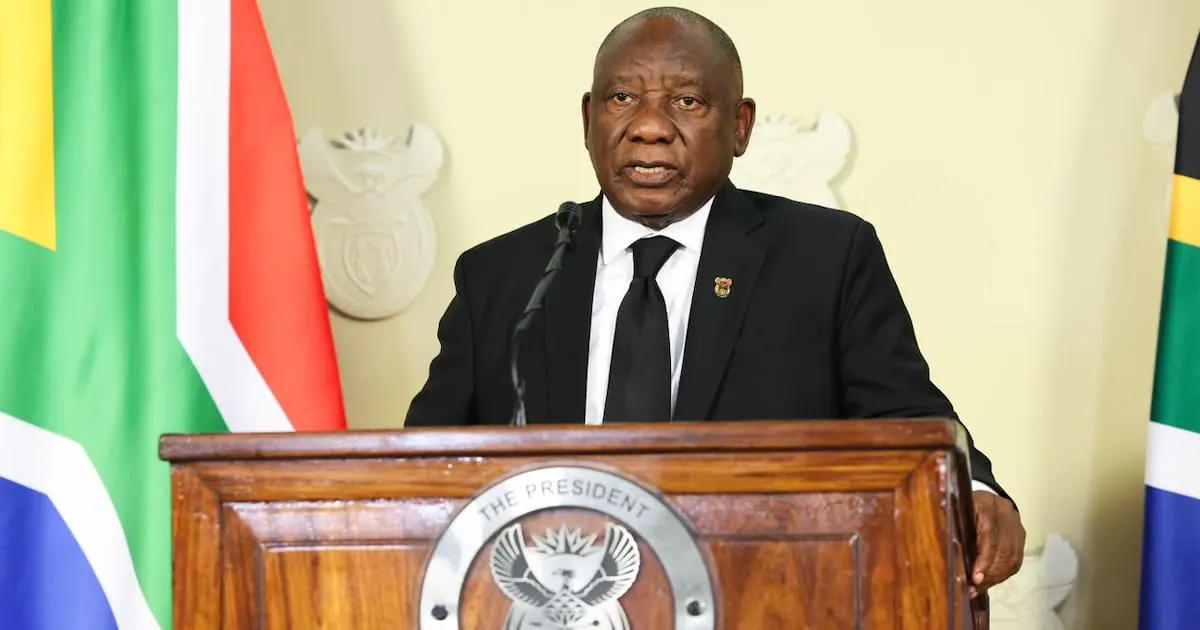
On Tuesday night, President Cyril Ramaphosa of South Africa addressed the nation, outlining the government's plan to combat gender-based violence and femicide (GBVF). This announcement comes in response to growing public concern and follows a series of murders of women in Ekurhuleni. The President emphasized the need for a multi-faceted approach to tackle the crisis, which has been a longstanding issue in the country. Ramaphosa's address highlighted various interventions aimed at addressing the root causes of GBVF.
A key component of the government's strategy is an audit of unresolved murders of women and children, rape cases, and serious sexual offences. This move aims to identify bottlenecks in the justice system and ensure that perpetrators are held accountable. Furthermore, the Minister of Police has been tasked with developing a plan to reduce the backlog at forensic laboratories within 60 days. This plan will prioritize GBVF-related forensic evidence, particularly in cases involving rape and murder of women and children.
In addition to these measures, municipalities have been instructed to undertake several tasks to improve public safety. These include auditing and repairing broken streetlights, clearing overgrown public areas, addressing abandoned buildings, and enhancing public transport safety. While these steps are necessary, concerns have been raised about the ability of some municipalities to implement these changes, given their history of dysfunction. The effectiveness of these interventions will depend on the government's ability to support and monitor their implementation.
President Ramaphosa acknowledged that the government has not done enough to address GBVF, despite announcing similar policy measures seven years ago. This admission highlights the need for a more sustained and effective approach to tackling the crisis. The President emphasized that women often face significant challenges when seeking help, and that prevention and behavioral change are crucial in curbing GBVF. He also stressed that men must play a central role in the solution, through behavioral and attitude change.
A significant aspect of Ramaphosa's address was the emphasis on prevention and community involvement. He stated that "we cannot police our way out of gender-based violence," signaling a shift towards more proactive and preventative measures. This approach recognizes that GBVF is a societal issue that requires a collective response. By engaging men and communities in the solution, the government hopes to create a cultural shift that will help to reduce instances of GBVF.
Despite the government's efforts, concerns remain about the institutional weaknesses that have allowed perpetrators of GBVF to escape justice. The President's admission of past failures and the need for accountability were seen as positive steps, but more needs to be done to address these underlying issues. The public expects to see tangible results from the implementation of the government's broader strategy to deal with the crisis.
The government's interventions aim to address the complex and multifaceted nature of GBVF. While there are concerns about the implementation and effectiveness of these measures, the President's address has been seen as a positive step towards addressing the crisis. The public will be watching closely to see if the government's efforts will lead to meaningful change and a reduction in instances of GBVF.
Key points
- President Cyril Ramaphosa announces government interventions to address gender-based violence and femicide in South Africa.
- The government's strategy includes an audit of unresolved murders and rape cases, as well as measures to improve public safety.
- The President emphasizes the need for prevention and behavioral change, and the importance of men playing a central role in the solution.