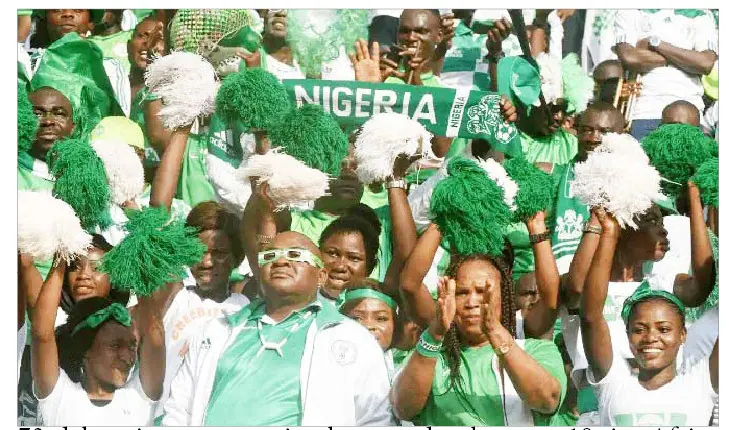
Today, Nigeria celebrates 66 years of independence from British colonial rule. The country's flag, first raised at midnight in 1960, still flies high. However, the questions surrounding its development have grown louder. Despite being Africa's largest oil producer and the world's 6th most populous nation, Nigeria is ranked among the world's poorest countries. Its longest stretch of unbroken civil rule is now in its 27th year, a significant feat for a nation that experienced six military coups in its first 39 years.
Nigeria's democracy has not translated into quality governance and enlightened politics. Elections remain fiercely contested and litigated, with voter turnout declining significantly over the years. The 2023 elections saw a turnout of about 27%, down from 69% in 2003. The conversation around the 2027 election cycle is already heating up, but it is more focused on survival than ideology. The current federalism practice remains lopsided, with states depending on Abuja for over 70% of their revenue. There are growing calls for restructuring, state police, and resource control.
The debate around Nigeria's governance and federalism was recently revived by President Tinubu's 30-day absence from the country. This has underscored a deeper constitutional unease about who governs and from where. The country's economic situation is a significant concern, with its GDP per capita at independence being higher than South Korea's. Today, South Korea's GDP per capita is over 20 times larger than Nigeria's. The government has implemented several policies, including the removal of petrol subsidy, unification of the exchange rate, and aggressive borrowing.
The results of these policies have been mixed. Inflation, which peaked at 34% in 2024, has moderated to around 22%, but food inflation remains a challenge. The naira has lost over 70% of its value since June 2023, crippling small businesses. Public debt has crossed N167 trillion, according to the Debt Management Office. Additionally, 35 million Nigerians face acute food insecurity, and over 140 million are multi-dimensionally poor. The removal of petrol subsidy freed up over N5 trillion annually, but there are questions about the reinvestment of these funds.
Nigeria's security situation has also deteriorated. In 1960, the country's security concern was managing regional rivalries. Today, it faces banditry in the North West, insurgency in the North East, farmer-herder killings in the Middle Belt, separatist agitations in the South East, and kidnapping for ransom nationwide. Over 2.2 million people remain internally displaced. Despite increased defence spending, the security architecture remains overstretched, under-equipped, and distrusted locally.
The absence of state police and a coherent community policing model continues to leave vast ungoverned spaces. On a positive note, Nigeria's greatest asset remains its people, with over 70% of the population under 30. Nigerian creatives, tech founders, athletes, and academics dominate globally. Remittances hit $20.5 billion in 2025, more than Foreign Direct Investment. However, the country still faces significant human capital challenges at home.
As Nigeria looks to the future, it must address its current challenges and create a more cohesive and prosperous nation. The government must focus on reinvesting funds in critical infrastructure, such as refineries, schools, hospitals, and mass transit. It must also prioritize the development of its human capital and address the country's security situation. The conversation around Nigeria's governance and federalism must continue, with a focus on finding solutions that work for all Nigerians.
Key points
- Nigeria has been resilient and restless, avoiding disintegration but yet to achieve cohesion.
- The country's economic situation is a significant concern, with its GDP per capita significantly lower than South Korea's.
- Nigeria's security situation has deteriorated, with over 2.2 million people internally displaced.