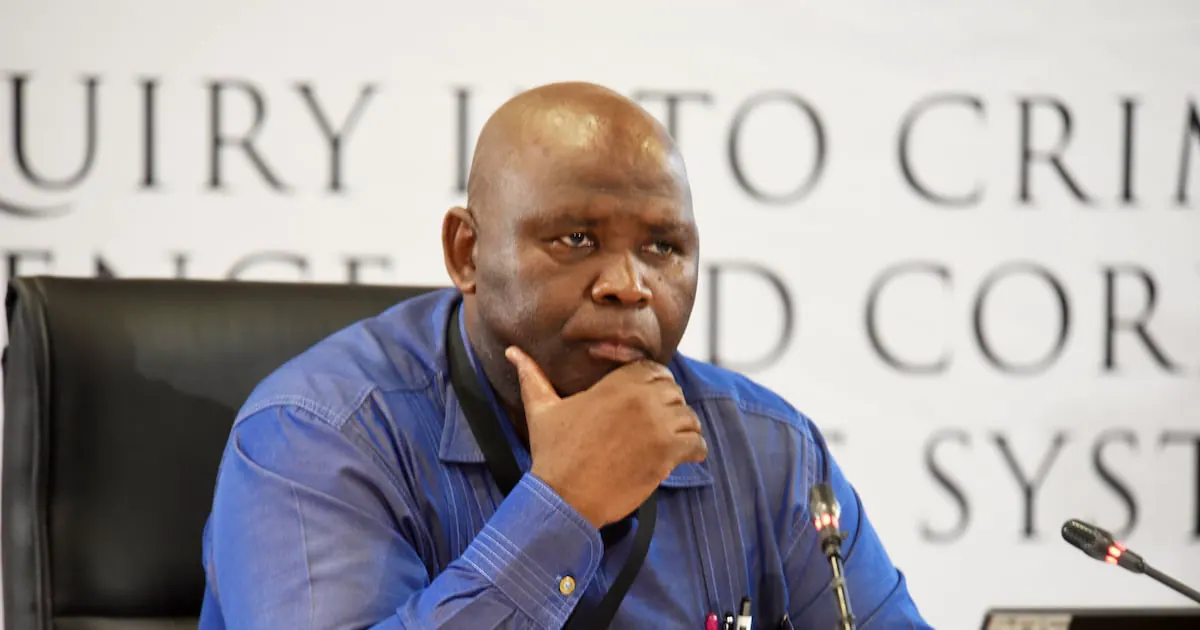
Public Service Commission chairperson Prof Somadoda Fikeni recently testified before the Madlanga commission of inquiry, detailing how government systems and processes are being deliberately broken down to allow inefficiency and incompetence to flourish for the benefit of corrupt individuals. Fikeni's testimony, dubbed "the political economy of inefficiency," highlighted the issue of prolonged acting positions at high levels of government departments. This has significant implications for the delivery of public services and the overall functioning of the government.
A notable example of this issue is the department of public service and administration, which has been without a permanent director-general for over 18 months since Yoliswa Makhasi's contract ended in February 2025. Despite repeated attempts to fill the position, a ministerial selection panel has failed to muster a quorum, and the post was re-advertised, with shortlisting still awaiting confirmation of ministers' diaries. The official hope is now early 2027, highlighting the slow pace of filling critical positions.
The problem of prolonged acting positions is not isolated to the department of public service and administration. At least 12 of the 42 national departments are currently run by acting heads, including critical service-delivery engines such as health, justice, social development, and transport. Additionally, entities under the Presidency, including planning, monitoring, and evaluation, and the State Security Agency, are also led by temporary heads. This has significant implications for the delivery of public services and the overall functioning of the government.
Regulations are clear that acting positions should not stretch beyond 12 consecutive months, but in practice, the rule is treated as optional. Departments drift under temporary authority, strategic planning stalls, accountability blurs, and the "political economy of inefficiency" becomes the operating system. This has resulted in empty chairs where permanent, accountable leadership should sit, leading to tentative decision-making and a lack of institutional memory.
The issue of prolonged acting positions has been raised repeatedly, with parliamentary questions, opposition interventions, and media exposés chronicling the problem. Despite promises of professionalisation and merit-based appointments repeated in every state of the nation address, the results remain the same. The government has known about this problem for years, but the issue persists, highlighting a lack of urgency in addressing the problem.
The consequences of prolonged acting positions are significant, with service delivery suffering, investor confidence eroding, and citizens experiencing the state as unreliable. The culture of acting appointments creates space for patronage, delayed consequence management, and the quiet continuation of underperformance. If the government of national unity is serious about rebuilding state capacity, it must begin by filling these posts properly and promptly.
To address the issue, the government must fill the vacant positions on merit, within the timelines provided by the law, and without the endless delays that have become a feature of the system. Succession planning is not rocket science; it is basic administration. The government must take concrete steps to address the problem, and anything less is not reform, it is managed decline, dressed up as process.
Key points
- The South African public service is facing a crisis due to prolonged acting positions, with 12 of 42 national departments currently led by temporary heads.
- The issue has significant implications for the delivery of public services and the overall functioning of the government.
- The government must fill the vacant positions on merit, within the timelines provided by the law, and without delays to address the problem.