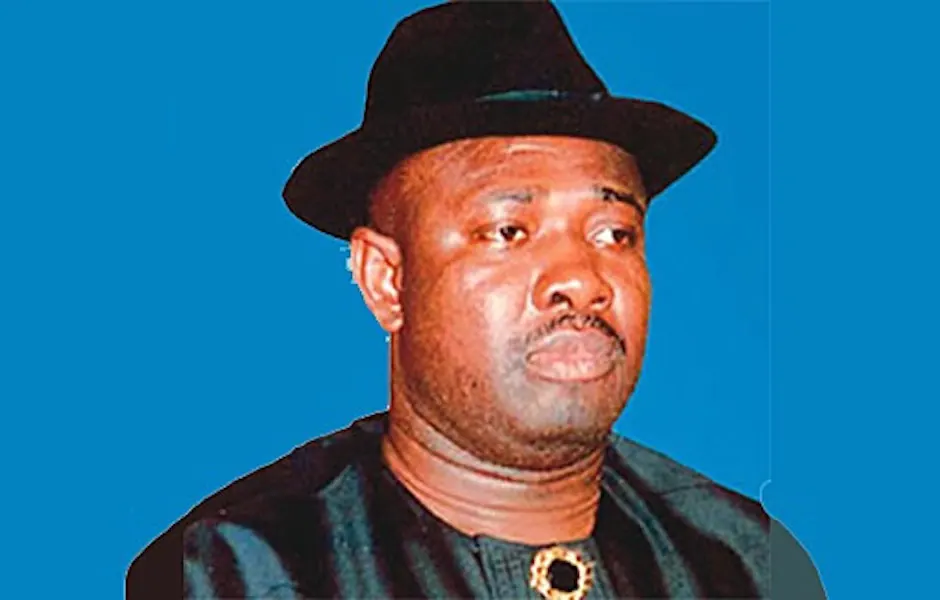
Nigeria's Minister of State for Petroleum Resources, Senator Heineken Lokpobiri, has stated that the country would have been spending approximately N21 trillion annually on petrol subsidy if it had been retained. This estimate is based on the N18.4 billion daily subsidy expenditure reported by former Minister of Finance, Zainab Ahmed, in 2023. At the time, this amount translated to about $41 million a day and $15 billion annually. Converting this to the current exchange rate of N1,400 to the dollar would result in approximately N21 trillion annually.
Lokpobiri defended the removal of petrol subsidy, citing the Petroleum Industry Act (PIA) 2021, which stipulates that petroleum products should be priced under free market conditions. He described the decision by President Bola Tinubu to remove the subsidy as difficult but necessary. According to Lokpobiri, retaining the subsidy could have pushed Nigeria into a situation similar to that of Venezuela, despite the country's huge crude oil reserves.
The minister dismissed former Vice President Atiku Abubakar's proposal for a production subsidy on petrol refined locally, arguing that it has no legal, fiscal, or financial basis. Lokpobiri described Atiku's position as political and maintained that petrol pricing in Nigeria is now governed by the free-market provisions of the PIA. The legislation provides for petroleum products to be sold under market forces, and the government cannot simply return to the subsidy regime.
Atiku Abubakar had argued that Nigeria should benefit from cheaper locally refined petrol through a production subsidy, given the country's domestic refining capacity, including the Dangote refinery. However, Lokpobiri disagreed, stating that Nigerians should not take Atiku's proposal seriously. The minister emphasized that the government's decision to remove the subsidy was in line with existing law.
Lokpobiri revealed that $1.4 billion of the $1.5 billion refineries' fund had already been spent before he resumed office. He also stated that the savings from subsidy removal are reflected in increased allocations to the three tiers of government through the Federation Account Allocation Committee (FAAC). According to him, FAAC allocations have significantly increased, with N2.3 trillion and N2.1 trillion being distributed at the end of every month.
The increased FAAC allocations, according to Lokpobiri, demonstrate the positive impact of subsidy removal on government revenue. He noted that this is the first time FAAC allocations have reached such high levels. The minister's statement suggests that the government is transparent about the use of funds saved from subsidy removal.
The debate over fuel subsidy removal and petrol pricing continues in Nigeria. Lokpobiri's statements highlight the government's commitment to implementing the PIA and ensuring that petrol products are sold under market forces. The issue remains a contentious one, with different stakeholders holding varying opinions on the best approach to manage the country's petroleum resources.
Key points
- Nigeria would have spent approximately N21 trillion annually on petrol subsidy if it had been retained.
- The Petroleum Industry Act (PIA) 2021 provides that petroleum products should be priced under free market conditions.
- The savings from subsidy removal are reflected in increased allocations to the three tiers of government through FAAC.