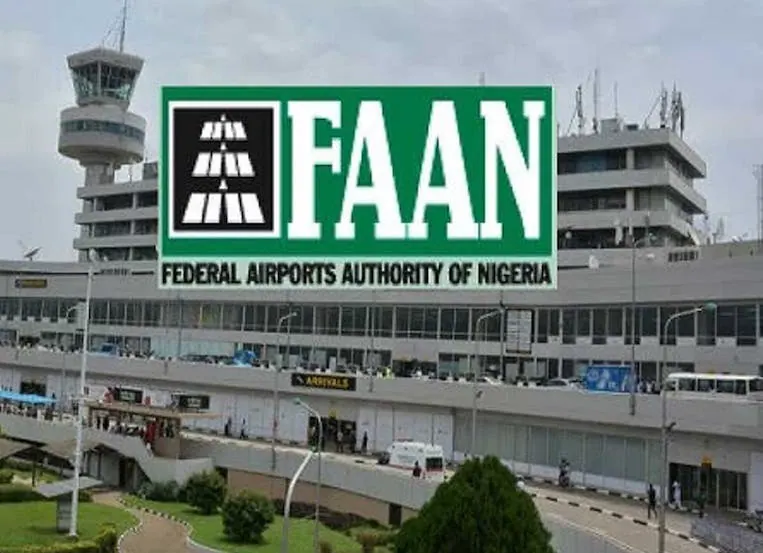
Nigeria's aviation industry has experienced significant growth, with 18.8 million domestic and international travelers recorded in 2025, representing an 11.9% year-on-year increase. This growth has solidified Nigeria's position as the fourth-largest aviation market in Africa. The Managing Director and Chief Executive of the Federal Airports Authority of Nigeria (FAAN), Mrs. Olubunmi Onabanjo-Kuku, highlighted this achievement at the Airports Council International (ACI) Africa Regional Conference and Exhibition 2026 in Abuja.
The growth in Nigeria's aviation market can be attributed to several factors, including a 37.4% increase in scheduled airline capacity, reaching 1.19 million seats in September 2026. This surge is the fastest growth rate among Africa's top 10 aviation markets. Onabanjo-Kuku attributed this increase to currency reforms, new aircraft leasing arrangements, and renewed confidence among international airlines operating in Nigeria.
Several airlines have resumed operations in Nigeria since the current Minister of Aviation and Aerospace Development assumed office, with more expected to return. Lagos remains the growth driver, with scheduled seat capacity at Murtala Muhammed International Airport (MMIA) rising by 24.1% in September, the fastest growth among Africa's 10 largest airports.
According to data from the International Air Transport Association (IATA), African airlines recorded a 6.4% year-on-year increase in international passenger demand in July 2026, compared to a 0.1% decline in global international demand. Africa's passenger demand grew by 5.2%, making it the second-fastest-growing region after Latin America and the Caribbean.
Despite the positive trend, Africa's aviation gap remains wide, with the continent accounting for just 1% of global air traffic despite having 18% of the world's population. Load factors are still below global averages, and the financial viability of African airlines remains fragile. Nigeria still has significant untapped potential, with over 220 million people and about 19.5 million annual passengers across 28 airports.
The FAAN boss listed several challenges facing African airports, including funding constraints, infrastructure deficits, high operating costs, fragmented connectivity, and pressure to keep charges low while delivering world-class facilities. The ACI Africa Regional Conference and Exhibition 2026, themed "Next-Gen Airports: Driving Performance and Resilience," aimed to address these issues.
FAAN has implemented a transformation agenda since 2023, focusing on safety, infrastructure modernization, and capacity expansion. Achievements include the rehabilitation of a major runway at MMIA, terminal upgrades, improved airfield lighting, and the establishment of a Passenger Experience Hub to enhance speed, comfort, and assistance.
Key points
- Nigeria's aviation market has grown to 18.8 million passengers in 2025, with a 37.4% increase in airline capacity.
- The country remains the fourth-largest aviation market in Africa, driven by Lagos as the growth driver.
- Despite growth, Africa's aviation gap remains wide, with the continent accounting for just 1% of global air traffic.