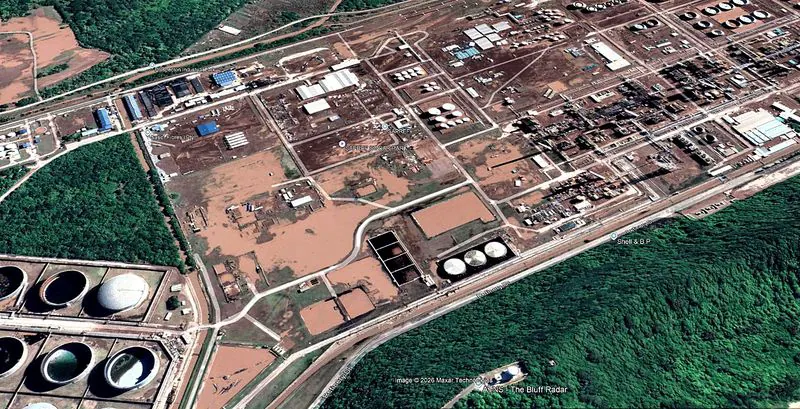
The South African government's plan to revive and expand the Sapref refinery, which was abandoned in 2022 after floodwaters damaged the site, has raised concerns among nearby communities and environmental groups. The refinery, which was operated jointly by Shell and BP since 1963, had been releasing tons of sulphur dioxide and other pollutants into the atmosphere daily. The government plans to invest R117 billion in the refinery, now owned by the state-owned Central Energy Fund, to double and then triple its previous capacity to 650,000 barrels per day.
The refinery's redevelopment has sparked fears of increased pollution and health risks for nearby residents, who have long suffered from the effects of industrial pollution. Studies by the University of KwaZulu-Natal and the University of Michigan in 2007 found higher rates of asthma in children living near the refinery, as well as significant exposures to benzene, a cancer-causing pollutant. The South Durban Community Environmental Alliance has raised concerns about the reliability of industry and government air pollution monitoring stations in the area.
The legacy of underground fuel leaks and contamination at the refinery site is also a major concern. In 2001, nearly a million litres of petrol leaked from rusty pipelines, forcing the evacuation of homes in the Bluff and Wentworth areas. The Department of Forestry, Fisheries and the Environment has confirmed that the site has been registered on the national Contaminated Land Register, and remediation efforts have been ongoing since before 2014.
The Central Energy Fund has insisted that the refinery's redevelopment will be "commercially disciplined, technically credible and financially sustainable". However, critics argue that the venture could saddle taxpayers with an expensive white elephant. SA National Energy Association director Dave Wright has warned that buying and operating an old refinery could cost taxpayers more than it's worth, leaving the country with a stranded asset in 10 to 15 years.
The South Durban Community Environmental Alliance is demanding a comprehensive, independently verified environmental and health impact assessment, covering soil and groundwater contamination, risks to nearby residents, and longer-term human health impacts. The alliance has also called for a site visit to verify reports of significant corrosion, blockages, and contamination.
The Department of Forestry, Fisheries and the Environment has underlined the legal requirement for the Central Energy Fund to undertake an environmental impact assessment for the proposed redevelopment and expansion of the refinery. The department has also confirmed that the Central Energy Fund is now responsible for the ongoing monitoring and management of contamination at the site.
The revival of the Sapref refinery has significant implications for the country's energy sector and economy. If the plan comes to fruition, it could increase the country's refining capacity and reduce reliance on imported fuels. However, the concerns over pollution, health risks, and taxpayer liability must be addressed through a thorough and transparent assessment process.
Key points
- The South African government's plan to revive and expand the Sapref refinery has raised concerns over pollution, health risks, and taxpayer liability.
- The refinery's redevelopment has sparked fears of increased pollution and health risks for nearby residents, who have long suffered from the effects of industrial pollution.
- The legacy of underground fuel leaks and contamination at the refinery site is a major concern, with calls for a comprehensive, independently verified environmental and health impact assessment.