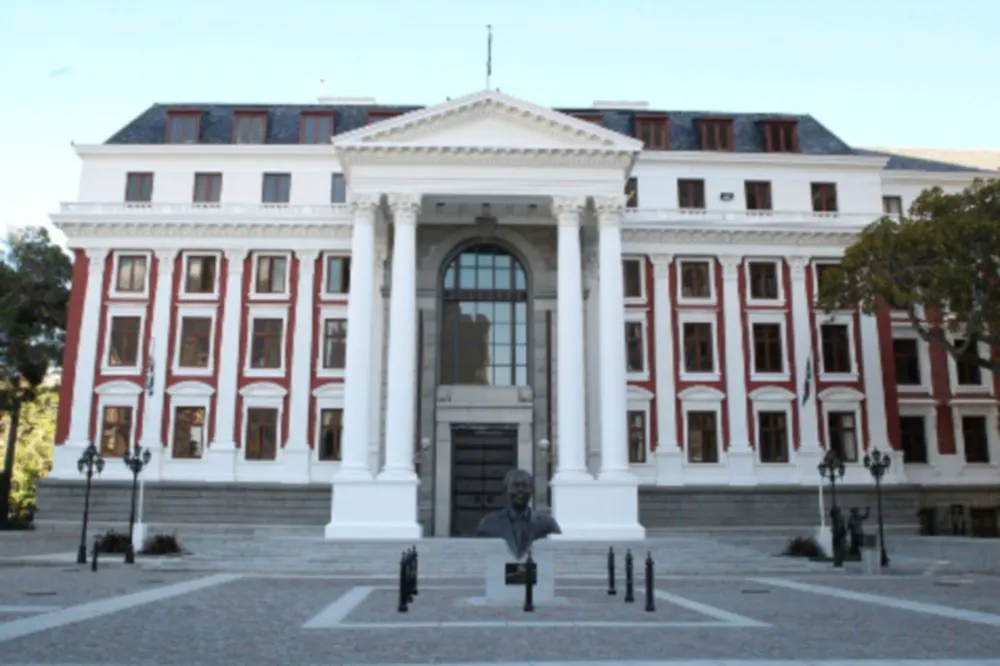
The South African Parliament is set to take over the running of three parliamentary villages in Cape Town, which house MPs from outside the city, as well as ministers' official residences. The move is part of a proposed law, the Parliamentary Villages Bill, which aims to repeal the 1998 legislation governing the villages. The bill, published in the Government Gazette on July 24, has been under consideration by an ad hoc committee.
According to Simon Mashigo, head of Parliament's institutional support services division, taxpayers have spent R600 million over five years maintaining the parliamentary villages and ministers' official residences. The amount covers a single facilities management contract administered by the Department of Public Works and Infrastructure. However, the department has not provided a breakdown of how much of the R600 million was spent on the three parliamentary villages.
The three parliamentary villages are located in Acacia Park in Goodwood, Laboria Park in Belhar, and Pelican Park in Zeekoevlei. Under the proposed law, Parliament would become responsible for managing and maintaining these villages. However, the Department of Public Works has raised concerns that the proposed transfer could encroach on its constitutional mandate. Mashigo said the issue may need to be resolved by President Cyril Ramaphosa or the leader of government business.
There are also questions over ownership of the land on which the villages stand. Mashigo said the City of Cape Town owns the land on which Laboria Park stands, which could limit Parliament's ability to control or dispose of the property. This could create challenges if Parliament wants to dispose of the property in the future. The committee has received 13 written submissions on the draft Bill, with some questioning the cost and rationale of providing accommodation and security for MPs in Cape Town.
Security arrangements at the villages have also come under scrutiny. Brigadier Debbie Peterson of SAPS protection and security services told the committee that police officers stationed at the villages cannot open criminal cases there. Residents have to report crimes at the nearest police station. Additionally, firearms have to be handed in at the nearest police station because the villages do not have storage facilities.
The committee has also raised concerns about communication between residents and police. ANC MP Nonkosi Queenie Mvana said phones and intercoms used to contact officers are not working. Brigadier Peterson said only one telephone had been faulty, at Pelican Park, but undertook to check whether it was operational. The committee's content adviser, Dr Anneke Clarke, said some submissions appeared to assume that MPs were receiving accommodation as a personal benefit rather than as part of Parliament's operational arrangements.
The transition would also involve moving public works employees responsible for managing the villages to Parliament. Public Service and Administration Minister Inkosi Mzamo Buthelezi said his department would assist with the process and ensure labour laws were followed. The Department of Public Works has until next Tuesday to submit its response and is expected to brief the committee next Friday. The committee plans to adopt the final Bill on November 27.
Key points
- Parliament to take over running of three parliamentary villages in Cape Town.
- R600 million spent over five years maintaining parliamentary villages and ministers' official residences.
- Proposed law aims to repeal 1998 legislation governing parliamentary villages.