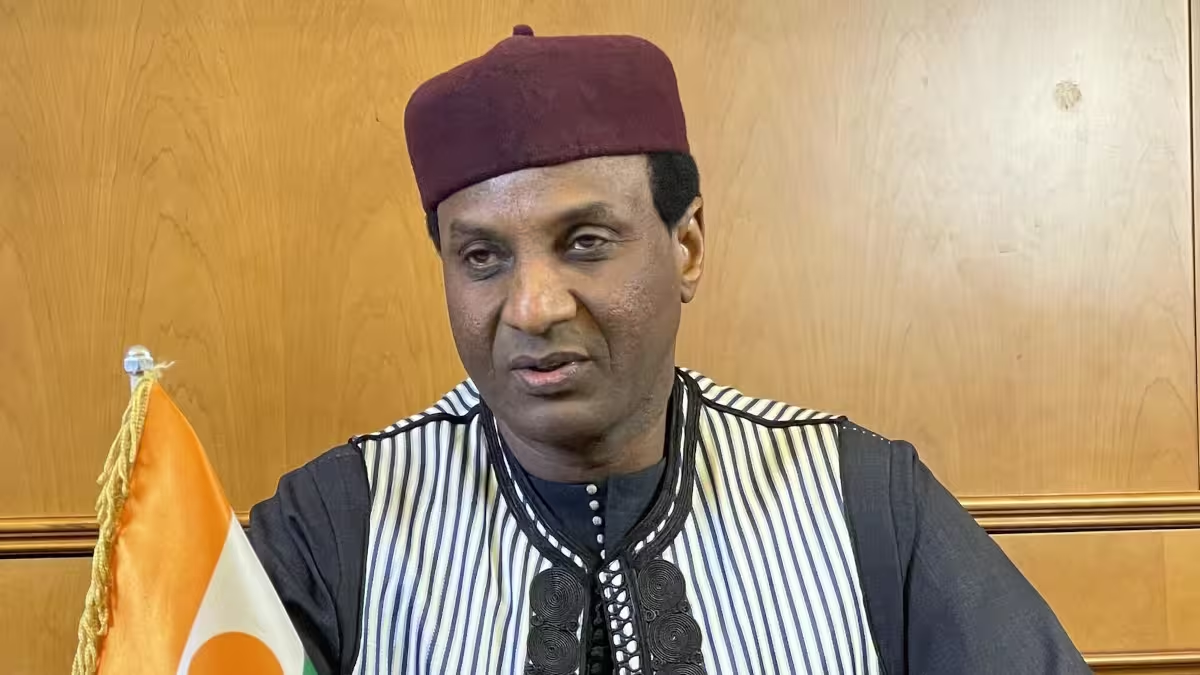
Niger's Prime Minister, Ali Mahaman Lamine Zeine, addressed the 81st session of the United Nations General Assembly on September 26, accusing France of deliberately disorganizing the exploitation of uranium sites before its departure from the country. This new accusation is part of an ongoing dispute between Niamey and Paris over the country's natural resources. Lamine Zeine claimed that France had sabotaged the installations, leaving Niger to invest approximately thirty billion francs CFA to restart production.
The dispute between Niger and France has been escalating since 2023. Niger withdrew Orano's permit to exploit the Imouraren deposit and took operational control of Somaïr in late 2024. In June 2025, Niger nationalized the site, citing Orano's "irresponsible, illegal, and unjust" behavior as a company owned by the French state. The two countries have been at odds over a missing stock of uranium from the Arlit site, with Orano denouncing the departure of a uranium shipment without its consent.
Niger's nationalization of the uranium site has led to a significant shift in the country's control over its natural resources. Lamine Zeine stated that Niger has taken full control of its uranium production, which is now entirely managed by Nigerien agents and engineers. He emphasized that the current stock of uranium belongs to Niger and will be sold transparently to any interested buyer. This move marks a significant change in Niger's relationship with France, which had previously controlled the country's uranium exploitation for over fifty years.
The historical context of Niger's uranium exploitation has been marked by controversy. Lamine Zeine noted that for over half a century, Niger's uranium had powered European cities while the country's own cities remained in darkness. He stated that this injustice has now ended, with Niger managing its resources for its own benefit. The country's goal is to commercialize its uranium on the international market transparently, in line with nuclear non-proliferation obligations.
The reaction from France and Orano to Lamine Zeine's accusations has been muted so far. Unlike previous episodes in the controversy, where Orano and French authorities had responded to Nigerien accusations, no comment has been made on the sabotage allegations. This silence comes as Niger seeks to assert its sovereignty over its natural resources and move away from its historical dependence on France.
The current situation marks a significant shift in Niger's relationship with its natural resources. With the nationalization of its uranium sites, Niger aims to benefit directly from its resources. The country's investment in restarting production has been substantial, but Lamine Zeine emphasized that it was necessary to regain control over Niger's uranium. The international community is watching closely as Niger navigates its new role as a uranium producer.
The dispute between Niger and France highlights the complexities of natural resource management in Africa. As countries seek to assert their sovereignty over their resources, historical ties and dependencies are being reevaluated. Niger's experience serves as an example of the challenges and opportunities that come with managing natural resources in a rapidly changing global landscape.
Key points
- Niger's Prime Minister accuses France of sabotaging uranium installations before leaving the country.
- Niger has nationalized its uranium sites, taking control of production and management.
- The dispute between Niger and France highlights the complexities of natural resource management in Africa.