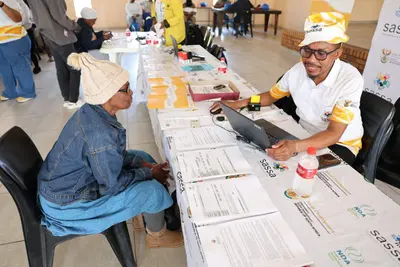
The Older Persons Grant (OPG) in South Africa has become a critical source of income for many households, particularly those with older people supporting multiple generations. Despite its importance, the grant's value has not kept pace with the cost of living, leading to widespread frustration among pensioners. With local elections approaching, politicians have seized on the issue, promising to double the grant to R4,500 a month. However, experts argue that this approach oversimplifies the problem.
Research on family caregiving has revealed that the OPG is often used to support entire households, rather than just the individual recipient. This is particularly true for older women, who receive the grant more frequently than men and often live in large, multigenerational households. The Social Relief of Distress grant, available to working-age adults, is only R375 a month, making the OPG a vital lifeline. Nevertheless, increasing the grant is not a substitute for a comprehensive social protection and care system.
The numbers tell a significant story. Spending on the OPG accounts for approximately 98.5% of state funding directed towards elder care, with 4.16 million people receiving the grant, up from 2.2 million in 2006/07. In nominal terms, expenditure has increased almost fivefold, from R21.9 billion to R106.8 billion. However, when adjusted for inflation, the real annual value of the grant per person has remained relatively stable, at approximately R25,640 in 2024/25, compared to R25,400 in 2006/07.
The Grant in Aid, designed for OPG recipients requiring regular assistance due to care needs, remains underused, with only around 6% of OPG beneficiaries, or approximately 252,000 people, receiving it. Experts estimate that up to 1.5 million people may require significant assistance. Expanding access to the Grant in Aid could be a targeted and credible election promise, but it is only a partial solution to the country's long-term care crisis.
Provincial spending on community-based care for older people has fallen by approximately 26% over the past two decades, which is concerning given the emphasis on ageing in place. This approach requires a range of services, including home-based care, transport, respite services, and day centres. An additional R1,000 or R2,000 in an older person's pocket cannot create these services if they do not exist. Collective investment is needed to establish the necessary care infrastructure.
The issue of where older people are ageing is also crucial. Support for services is uneven across the country, with rural and informal areas receiving less support. Densely populated, poorly serviced communities with substantial and growing older populations require targeted investment. For example, Khayelitsha has approximately 20,000 older person grant beneficiaries, but only now is the first residential care facility being established to serve this population.
Ultimately, the debate around the OPG needs to shift beyond the size of the monthly payment to consider what kind of society South Africa wants to build for its ageing population. While older people clearly need greater income security, a bigger pension is not a long-term care policy. The state must recognise where ageing is happening and invest in the necessary infrastructure to allow older people to remain safely and with dignity in their communities.
Key points
- The Older Persons Grant, while vital, requires a nuanced approach that addresses the complex needs of South Africa's ageing population.
- Increasing the grant is not a substitute for a comprehensive social protection and care system.
- Collective investment in care infrastructure, including home-based care, transport, and community-based services, is essential to support older people.