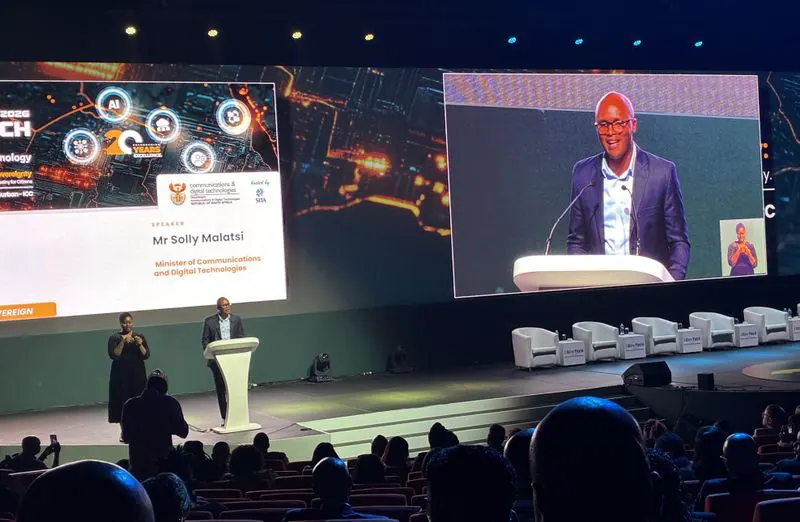
South African Minister of Communications and Digital Technologies, Solly Malatsi, has announced that a new draft of the country's AI policy will be ready by March 2027. The announcement comes after the previous draft was withdrawn due to the discovery of AI hallucinations, which led to a loss of public confidence. Malatsi made the statement at the GovTech 2026 conference in Durban, where he emphasized the importance of having a robust policy that balances regulation with economic growth.
The previous draft of the AI policy was presented at GovTech 2025, but was later withdrawn after it was discovered that AI tools had been used to draft parts of the document without proper oversight. Malatsi revealed that he had provided robust feedback to the department on the first draft, but was disappointed when the AI hallucinations were discovered. The incident highlighted the challenges of using AI in policy-making and the need for human oversight.
To prevent similar incidents in the future, Malatsi has established an expert advisory panel, led by Prof Benjamin Rosman of the Wits Mind Institute, to review and rewrite the policy. The panel will ensure that the new draft is free from avoidable errors and is suitable for presentation to the Cabinet. Malatsi emphasized the importance of transparency and accountability in the policy-making process.
Malatsi warned against over-regulation driven by panic, advocating for an agile policy that enables economic expansion. He emphasized that regulation should be used to enable sectors to grow, rather than stifle opportunity. The minister also highlighted the need for digital sovereignty to be treated as a developmental issue, rather than just a security or protectionist issue.
Malatsi defined digital sovereignty as an engine for socioeconomic development and fundamental rights. He emphasized that it must be viewed as a developmental issue that forms part of the country's growth plans. The minister also highlighted the need for state capacity, protection of citizens' rights, maintenance and enhancement of national security, and progressive international cooperation.
The minister concluded his address by reminding public servants that technological tools are meaningless if they fail to improve citizens' daily experiences or secure public data. He emphasized that technology is not the destiny, but rather the choices made that will shape the country's digital transformation journey. Malatsi expressed his wish that the country will make better choices for the benefit of its digital transformation.
The new draft AI policy is expected to be presented to the Cabinet by the end of the financial year, in March 2027. The policy will aim to balance regulation with economic growth, and ensure that AI is used in a way that benefits the country and its citizens. The advisory panel will play a crucial role in ensuring that the policy is robust and suitable for implementation.
Key points
- The new draft AI policy will be ready by March 2027.
- The previous draft was withdrawn due to AI hallucinations.
- The policy aims to balance regulation with economic growth.