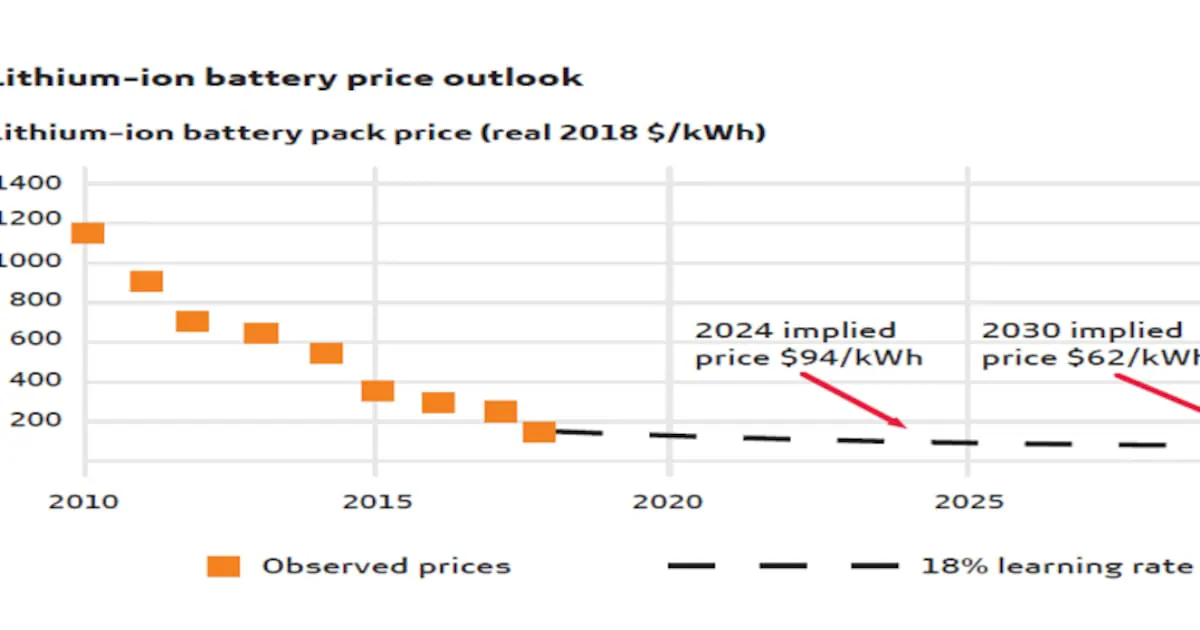
South Africa's mineral exports, particularly ore, are being priced against a cost curve shaped by Chinese policy. For over a decade, China has influenced this curve through subsidies and encouragement to build capacity. However, China has now reversed its policy direction, introducing a 2% consumption tax on lithium-ion batteries made in China, effective September 1, which will increase to 4% by September 2027. This shift may have significant implications for South Africa's mineral exports.
China's policy change is not limited to the new tax on lithium-ion batteries. The country has also issued a development plan for the vehicle and battery industry, running to 2030, which includes a capacity warning and adjustment mechanism. This mechanism sets stricter conditions for new projects, encourages consolidation among existing producers, and provides for the orderly exit of inefficient capacity. The plan aims to curb local investment incentives that contributed to the surplus in the first place.
The new tax and development plan may have a significant impact on South Africa's mineral exports, as the country sells ore and is building capacity to process it. Both decisions are priced against a cost curve that sits in China, which processes most of the world's battery minerals. South Africa's exposure to China's policy shift rests on no contract, cannot be hedged directly, and carries no recourse. This makes it a challenging situation for businesses to navigate.
According to ANESU M Chatikobo, a CA specialising in M&A advisory, anyone modelling a Chinese cost curve is also modelling another government's policy. This means that South Africa's businesses must consider the implications of China's policy shift on their operations. Chatikobo notes that a converter outside China competes with that capacity and gains ground if the discipline holds, while a miner selling ore into it faces a more concentrated set of buyers if the discipline holds.
The campaign against what Beijing calls involution, meaning competition that destroys margin without moving share, has been running since mid-2025 across various industries, including steel, building materials, solar, and batteries. The sector requirements are drawn broadly, leaving the result to enforcement. Policymakers have also left electric vehicles off the strategic industries list in the national development plan for 2026-30, which may be seen as support withdrawn rather than closures ordered.
China's policy shift may have significant implications for South Africa's businesses, which must now consider the risks associated with China's policy changes. Chatikobo notes that the exposure behaves like a counterparty risk, with a decision-maker, the ability to move without notice, and no recourse. To manage this risk, businesses must establish how much of their return depends on China's policy and decide whether to hold that much unsecured risk.
In conclusion, South Africa's mineral exports face uncertainty amid China's policy shift. Businesses must navigate the implications of the new tax and development plan, which may impact the cost curve and their operations. By understanding the risks associated with China's policy changes, businesses can make informed decisions about their investments and operations.
Key points
- China's new tax on lithium-ion batteries and development plan for the vehicle and battery industry may impact South Africa's mineral exports and cost curve.
- South Africa's businesses must consider the implications of China's policy shift on their operations and manage the associated risks.
- The policy shift may lead to a more concentrated set of buyers for miners selling ore into China.